- 09:00 - 09:15 CEST
- Thomas Schmid
- tbd.
Opening & Welcome
- 09:15 - 10:00 CEST
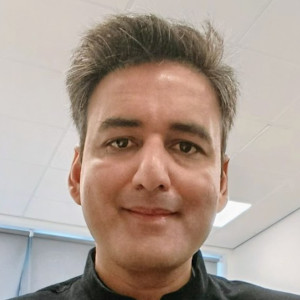
- Aakash Ahmad
- Room 727
Keynote "Architecting Software Systems in the Era of Generative Artificial Intelligence"
Artificial Intelligence (AI) is transforming software engineering practices and is increasingly influencing the discipline of software architecture. This talk explores the emerging paradigm of AI-Assisted Software Architecting (AISA), examining how AI technologies can augment architectural design, decision-making, knowledge management, and continuous system evolution. The talk will discusses opportunities for human–AI collaborative architecting alongside challenges related to trust, explainability, governance, and intellectual property. It concludes by identifying key research directions, including explainable architectural reasoning, continuous architecting, and effective human–AI collaboration models for future software-intensive systems.

- 10:00 - 10:30 CEST
- Hamua Sakout
- Room 727
Generative AI for Software Development Primer
This prsentation is a short introduction the most important tools, practices and concepts for coding with Generative AI.
- 10:30 - 11:00
Coffee Break
- 11:00 - 15:30 CEST
- Hamza Sakout
- Room 727
Hands-on Student Workshop
- 15:30 - 16:00 CEST
- Thomas Schmid
- Room 727
Student Workshop Closing
- 09:15 - 09:30 CEST
- Thomas Schmid
- tbd.
Opening & Welcome

- 09:30 - 10:30 CEST
- Martin Hebart
- tbd.
Keynote "Similarities and Differences of Representations in Humans and Artificial Intelligence"
Recent AI models have been shown to match or surpass human performance on many benchmarks, yet their success often tells us surprisingly little about the representations that support it. When two systems produce similar outputs, their decisions can be based on fundamentally different dimensions of the world. This leads to a central challenge for human-AI alignment: how can we identify what it is that leads to similar representations in humans and AI? In this talk, I will present work from our lab that uses tools from cognitive science to reveal the representational structure of human and artificial systems. Starting from large-scale human similarity judgments, I will show how object representations can be decomposed into interpretable dimensions that capture much of human perceptual and conceptual structure in representations. I will then describe how the same logic can be applied to deep neural networks, revealing striking differences between how humans and artificial models make sense of the world. I will end by extending this approach across large model families to reveal what are universal dimensions of representations learned across models and how they relate to biological vision. Together, these findings highlight that applying the toolkit of cognitive science to the study of artificial systems can yield important similarities and differences in learned representations across biological and artificial neural systems.
- 10:00 - 10:30 CEST
Coffee Break

- 11:00 - 11:30 CEST
- Melle Mendikowski
- tba.
Bridging Computer Science, Economics, and Social Science: Reproducible LLM Workflows for Large-Scale Qualitative Text Coding
Large Language Models (LLMs) are creating new opportunities to scale qualitative research, but reliable and reproducible methods for integrating them into workflows are still emerging. This interdisciplinary project brings together researchers from computer science, economics, and the social sciences to design, implement, and evaluate LLM-assisted approaches for large-scale text classification and qualitative coding. Drawing on corpora of approximately 6,000 computer science papers and 544 research abstracts, we examine how LLMs can help identify research narratives, including portrayals of AI as augmenting or replacing human labor, alongside more complex qualitative coding tasks. We present QualCoder-LLM, an open-source Python pipeline that supports prompt experimentation, validation, coding, logging, and evidence-line verification while preserving human oversight and reproducibility. Our findings offer practical guidance for researchers seeking to use LLMs as scalable collaborators in systematic literature reviews and other text-intensive interdisciplinary research.

- 11:30 - 12:00 CEST
- Tracy Arndt
- tbd.
Practical Approaches to Large-Scale Linked Open Data
Over the past sixteen years, the German National Library has developed its Linked Open Data (LOD) services into a large‑scale, community‑oriented ecosystem. Our work spans three interconnected roles: data producer of authority and bibliographic records, data provider offering over 1.4 billion triples via open interfaces, and community member collaborating with researchers, developers, and cultural heritage institutions. This talk highlights how openly developed vocabularies, transparent workflows, and a freely accessible SPARQL endpoint support sustainable LOD infrastructures. We share insights from operating a high‑volume service, including challenges in data quality, update cycles, and increasing pressure from AI-driven scraping.
- 12:00 - 13:00 CEST
Lunch Break

- 13:00 - 13:30 CEST
- Paul-Niklas Kandora
- tba.
LinearizeLLM: An Agent-Based Framework for LLM-Driven Exact Linear Reformulation of Nonlinear Optimization Problems
Reformulating nonlinear optimization problems into solver-ready linear or mixed-integer linear problems is a common but expertise-intensive task in mathematical programming. We study this task as a verification-aware reformulation problem: given a raw LaTeX optimization problem, can a workflow recover the reformulation-relevant problem structure, apply known exact recipes for a fixed supported reformulation family, and validate returned candidates by execution? We propose LinearizeLLM, a multi-stage language-model-supported workflow that detects supported nonlinear patterns, records their nesting structure, applies a deterministic bottom-up reformulation order, and generates solver-ready LP/MILP candidate formulations with reformulation records. The current implementation supports absolute values, minimum and maximum operators, binary-continuous products, linear fractional terms under sign conditions, and monotone objective transformations. On ComplexORNL, a 40-instance controlled benchmark derived from ComplexOR and synthetic nested models, LinearizeLLM has higher observed end-to-end objective-preservation success than the evaluated same-model one-shot reformulator and the raw-LaTeX-to-GDP-to-MILP pipeline. In order to address correctness beyond objective agreement, we add a solution-mapping verification step: 88 of 89 successfully-reformulated LinearizeLLM runs are mapped back to original decision-variable assignments that pass feasibility and optimality checks in the original reference problem.

- 13:30 - 14:00 CEST
- Andre Opris
- tba.
Understanding the Population Dynamics of NSGA-III via Runtime Analysis
NSGA-III is a widely used algorithm in evolutionary many-objective optimization and is designed for problems with more than three objectives, distinguishing it from the classical NSGA-II. Despite its practical success, the theoretical understanding of when and why NSGA-III performs well remains limited. In this talk, we help bridge this gap by presenting rigorous runtime analyses of NSGA-III on several classical benchmark problems with arbitrary numbers of objectives. Our results improve previous analyses in regimes where the population size asymptotically exceeds the size of the Pareto front. A key ingredient of our work is a detailed understanding of the population dynamics of NSGA-III. Notably, in the bi-objective setting, the obtained upper runtime bounds are asymptotically tighter than the best known bounds for NSGA-II. For suitable population sizes, NSGA-III even achieves a smaller expected runtime than NSGA-II. Finally, we complement these results by establishing tight runtime bounds for NSGA-III.

- 14:00 - 13:30 CEST
- John A. Warwicker
- tba.
Theoretical and Empirical Analysis of Classification Schemes within Neuroevolution and Evolutionary Neural Architecture Search
The choice of architecture of a neural network (NN) is crucial to its performance, and is usually found by a complex trial-and-error approach with significant manual input. Evolutionary methods have successfully been employed to automate this approach, leading to the promising field of evolutionary neural architecture search (ENAS). Despite its prevalence, the performance of ENAS is not well understood. Recent theoretical works analysing ENAS and the use of evolutionary approaches for parameter training within NNs have appeared; however, these approaches either assume a pre-defined architecture or an oracle-based training approach. In this work, we present the first theoretical analyses of ENAS with in-built parameter adaptation for binary classification problems. We firstly analyse ENAS with the oracle-based \textit{Neuron Parameter Training Strategy} for the benchmark \textsc{Uniform} problem class, by isolating the performance for different mutations to the architecture, and comparing local and global training strategies. We show that the oracle-based approach is inefficient as it relies on large jumps or a random walk in the parameter space, and thus has an expected runtime complexity that increases with the problem size and the chosen resolution. We then analyse the training approach without an oracle, and showcase that it can be more efficient as it relies on hillclimbing in the parameter space. Nevertheless, to overcome inefficiencies associated with poor initialisations, we highlight the need for restart strategies or alternative classification schemes.
- 14:30 - 15:00 CEST
Coffee Break
- 15:00 - 15:30 CEST
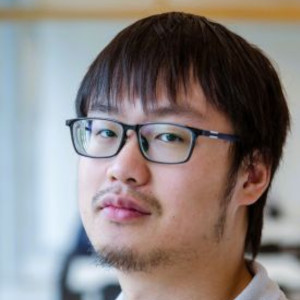
- Jixiang Qing
- tba.
Bayesian Optimization over Graphs via Global Acquisition Optimization
Bayesian optimization (BO) is highly effective for tasks like molecular design and neural architecture search (NAS). However, optimizing acquisition functions in discrete, combinatorial graph spaces, especially under structural constraints, remains a significant challenge. This talk addresses this critical bottleneck by proposing a novel approach for global acquisition optimization. We demonstrate how to encode both the graph search space and shortest-path graph kernels using mixed-integer programming (MIP). This formulation enables the exact, global optimization of acquisition functions such as the Lower Confidence Bound (LCB). We demonstrate the effectiveness of this scheme on standard molecular design and NAS benchmarks.
- 15:30 - 16:00 CEST
- Maren März
- tba.
From Learning Curves to Licensing Outcomes: An Analysis of Progress Test Data
Progress tests provide longitudinal insight into students’ knowledge development and have demonstrated predictive value for licensing examinations. Building on an earlier feasibility study using individual‑level LSTM models to forecast state licensing exam outcomes (M2) from item‑level behaviour, response patterns, and performance clusters, we extend the analysis to the cohort level. Using aggregated progress test means from three faculties, we extracted linear and non‑linear learning‑curve features and modelled their association with cohort‑level deviations from the national M2 mean using Elastic Net, Bayesian Ridge, and XGBoost. Individual predictions exceeded field‑comparison accuracy from the 6th semester onward. At the cohort level, steeper and higher learning curves—particularly, but not limited to, in later semesters—were consistently associated with better M2 outcomes. Together, both modelling strands indicate that the level and shape of progress‑test learning trajectories carry substantial predictive information for licensing performance and could be used to provide feedback at individual and institutional levels.
- 16:00 - 16:30 CEST
- Christian Zinke-Wehlmann
- tba.
From Ambition to Reality: Lessons Learned from the KISS Project
How can AI help manufacturing networks respond faster, more transparently, and more resiliently in times of crisis? The KISS project set out to explore this question through the idea of an AI-based semantic networking platform for rapid supply networks, connecting platform technologies, additive manufacturing, and artificial intelligence. This talk offers a reflective recap of the project journey: what worked, what proved harder than expected, and what we learned about translating semantic AI concepts into practical, trustworthy, and organisationally usable infrastructures. The talk highlights the pitfalls and most promising outcomes, such as an agentic approach.
- 09:00 - 09:15 CEST
- tbd.
Registration & Coffee
- 09:15 - 09:30 CEST
- Simon Guy
- tbd.
Welcome Note

- 09:30 - 10:30 CEST
- tbd.
Envisioning the Future: How Data Stories are Told – and What People Make of Them
In my talk, I will focus on two things. In first step, I will venture into an area of journalistic sensemaking and examine the diagrammatic patterns along which data-based projections have been crafted into a journalistic story. In the analysis of this nascent genre of data journalism that I present, I characterize three forms of predictive storytelling: concentration on a single scenario, contrasting different scenarios, and the conjunction of several future scenarios into a prognostic tendency. In all these forms of predictive data stories, more or less conclusive information is arranged into a sequence of events and trends. In most of the resulting stories, issues of probability and uncertainty are not submitted for interactive exploration but become integrated into a directed explanation offered by the news pieces. In a second step, I will zoom in on the identity-driven social and informational dynamics that form around the reception of such predictive data stories. Through a bi-national focus-group study involving the collective and individual decoding of visualization stimuli, the study is present found starkly polysemic readings regardless of design quality or topic. It defines four reading stances, from graphical avoidance to demanding interpretive freedom, viewing literacy as the ability to assert personal interpretations informed by both informational and ideological components.
- 10:00 - 10:30
Coffee Break

- 11:00 - 11:30 CEST
- Jose Alcaraz & Leo Baehr
- tba.
Data Narratives in Gender Representation: A Multimodal Examination
We live primarily in a world of video, images, sound and text. To untangle our contemporary organizations, social semiotic approaches have provided a powerful approach to examine inter-related narratives produced by multimodal data. Hence, in this talk we ask: What does a multi-modal examination of Work-Life Balance policies reveal about female representation, about hidden or less obvious meanings - e.g. on the role of women in organizations and domestic life? Here we present our preliminary findings from our multimodal analysis of the EU Directive 2019/1158 of the European Parliament and the Council on Work-Life balance (WLB). In examining this key directive, which could potentially affect more than 200 million workers, and the data narratives that can be identified from an integrated analysis (speech, written text, moving images, body movements, composition, sound and music) of 2 key related videos, we contribute to both critical feminist approaches on WLB, and to multimodal methods to the analysis of data.

- 11:30 - 12:00 CEST
- Will Haynes
- tba.
Telling Stories Through Sketches: Communicating the Experiences of Homelessness in Three Cities
I conduct interdisciplinary research on the exclusion of people experiencing homelessness in three cities: Manchester, Rome and Toronto. Giving voice to those often overlooked and ignored, my research is tied to data storytelling and communication, particularly through sketching. I hope to use sketches to collaborate, to engage and even affect change in my research. In my talk I will explore my successes/challenges with this method so far, as well as my future plans. I will assess sketching as both an ethical methodological tool (Haynes et al., 2025), an insightful and oftentimes mutually beneficial process (Brice, 2024) and as a key strategy for sharing and disseminating research. It also can be an ethical alternative for photography and avoiding capturing faces or likenesses, but rather focuses on material acts of ‘homemaking’ and everyday mobilities (Lancione, 2019) in the places where people live – train stations, river embankments, public parks etc.
- 12:00 - 13:00
Lunch Break

- 13:00 - 13:30 CEST
- Christine Shobana Arthur
- tbd.
Understanding Student Engagement in Higher Education through Inquiry Graphics: A Multimodal Approach
This study explores student engagement in higher education using a multimodal and semiotic method known as Inquiry Graphics (IG). While surveys and interviews have traditionally dominated student engagement research, these approaches may not fully capture the complexity, emotional depth, and reflective dimensions of students’ learning experiences. By inviting students to co-construct visual representations of their learning, this study offers an alternative approach that foregrounds visual storytelling and meaning-making. These student-generated artefacts provide insight into how learners interpret and communicate their experiences, supporting richer interpretation of data grounded in students’ own perspectives. Drawing on Coates’ framework of student engagement, the analysis examines students’ emotional and cognitive connections to their learning processes. The findings suggest that IG enables deeper exploration of key aspects of engagement, including academic challenge, peer collaboration, and active learning. This study contributes to broader conversations on how storytelling and multimodal approaches can enhance the interpretation of experience-based data in educational contexts. It highlights the potential of IG to complement existing qualitative methods while offering a more inclusive and participatory approach to understanding student engagement.

- 13:30 - 14:00 CEST
- Yuqian Wan
- tba.
AI-augmented Pedagogical Design within Higher Education
Artificial Intelligence (AI) has increasingly been applied in the teaching environment in China since last year. There are numerous seminars and training programs exploring its potential to enhance the teaching and learning experiences. Drawing from my own teaching practice, I have applied AI tools to re-frame the class activities, such as presentations and group discussions, into more dynamic formats that encourage active participation. These experiences lead to a question that how can educators transform classroom activities into more interactive and motivating experiences with the support of AI. To explore this question, the study adopts a qualitative case study approach. The teaching practices are documented where AI tools are used to design activities. This study aims to gather diverse practices and offer insights for teachers who wish to incorporate AI into their practices, especially for the disciplines that rely heavily on interactive class activities.

- 14:00 - 14:30 CEST
- Jian Wang
- tba.
Bibliometrics for Science Funding Policy
I will give a brief overview of bibliometrics as a discipline, and how it is connected to science policy making and research evaluation. Then I will briefly present several papers of mine, which focuses on using bibliometric data in inform science funding: What novelty means and why is it important for science funding. How do we measure it, and how is it connected with other bibliometric indicators, especially short-term citations and journal impact factor? How to fund science? There is key distinction between competitive project-based funding model and the internal block funding model. Which one leads to more novel outcomes? How do the effects differ across gender and seniority? Does ERC select researchers prone to novel research to support, does receiving ERC grant stimulate more novel research? What about DFG’s flagship Reinhart Koselleck projects? Furthermore, what is the relationship between feasibility and novelty? Does feasibility mitigate selection bias against novelty?

- 14:30 - 15:00 CEST
- Xinwu He
- tba.
Tracing Intellectual Trajectory: A Linguistic Analysis of Published Papers of Richard Macve
While biographies have been written of accounting history scholars, there are no prior studies which conduct a linguistic analysis of a specific accounting history scholar’s research output. The objective of this study is to examine Professor Richard Macve’s selected published research papers, tracing scholarly trajectory through linguistic patterns. The study analyses thirty publications using LIWC software and customised coding to seek out linguistic patterns, highlighting the most pertinent ones. The results reveal language that is consistently readable, more objective, neutral in sentiments, and authoritative and authentic, among others. The analysis also reveals differences in linguistics patterns when a publication was sole authored or not, and between accounting history research topics and other topics. In addition, this study offers a methodological contribution by providing a method for future research, not only on text generated by individual scholars, but also for any machine-readable text in the accounting history field or even beyond.
- 15:00 - 15:30
Coffee Break

- 15:30 - 16:00 CEST
- Teoh Yun Xin
- tba.
From Pixels to Pain: Data Narratives for Interpretable AI in Knee Osteoarthritis
Artificial intelligence (AI) is increasingly used to extract clinically relevant information from medical images, yet its outputs often remain difficult for clinicians and patients to interpret. In knee osteoarthritis, structural abnormalities identified on imaging frequently show weak or inconsistent relationships with patient-reported pain and functional limitations, creating challenges for clinical decision-making. This study investigates how data storytelling can bridge this gap by transforming complex AI-derived outputs into clinically meaningful narratives. Using multimodal data comprising quantitative cartilage measures, semi-quantitative structural features, and patient-reported outcomes (KOOS, WOMAC, and activity-specific pain scores), machine learning models identify associations between structural pathology and pain phenotypes. Findings are translated through a three-layer narrative framework integrating computational features, pathological changes, and patient experiences. Preliminary results demonstrate that narrative-based explanations improve the interpretability of AI outputs and better align with clinical reasoning. By combining biomedical engineering, and narrative design, this work advances human-centered, transparent, and trustworthy AI for musculoskeletal healthcare.

- 16:00 - 16:30 CEST
- tba.
When Data Speaks in Healthcare: AI-Powered Storytelling for Transparent and Trustworthy Analytics
Healthcare systems generate vast amounts of complex data from electronic health records, diagnostic imaging, wearable devices, laboratory reports, and patient monitoring systems. However, the value of these data depends not only on predictive accuracy but also on how clearly insights are communicated to clinicians, researchers, and decision-makers. This poster presents the concept of AI-powered storytelling as an approach for transforming healthcare analytics into transparent, interpretable, and trustworthy narratives. By integrating machine learning, explainable artificial intelligence, visual analytics, and domain-specific contextualisation, AI-driven storytelling can support clinical understanding, reduce uncertainty, and improve evidence-based decision-making. The proposed perspective highlights how healthcare data can be converted into meaningful stories that explain patterns, risks, predictions, and recommendations in a human-centred manner. It also emphasizes the importance of transparency, fairness, data privacy, model accountability, and ethical governance in healthcare AI systems. Through this approach, data becomes more than numerical output; it becomes an interpretable communication tool that supports trust between AI systems and healthcare professionals. The poster aims to demonstrate how transparent analytics and narrative-based AI can strengthen healthcare intelligence, improve patient-centred care, and support responsible adoption of artificial intelligence in clinical and public health environments.
- 17:00 - 18:00 CEST
- tba.
Panel Discussion "Towards a Shared Language – Data Narratives in Science, Business, and the Humanities"
In this public panel discussion, we will explore how data storytelling shapes the development of science, business and the humanities. Bringing together diverse faculty with complementary expertise and background, the panel aims to identify common narrative strategies and surface disciplinary differences.