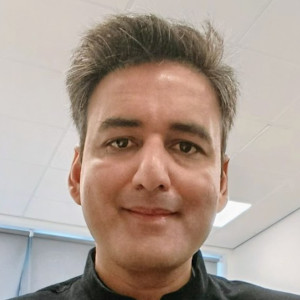
Aakash Ahmad
University of Derby
Aakash is a Senior Lecturer in Software Engineering at the University of Derby, United Kingdom. His research covers software engineering and software architecture and his expertise lies in AI-augmented software systems, software modernisation, and the responsible use of AI for decision support. He has led and contributed to funded projects with academic and industry collaborators, developing AI-augmented solutions for education and software engineering workflows. His published research has won multiple awards at international conferences.
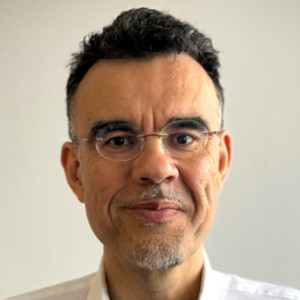
Jose Alcaraz
Lancaster University Leipzig
Jose is a lecturer in management at Lancaster University Leipzig. He has explored new approaches to data analysis and storytelling through the lens of social semiotics and Multimodality. Relying on this approach he aims to study how speech, written text, images, moving images etc make meaning inter-semiotically. He has published on this topic at The Academy of Management Learning & Education.
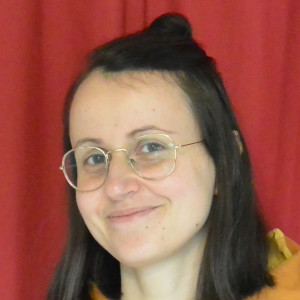
Tracy Arndt
Deutsche Nationalbibliothek
Tracy is responsible for the Linked Data Service of the Deutsche Nationalbibliothek (DNB, German National Library). She teaches the "Data Formats" module in the Library Computer Sciences program at the Technical University of Applied Sciences in Wildau. She is the spokesperson for the DINI AG KIM working group (Competence Center for Interoperable Metadata).
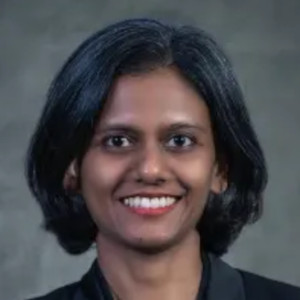
Christine Shobana Arthur
Sunway University
Christine is passionate about feedback and assessment in higher education, with a particular interest in the potential of evaluative research. She received her PhD from Lancaster University and teaches Academic Writing, Communication Skills, and Cross-Cultural Communication at the Sunway University Centre for English Language Studies. Beyond teaching, she supports the Sunway University Centre for Academic Development (CAD) as a CAD Associate, where she facilitates staff development initiatives, contributes to teaching and learning resources, and supports colleagues in enhancing their teaching practices across the university. In addition, she actively fosters collaboration and professional growth among emerging scholars through the Sunway University Early Career Researchers Network.
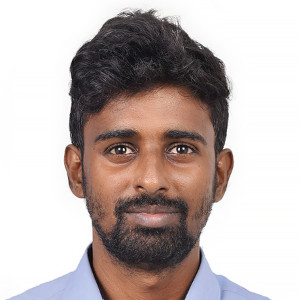
Sathishkumar Veerappampalayam Easwaramoorthy
Sunway University
Sathishkumar is a Senior Lecturer in the Department of Data Science and Artificial Intelligence at Sunway University. He previously served as a Postdoctoral Researcher at Jeonbuk National University and Hanyang University, Republic of Korea, and as an Assistant Professor at Kongu Engineering College, India. He earned his Bachelor’s degree in Information Technology from Madras Institute of Technology, Anna University, and his Master’s degree in Biometrics and Cyber Security from PSG College of Technology. Under the Korean Government Scholarship Program, he completed Korean language training at Inha University and received his Ph.D. in Computer and Communication Engineering from Sunchon National University. He serves as an academic editor for Information Research Communications and BMC Research Notes. He has reviewed more than 2,000 articles across 200 journals. His research interests include data mining, machine learning, big data analytics, quantum computing, and high-performance computing.

Simon Guy
Lancaster University
Simon is Pro-Vice-Chancellor Global (Digital, International, Sustainability) at Lancaster Unversity and currently leading the creation of Lancaster’s new campus in Indonesia as well as scaling up the LU Leipizig campus, while also overseeing the evolution of other partner campuses in China, Ghana and Malaysia. He began his career as an engineer before beginning his academic life pursuing studies in the humanities and cultural sociology. Situated within schools of architecture and planning, Simon has focussed upon sustainable urbanism where his interdisciplinary and international research connects architecture with urban planning, the property sector with utilities, academia with industry. He has established links with academics in North America, Asia and Europe and has held research fellowships in Tokyo, Paris, Berlin, Graz, Leuven, California and Singapore. Simon has published around sixty refereed article, over thirty book chapters and six books. He has been responsible as a principal or co-investigator for around £4.5 million of research income (£2.5 million as PI) derived from a variety of sources including RCUK, European and industry funds.

Will Haynes
Lancaster University
Will is an urban and cultural geographer. His research focusses on the governance of homelessness in public spaces and marginal city environments. This encompasses both 1) how this governance is implemented and developed from the ‘top-down’, including the use of byelaws, PSPOs, policing and urban development projects, and 2) how this governance is experienced and contested by people living on the margins of the city, looking at geographies of affect and using ethically driven qualitative methodologies. Connected to his focus on city spaces that are characterised by encounters and informal inhabitations, Will also had an emergent project on urban water. Will’s ‘watery’ research also relates to a critical concern for encampments on urban rivers, toilet access in cities, and the discursive relationship between urban waste, sanitation and development.

Xinwu He
Lancaster University College at BJTU
Xinwu is a Lecturer (Teaching & Scholarship) in Accounting and Finance with experience in UK and transnational higher education. Her work focuses on delivering high-quality accounting education that integrates conceptual clarity, professional judgement, and sustainability-informed corporate reporting. She is committed to supporting student progression, designing clear and fair assessment, and contributing to academic quality processes within international partnerships. Alongside teaching, she maintains scholarship in sustainability reporting, CSR, and sustainability accounting education to ensure curriculum relevance and continuous professional development.

Martin Hebart
Justus Liebig University Giessen / Max Planck Institute CBS Leipzig
Martin is Professor of Computational Cognitive Neuroscience at Justus Liebig University Giessen and an independent research group leader at the Max Planck Institute for Human Cognitive and Brain Sciences in Leipzig. His research focuses on how humans perceive, organize, and understand the visual world, combining large-scale behavioral experiments, neuroimaging, and machine learning. He is the founder of the THINGS initiative, a major resource for studying object perception and visual representations at scale. His work bridges cognitive neuroscience and NeuroAI, asking how biological and artificial systems represent objects, concepts, and meaning. He has been awarded an ERC Starting Grant and a LOEWE Professorship, supporting his group’s interdisciplinary research at the interface of psychology, neuroscience, and machine learning.

Paul-Niklas Kandora
Karlsruhe Institute of Technology
Paul obtained his B.Sc. degree from the Karlsruhe Institute of Technology and his M.Sc. degree from Columbia University. He is currently a Ph.D. student whose research focuses on the intersection of machine learning, artificial intelligence, and mathematical optimization.

Maren März
Charité Berlin
Maren is a Research Associate at the Office of Student Affairs at Charité–Universitätsmedizin Berlin, where her group's work focuses on progress testing, AI in medical education, and the design, implementation, and evaluation of OSCE and multiple-choice assessments. Since 2014, she has led the Progress Test Medicine Working Group and have coordinated several BMBF-funded projects, including INTER-AGENT and iPT, advancing AI-supported assessment and evidence-based examination formats. Previously, she contributed to digital assessment and veterinary eLearning research at Leipzig University. Maren holds a doctorate in veterinary medicine, is a specialist in veterinary informatics and documentation, and has completed advanced training in natural language processing, machine learning, and deep learning.

Melle Mendikowski
University of Hamburg
Melle received the B.Sc. degree in Computer Science from Leipzig University in 2022 and the M.Sc. degree from the same institution in 2024. From 2022 to 2024, he worked at the German Research Center for Artificial Intelligence (DFKI). Since 2024, he has been pursuing a Ph.D. in Computer Science at the University of Hamburg, where he is a scholarship holder of the Stiftung der Deutschen Wirtschaft (sdw). His research focuses on synthetic tabular data generation, with particular interest in generative adversarial networks (GANs) and the preservation of inter-column dependencies in synthetic datasets.

Andre Opris
University of Passau
Andre is an assistant professor (Akademischer Rat auf Zeit) at the Chair of Algorithms for Intelligent Systems at the University of Passau. His research interests are runtime analyses of evolutionary algorithms, particularly in multiobjective and combinatorial optimization.

Christian Pentzold
Leipzig University
Christian is a Professor of Media and Communication in the Department for Communication and Media Studies at the University of Leipzig, Germany, and a co-director of the Center for Digital Participation. Before that, he worked in the Center for Media, Communication and Information Research at the University of Bremen, and the Institute for Media Research at Chemnitz University of Technology. Christian was an EPSRC-funded doctoral visitor to the Oxford Internet Institute, University of Oxford, and a visitor to the Berkman Klein Center for Internet & Society, Harvard Law School. From 2012 to 2016, he was an Associate Researcher at the Alexander von Humboldt Institute for Internet & Society, Berlin and in 2015 he joined the Department of Culture, Media & Creative Industries at King’s College London as a Visiting Post-Doc Research Fellow. In spring 2018, Christian was a Humboldt Fellow at The Hebrew University of Jerusalem which he joined again as Lady Davis Fellow in 2021/2022.
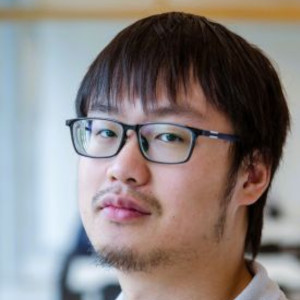
Jixiang Qing
Lancaster University
Jixiang is a lecturer in the School of Mathematical Sciences at Lancaster University. Prior to joining Lancaster in October 2025, he was a postdoctoral researcher at Imperial College London and earned his PhD in engineering from Ghent University in Belgium. His research focuses on sequential decision-making, machine learning, and their practical applications.

Hamza Sakout
Freelancer
Hamza is a Lancaster University Graduate from the Bachelor in Computer Science. He did his thesis on "Large Language Models as Software Development Bots" by integrating LLMs into the Software Development Life Cycle, and won the LEISYS 2025 Student AI award. Hamza is a creative, hard-working and humble polymath who believes in continuous self-development and providing value to the world. He has gathered experience in different fields, and chose to specialize in Artificial Intelligence. Hamza is currently dedicating himself fully to his passion for freelancing, entrepreneurship and the startup scene.

Teoh Yun Xin
Sunway University
Yun Xin is a Lecturer at the School of Computing and Artificial Intelligence, Faculty of Engineering and Technology, Sunway University, Malaysia. Her research focuses on the application of artificial intelligence, medical image analysis, biomechanics, and digital health technologies to improve musculoskeletal healthcare. She is currently leading projects on AI-based risk profiling of chronic knee pain in Malaysian women and the development of digital solutions for personalized intervention planning. Her work integrates machine learning, medical imaging, biomechanics, and clinical data to advance precision healthcare and healthy ageing. She has collaborated with multidisciplinary teams across academia, healthcare, and industry. Her broader research interests include knee osteoarthritis, plantar pressure analysis, and AI-driven healthcare innovation. Through research, teaching, and community engagement, she aims to translate emerging technologies into practical solutions that improve quality of life and healthcare outcomes.

Yuqian Wan
Lancaster University College at BJTU
Yuqian is a Lecturer in the postgraduate programme of Logistics and Supply Chain Management at Lancaster University Weihai Campus, where she also serves as Interim director for Employability and Industry Outreach. She earned her PhD at the University of Bremen, focusing on digitalisation of maritime logistics. During her Master’s studies at Beijing Jiaotong University, she researched benefit-sharing mechanisms in less-than-truckload logistics collaboration. Her academic interests center on maritime logistics digitalisation, integration of industry practices into higher education, and innovative approaches to enhancing student engagement in teaching and learning.
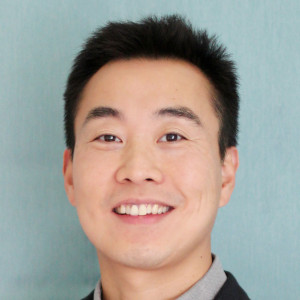
Jian Wang
Lancaster University Leipzig
Jian is Associate Professor in Entrepreneurship and Strategy at Lancaster University Leipzig. His recent research focuses on science funding, organization of science and innovation, creativity and novelty, and science-technology-linkages. Another research interest of his is to develop innovative analytical methods for studying science and innovation, drawing from fields of bibliometrics, statistics, and machine learning. Jian earned his Ph.D. degree in Public Policy and a Master of Science degree in Statistics, from Georgia Institute of Technology (USA), and a Master of Economics degree in Applied Economics and a Bachelor of Arts degree in Journalism, from Tsinghua University (China). He currently serves as an advisory editor for Research Policy and editorial board member for Research Evaluation.
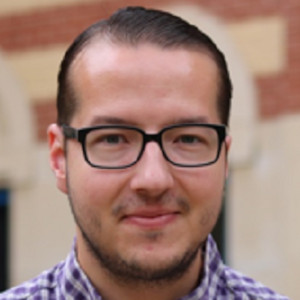
John Alasdair Warwicker
Lancaster University Leipzig
John received his Ph.D. degree in Theoretical Computer Science from the University of Sheffield, UK. He is currently an Assistant Professor in Computer Science within the School of Computing and Communications at Lancaster University Leipzig, Germany. His research interests include optimisation-based approaches for analysing problems from Machine Learning, including Neural Networks, and analysing the performance of heuristics and hyper-heuristics.

Christian Zinke-Wehlmann
Institut für Angewandte Informatik @ Leipzig University
Christian is a sociologist with a PhD in computer science. As the director of the Competence Center KMI (Artificial Human Intelligent), he conducts research at the intersection of digital technology, education, work, and services. His work aims to understand these interfaces and develop innovative solutions that harness the power of digital technology to enhance education, optimize work processes, and improve services in our increasingly connected world.