We welcome applications from the United States of America
We've put together information and resources to guide your application journey as a student from the United States of America.
Overview
Top reasons to study with us
1
1st for Teaching Satisfaction (Criminology)
The Guardian University Guide (2026)
3
3rd for Student Satisfaction (Criminology)
The Times and Sunday Times Good University Guide (2026)
10
10th for Criminology
The Times and Sunday Times Good University Guide (2026)
Ready to see the world of crime and criminal justice differently? Join us to unpick theories and perspectives that explore today’s most pressing crime-related issues. You will study a wide range of topics and have the opportunity to connect with local agencies such as the police and the prison service. Work with our specialist careers advisors to plan your future in the criminal justice system and beyond.
Why Lancaster?
Critically explore crime and justice: A thought-provoking degree that examines crime through a social justice lens
Exceptional academic support: Work closely with engaged lecturers who value your ideas and are committed to helping you grow as a criminologist
Build connections: Network with experts from NGOs, charities, law enforcement, and other criminal justice organisations
Unlock your career potential: Tailored career advice to discover diverse pathways and practical steps you can take to achieve your goals
Work with Leading Experts: Our academics advise the United Nations and the EU, influence drug policies in the UK and overseas and work with national and local criminal justice agencies
Explore today’s challenges on topics such as drug-related crimes, sex offences, organised crime, and human rights violations
A rich history of Criminology
Lancaster is a city that has criminal justice at its heart. From the medieval period to contemporary times, the Castle in Lancaster has served as an assizes court, crown court and a fully functioning prison. From the infamous 1612 trial and execution of the ten people accused of witchcraft to the more recent exoneration of accused terrorists the ‘Birmingham Six’, Lancaster Castle has been the site of both persecution and justice. Past or present, this is not dramatised or romantic crime. This is real life: brutal, saddening, enraging, uncomfortable, but fascinating.
Criminology at Lancaster has a long and distinguished history informed by this past but looking strongly to the future of crime and punishment in the United Kingdom and internationally.
A critical view of crime and punishment
The city as a centre for criminal justice and injustice creates a strong sense of what our degree is about. On this course, you’ll look critically at the social, cultural, political, and economic contexts of crime and criminal justice, as well as viewing challenges through a social justice lens. You will examine how crime is portrayed in the media and popular culture and explore how deviancy is rendered as a criminal act and how activism and protest can be demonised.
You will learn to untangle the complex relationship between society, crime, and the criminal justice system and explore what alternative approaches to justice might look like now and in the future.
Together, we will investigate the historical, present, and future dimensions of crime—spanning urban streets to digital spaces in national and global perspectives.
Questions of justice
Our sense of who we are as a society revolves around our definitions and relationship with crime. Who decides what counts as ‘wrong’? Why is ‘justice’ such a contested word? Why do some communities have higher rates of crime than others? What does it mean to ‘police’? Why do well-intended preventative campaigns fail to reach many people?
You will engage with questions of morality, explore philosophical debates, and undertake deep self-reflection to focus on the meanings, values and judgements that frame crime. In doing so you will learn to ask and answer such difficult questions with evidence and confidence.
Engage with experts
Criminology at Lancaster takes you through landmark theories to the critical evaluation and analysis of statistics, to detailed studies of processes and pathways through the criminal justice system. You will be taught by an internationally recognised team of researchers who lead in shaping both criminal justice policy and the academic field of criminology.
Our expertise and research inform our teaching and give you an insight into the ways policies and laws are influenced and changed.
Topics might include:
Human rights
Asylum and migration
Green criminology
Cyber security and policing
Gendered harm
Media and popular culture
Youth justice
Crime and power
You will also gain insights directly from visiting speakers. Previously students have listened to talks from Victim Support, a Restorative Justice coordinator from Lancashire Constabulary, a Detective Inspector working in domestic abuse and a 'professional burglar' who turned his life around and now advocates for crime prevention and community support.
Great student experience, great student support
At Lancaster we pride ourselves on providing excellent student experience and support. It is at university that you will build up not only your professional networks, but equally important your confidence and your social group. For example, you can join the Criminology Society and take part in a wide variety of events, ranging from academic and career-informed activities that complement existing criminological knowledge, to fun and social nights designed to help foster a strong sense of community.
Our historic city offers great opportunity for rewarding experience. You may take part in field trips to the Castle and visit its fascinating former prison, magnificent Crown Court and Lancashire Police Museum. The supportive and personalised experience we offer is designed to make your time with us memorable, enjoyable and successful.
Employers value experience and creating new connections is vital to your future. We’ll introduce you to professionals at NGOs and charities, as well as local criminal justice agencies such as Lancashire Constabulary, the Police Federation for England and Wales, Police Scotland, HMP Lancaster Farms, HMP Thorn Cross, prison education providers Novus, and Probation and Youth Justice.
We’ll also help you access a variety of placement and volunteering opportunities. Recent students have undertaken roles within West Mercia Police, HMP Lancaster Farms, Partners of Prisoners (POPS) and Family Support, Red Rose Recovery, Global Telemetrics (Security Liaison) and Enterprise.
Careers
Our Criminology degree creates opportunities to work in a wide array of exciting and impactful careers, offering the chance to work at the intersections of justice and social change.
Alongside real-world experience, you’ll gain the professional skills that employers value. In addition to your comprehensive knowledge of crime and criminal justice in a range of contexts you will be a strong communicator with the confidence to speak in public, put forward an argument and make sound decisions. Able to think critically, carry out research and analyse data, you will be a valuable asset in any professional role.
Your degree will prepare you for roles with criminal justice agencies (the Police, Prison Service, the National Probation Service), the Home Office, the Department for Health, Social Services, charities and the Youth Offending Service.
A dedicated careers team is on hand to help you make decisions about your future, and we’ll explain how to access professional bodies and criminal justice organisations. You will graduate with the skills, experience and contacts you need for a rewarding career within the criminal justice system and beyond.
Our graduates have gone on to roles with:
Criminal justice agencies (the police force, HM Prison Service, the National Probation Service, GSL UK)
The Home Office & Ministry of Justice
The Department for Health and Social Care
Local Government
NHS trusts
Charities
Youth offending services
Legal and Consulting firms
Banks and financial institutions
You may also choose to go on to further study or gain professional qualifications that will take your career further.
Careers and employability support
Our degrees open up an extremely wide array of career pathways in businesses and organisations, large and small, in the UK and overseas.
We run a paid internship scheme specifically for our arts, humanities and social sciences students, supported by a specialist Employability Team. The team offer individual consultations and tailored application guidance, as well as careers events, development opportunities, and resources.
Whether you have a clear idea of your potential career path or need some help considering the options, our friendly team is on hand.
Lancaster is unique in that every student is eligible to participate in The Lancaster Award which recognises activities such as work experience, community engagement or volunteering and social development. A valuable addition to your CV!
Find out more about Lancaster’s careers events, extensive resources and personal support for Careers and Employability.
Careers
Find out about some of the careers our alumni have entered into after graduation.
Entry requirements
These are the typical grades that you will need to study this course. This section will tell you whether you need qualifications in specific subjects, what our English language requirements are, and if there are any extra requirements such as attending an interview or submitting a portfolio.
Qualifications and typical requirements accordion
BBB
24 Level 3 credits at Distinction plus 21 Level 3 credits at Merit
We accept the Advanced Skills Baccalaureate Wales in place of one A level, or equivalent qualification, as long as any subject requirements are met.
DDM
A level at grade B plus BTEC(s) at DM, or A level at grade C plus BTEC(s) at DD, or A levels at grade BC plus BTEC at D
30 overall with 15 points from the best 3 HL subjects
We are happy to admit applicants on the basis of five Highers, but where we require a specific subject at A level, we will typically require an Advanced Higher in that subject. If you do not meet the grade requirement through Highers alone, we will consider a combination of Highers and Advanced Highers in separate subjects. Please contact the Admissions team for more information.
Merit overall
Help from our Admissions team
If you are thinking of applying to Lancaster and you would like to ask us a question, complete our enquiry form and one of the team will get back to you.
Delivered in partnership with Lancaster University International Study Centre, our one-year tailored foundation pathways are designed to improve your subject knowledge and English language skills to the level required by a range of Lancaster University degrees. Visit the Lancaster University International Study Centre for more details and a list of eligible degrees you can progress onto.
Contextual admissions
Contextual admissions could help you gain a place at university if you have faced additional challenges during your education which might have impacted your results. Visit our contextual admissions page to find out about how this works and whether you could be eligible.
Course structure
We continually review and enhance our curriculum to ensure we are delivering the best possible learning experience, and to make sure that the subject knowledge and transferable skills you develop will prepare you for your future. The University will make every reasonable effort to offer programmes and modules as advertised. In some cases, changes may be necessary and may result in new modules or some modules and combinations being unavailable, for example as a result of student feedback, timetabling, Professional Statutory and Regulatory Bodies' (PSRB) requirements, staff changes and new research. Where the course offers optional modules, they may not all be available every year.
Explore the dynamic field of Criminology where you will encounter a range of theoretical perspectives and debates that inform the discipline. Do you think that criminals are born bad? Or do they learn this behaviour from their families or as a product of where they grow up? We’ll debate it all!
You will study both positivistic and social analyses of crime and criminalisation and learn to evaluate criminological theory in relation to a range of intellectual movements. You’ll evaluate these theories in relation to academic scholarship, empirical evidence, popularity and application in crime policy and practice, and in relation to their geographical, social, cultural and historical locations.
Criminology and Law are two of the disciplines that underpin our criminal justice system (CJS). You will explore the interplay between these subjects by learning about the concepts, principles and processes of the CJS in England and Wales. You will gain an understanding of the structure and organisation of the CJS then find out about the different roles, functions and working practices of the main agencies that operate within it.
The notions of ‘justice’ and ‘injustice’ will feature heavily in this module. As a student of Criminology, you will have an opportunity to think critically about the powers and decision-making processes of the CJS, as well as those that are subject to them, as potential perpetrators, as offenders and as victims.
We will also hear from individuals on both sides of the CJS fence and you will consider how the issues we discuss in the classroom play out in practice.
How do we learn about crime and criminals? Discover the methods criminologists use to study crime and the criminal justice system, moving beyond everyday assumptions and media portrayals.
Using a range of topics within criminology as exemplars, you will learn to:
formulate research questions
conduct literature reviews
design studies
analyse findings
You’ll develop the skills to think like a criminologist and be prepared for deeper engagement with the research field as you progress with your study of criminology.
Explore the intersection of crime, deviance, and popular culture in this module. You will focus on how crime is represented in entertainment and can be consumed for pleasure. Through critical analysis of films, television shows, literature, podcasts, and social media, you will examine how the portrayal of criminal acts, law enforcement, and justice shape societal understandings of these issues.
You will consider the role entertainment plays in reinforcing or challenging dominant narratives surrounding crime, examining how popular culture serves as both a mirror to societal anxieties and a mechanism for cultural influence.
Critically engaging with the concept of deviance, you'll question how popular culture either reinforces or disrupts accepted social norms. Through a combination of theoretical readings, media analysis, and case studies, you will analyse entertainment as a site of both reproduction and resistance to dominant discourses.
To understand crime, criminal justice and criminology in the 21st Century, we need some understanding of how these have evolved through history.
You’ll encounter a brief history of crime and responses to crime, from the 19th Century to the present day. You will then be introduced to a cross-section of punishment practices in history, from the Bloody Code onwards.
The module takes advantage of Lancaster as a historical city of crime and (in)justice. From the witch trials to our history of slavery; from the castle as a local prison to its current home of Lancaster Crown Courts, you will gain an introduction to the history of crime, punishment, and criminal justice policy in Britain.
Optional
optional modules accordion
How can the world we live in be understood and why does it often feel unequal?
This module introduces ways of looking beneath the surface of everyday life to understand how power, inequality and social norms shape what comes to be seen as normal, fair or just. You will explore how ideas about success, poverty, gender, race and belonging are formed, challenged and changed over time.
Rather than focusing on abstract theory, you will connect key ideas directly to contemporary life, from media narratives and political debates to everyday experiences. You will be encouraged to question taken for granted assumptions, recognise less visible forms of power, and understand how social problems come to be defined in particular ways.
By the end of the module, you will move beyond describing social issues to recognising how they are produced, sustained and contested in society.
Your first theory module will introduce you to two key areas of study in psychology, developmental psychology and neuropsychology, plus the underpinning concept of individual differences. Developmental Psychology looks at change over time, using theories of learning (such as those from Piaget and Vygotsky) as a focus for discussion. Neuropsychology takes us into the realms of the brain and mind, where you will begin to understand the complex interplay between the brain and behaviour in real-world contexts. You will learn to use primary sources of knowledge - peer-reviewed journal articles presenting scientific theory and evidence - to enrich your thinking and talking about psychology and develop your critical evaluation skills.
The English language is not set in stone. It has changed over time and it differs depending on who is speaking it and where it is spoken. These facts are often ignored in the many myths surrounding its ‘proper’ form and use. This module will give you the knowledge to challenge those misconceptions by examining the history and varieties of English and attitudes toward it.
You will gain an insight into the way English became standardised and into the complex role that prescriptivism has played in shaping it. You will come to appreciate that English is ever-changing as its grammar and vocabulary continue to evolve in new directions.
You will also explore how and why the places where English is spoken – in the UK and around the world – and the people who speak it influence the many forms it takes.
In order to ask questions about the way language works in society, how it connects with the mind/brain or how it is acquired by computers, you first need to know something about the foundational elements of language. This module will introduce you to the building blocks of human language.
You will learn about sounds in language, how they are pronounced and how they can be combined to form words. We will teach you about the way words themselves are structured. You’ll also explore how language puts words together to build sentences of different types and how sentences express meaning, in isolation and in context.
By the end of the module, you will be familiar with the essentials of phonetics, phonology, morphology, syntax, semantics and pragmatics. This knowledge will enable you to study those areas in more detail, as well as other areas of linguistics or English language studies which build on them.
We begin your historical training with the cornerstone of historical research: evidence. What counts as evidence? It comes in many forms:
Chronicles and law codes
Letters and diaries written by people in the past
Visual records, from paintings to photographs, film and maps
Aural records such as music and oral histories
The physical remnants of past worlds, from coins to castles and burial places
Each source has a context we need to uncover. Who produced the source and why? Who would have seen or heard it and what was their reaction? From here we can learn what questions to ask of our evidence. How can it illuminate past worlds?
Our expert historians guide you through hands-on training, building your skills in drawing value from historical evidence.
The medieval and early modern periods witnessed immense change. This module will introduce you to the key themes, sources, and methods you need to understand the patterns of change and continuity around the world over a period of more than a thousand years. The shift from a warm climate in the medieval period to a colder one in the early modern period may help us explain patterns of life in a world where most people depended on subsistence agriculture.
Huge transformations were also wrought by the movement of people, diseases, animals, and goods, with events such as the Black Death in Europe and smallpox epidemics in the Americas decisively changing how people lived, and how they related to each other. At the same time, political and religious ideas can help us to understand how and why people organised their societies in the ways they did, and how they understood their relationships to the other societies around them.
To reckon with these changes - and many more - you will study a wide range of themes, from environment to health and disease, gender, culture, media, politics, religion, and science. Meanwhile, you will master some of the key approaches and methodologies that historians now use to interpret the fascinating patterns of continuity and change in early modern life. Moreover, discover a wealth of primary sources, ranging from: chronicles and letters; poetry and literature; codes of law; burials and material culture; along with printed pamphlets, books, and newspapers.
From questions about truth, justice, and knowledge to debates over freedom, power, and human purpose - how has philosophical inquiry shaped cultural, political, and scientific life across centuries?
In this module you will explore the major ideas and traditions that have guided the development of Western thought. Specific thinkers examined will vary from year to year, but they will include philosophers whose ideas have helped shape philosophical viewpoints, categories and boundaries in the western philosophical tradition. You will be encouraged to think about the problems and limitations of different thinkers’ approaches, and their impact on the way we practice and understand the boundaries and scope of philosophy today, asking questions of them such as:
How did these thinkers conceive of philosophy and its task?
How did they conceive of being and reality?
How did they understand truth and how did they think it could be discovered?
How did they set the agenda for philosophical debates in the West from the past to the present?
By the end of this module, you will have learnt to think with, rather than about some of these influential thinkers, while reflecting on how the concepts that forged the past continue to frame the challenges of our present and the possibilities of our future.
What is real, how can we know, and how can we check our reasoning? In this module you will study philosophical tools for reasoning and arguing (critical thinking) and discover fundamental philosophical questions about knowledge (epistemology) and the nature of reality (metaphysics).
In studying critical thinking, you will learn methods of constructing and analysing arguments and acquire basic logical terminology.
In exploring epistemology, you’ll discuss questions such as: what exactly is it to ‘know’ something? Can we know anything at all? Are there alternative knowledges?
In metaphysics, you will consider questions such as: what is the fundamental nature of reality? How are we to understand cause and effect, necessity and contingency, time and space, personal identity?
You will gain the means to think about some of the deepest and broadest philosophical questions we can ask. And you will be equipped with critical thinking tools to face the contemporary challenges of a globally connected world.
Gain a nuanced understanding of the forces driving change in the international system and their implications for global order and human security. You will acquire the tools to navigate and contribute to a complex and interconnected world. The module moves beyond traditional state-centric perspectives to explore the complex interplay of actors, structures and processes shaping our world.
You will delve into global governance and address the emergence of new security threats, while tackling shifting power-dynamics at both the national and international level. Throughout the module, you will engage with a variety of case studies that illustrate the complexities of these global issues.
Through debates and discussions, you will engage in critical thinking, develop your communication skills, and grapple with the ethical and political dimensions of global challenges.
Discover the core concepts, theories and historical contexts that shape the field of International Relations. You will gain an understanding of the state system, sovereignty, power, anarchy and other key concepts that underpin the discipline. You’ll also explore the history of international relations, from the emergence of the Westphalian system to contemporary global challenges.
Examining the major theoretical traditions, including Realism, Liberalism and Constructivism, you’ll critically assesses their strengths and weaknesses in explaining current international dynamics. Through the analysis of historical and contemporary case studies, you will develop the essential analytical tools to understand and engage with the complexities of world politics.
Learn how to analyse highly contemporary political events and trends, and develop the vital critical skills required to be able to put them into context. You will also discover how to relate these issues to core empirical questions and debates within academic research on politics. Taking a problem-based learning approach, you’ll use evidence to evaluate competing explanations for recent political developments.
These may include:
Democracy and elections
Political leadership
The state and globalisation
Structural inequalities
Political institutions
Public opinion and protest.
Lancaster’s politics experts have extensive expertise across different regions of the globe and we are quick to respond to contemporary global political trends. This means you will be able to directly connect current political events and your own political interests. You will learn to critically reflect on the different types of empirical evidence political experts use to study politics, including polling, rhetoric, discourse and case studies.
How do sociologists decide what to study and how to study it? This module introduces you to key debates in sociological research, exploring how different perspectives shape the questions we ask and the methods we use.
You'll examine objective vs subjective positions, as well as feminist and decolonial critiques that have challenged traditional research approaches to sociological research. Through discussions and exercises, you'll begin to develop your own research interests and approach, reflecting on what it means to conduct sociological enquiry.
By the end of the module, you’ll have a solid foundation in the principles of sociological research and a clearer sense of how to turn your questions about society into meaningful research practice.
How are your personal experiences connected to broader social forces? This module introduces you to the ‘sociological imagination’—a way of thinking that helps you make sense of the relationship between individual lives and society.
Drawing on classic and contemporary sociological debates, you’ll explore key questions about individualism, institutions and social change. You'll learn to critically analyse how biography and history intersect, engaging with foundational ideas in the discipline.
By developing your own sociological take on these themes, you’ll gain essential skills in critical thinking, argumentation and analysis—preparing you for further study and enabling you to see the world in new and insightful ways.
Digital media both displaces and complements ‘traditional’ media, in ways that complicate the current media landscape and challenge some of our most fundamental media concepts.?This module explores how this happens through the integration of “old” and “new” media and ongoing transformations in the media industries.
We examine how relations between consumers and producers are changing as the boundaries of media cultures are shifting, producing intercultural exchange but also fragmentation and radicalisation.?This module invites students to investigate their everyday digital media use and reflect on the expansion of digital media, its potentials and its pitfalls.
What does it mean to study media today? In this module, you’ll be introduced to major debates, theories and thinkers in studying media and culture.
You will encounter a diverse range of material from different media, including: television, film, news, advertisements, social media, video games and more.
You will explore the intersections between our cultural environment and our identities, aspirations, beliefs and value systems, to develop essential skills in critical thinking and analysis.
Core
core modules accordion
This module introduces you to the scholarship in criminological theory and the sociology of deviance from the nineteenth century to the present.
A unifying theme is the relationship between the problem of social order and strategies of social control as this has been conceived since the late nineteenth century. You will learn about the social and political context from which these various theories have emerged as well as their place within the intellectual development of Criminology.
This module will explore questions such as:
How can we know about the true extent of crime?
Are official data sources valid and reliable in informing crime-related policy?
Can we predict future offending behaviour?
How should we evaluate crime reduction programmes?
By the end of the module, you will have some of these answers.
You will be learning and working with different data sources related to crime and criminal justice, exploring data from police-recorded crime, the Crime Survey for England and Wales and criminal justice statistics from the courts.
You will develop highly valuable skills in data-handling and analysis during the computer workshops. You do not require any previous knowledge of maths or statistics. All you need is the willingness to learn and continuous practice.
Research provides an important means of producing knowledge and evidence within Criminology. It also contributes to the planning and evaluation of policies and provisions operating within the criminal justice system (CJS); an area of interest for criminologists. Focusing on real-world research in the ‘field,’ you will study the theoretical foundations of how knowledge and evidence is understood and produced and how this underpins the methods adopted by researchers.
You will explore the methods commonly used in criminological research such as:
Quantitative questionnaires
Evaluation and randomized control trials (RCTs)
Qualitative interviews
Ethnography
New innovative creative methods
Participatory action research
You will be able to engage critically with methodological debates within the field of Criminology and develop your own practical research skills.
Optional
optional modules accordion
In this module you will focus on the criminal justice response to children in conflict with the law.
The prevalence and nature of youth crime has been a persistent concern for society and is regularly subject to media and political debate. You will examine trends in youth justice policy as well as various possible responses to offending behaviour. You’ll focus particularly on the tension between conceptualising individuals as 'children in trouble' or 'children in need' and an explore how this shapes youth justice policy and practice.
Whilst the current focus on ‘child-first’ youth justice highlights the need to remove the label of ‘offender’, you will examine how far a ‘child-first’ approach is applied equally to all children. You will undertake a critical exploration of why some children continue to be stubbornly over-represented in the youth justice system and what efforts at diversion and decriminalisation might look like.
Many commentators claim that organised crime is one of the greatest problems facing contemporary societies. Law enforcement officials around the world have reported a significant increase in the range and scope of international criminal activity since the early 1990s.
Worldwide shifts in social, political and economic arrangements- often described as ‘globalisation’ - have opened up opportunities for organised crime groups. The extent of groups involved in transnational organised crime (TOC) and the profits made means TOC has become a priority area for governments around the world.
This module aims to provide you with knowledge and understanding of:
The range, extent and nature of cybercrime in the 21st Century.
The role of the Internet and other ICT in criminal networking, planning and communication for both cyber (online) and 'traditional' (offline) crime.
The challenges inherent in responding to cybercrime and online aspects of traditional crime and criminality.
Criminal justice and other (e.g. personal and private security) responses to cybercrime and criminality.
The application of established criminological theories to cybercrime and online criminality.
Explore a range of topics and perspectives related to Contemporary Issues in Policing. This module will cover three key core areas:
The role of the police in a contemporary and historical context
Key policing concepts
Contemporary issues related to policing in the UK
You will develop an understanding of contemporary issues in policing in the UK and critically consider the role of police officers within the criminal justice system. You’ll gain a critical understanding of key policing concepts such as police power, accountability and ‘cop culture’ and interpret theories in the context of policing.
The landscape of financial crime has dramatically shifted in recent decades, becoming a pervasive threat to economies worldwide and legal systems are constantly challenged to adapt. In this module you will delve into the core aspects of this complex field, specifically: fraud, money laundering, terrorism financing and the increasingly intertwined relationship between financial crime and cybercrime, where technological advancements often outstrip regulatory capabilities.
You will analyse how these crimes operate, including where appropriate, the implications of technology - cryptocurrencies, ransomware, dark web on these crimes - emphasising the inherent difficulties in effective legal enforcement.
In this module, you will gain a comprehensive understanding of the limitations of global and domestic regulatory frameworks, engage in critical analysis of leading cases and statute. You’ll acquire the knowledge and skills necessary to navigate the challenges of financial crime prevention and detection, while acknowledging the ongoing struggle of law to effectively regulate these activities.
The future of state-funded welfare is one of the most pressing social questions of our time. This module explores the history, purpose and politics of welfare states, examining what social welfare is, who it is for and how it should be funded and delivered.
You will consider the social and political debates that have shaped social welfare and trace their development over time. Topics covered may include education, health, housing, social security and unemployment. You will explore how welfare systems are funded, managed and organised and analyse the impact of social welfare cuts on poverty and social inequality.
The module also examines the moral and political tensions within welfare debates, such as distinctions between ‘deserving’ and ‘undeserving’ recipients. Engaging with diverse sources—including academic texts, policy reports, and media—you will develop critical insights into the past, present and future of welfare provision.
How many advertisements have you already seen today? From moving billboards to advertisements between games on your phone - advertising is everywhere.
How many advertisements have you already seen today? From moving billboards to advertisements between games on your phone, advertising is everywhere.
In this module, you will learn how advertisers use language, visuals, sound and music to influence behaviour. You will discover how to differentiate advertising from marketing by examining hard and soft selling, influencer advertising and the role of “prosumers” on social media. You will explore consumer research to ask what makes a good advertisement. Rich examples show how advertising has borrowed from prose, poems and plays.
You will explore aspects of language including:
Phonetics (sounds in a language)
Stylistics (linguistic analysis of literary texts)
Pragmatics (meaning in context)
By the end of this module, you will be able to analyse the creative use of language in advertisements, understanding the role that advertising plays in wider marketing efforts and reflecting on its uses in your future professional and personal lives.
In this examination of the evolving landscape of global power, we identify the forces challenging the world’s leading nations and explore the fluid nature of influence in the 21st century.
We will analyse the shifting balance of power, explore the relative decline of traditional superpowers and the simultaneous rise of new actors on the global stage.
You’ll be encouraged to consider how economic, military, and cultural influence is being reconfigured in a multipolar world, reshaping traditional understandings of world order. Crucially, we will also analyse the internal and external pressures these powers face, form rising regional actors, to the evolving nature of global threats, and the erosion of traditional power structures.
Through different case studies and theoretical frameworks, you will gain a nuanced understanding of the complex interplay between rising and established powers and the implications for global stability and future orders.
This module offers a critical introduction to the complex political landscapes of regions in the Global South, exploring how historical, economic and social forces have shaped contemporary states and societies.
You will examine colonial legacies and their lasting influence on political institutions, and the impact of external interventions on regions. The module also investigates the consequences of neoliberal economic reforms, the challenges faced during democratization processes, narratives of ‘development,’ and the dynamics of armed conflict and peacebuilding.
Consideration is given to grassroots activism as well as the role of regional integration and cooperation in shaping political and economic outcomes. Through these themes, you will develop a sophisticated understanding of power, resistance and development in the Global South.
Explore gender through a transnational and decolonial approach, as this module examines its intersections with race, class, nationality, sexuality, disability, religion and the environment.
You will analyse historical and contemporary examples from around the world, engaging with key debates that shape feminist research and activism. Drawing on diverse feminist perspectives, including Black, Indigenous and queer critiques, the module will challenge you to think critically about complex topics such as:
Sex work
Sexual violence
Islamophobia
Transgender rights
Reproductive justice
Ecofeminism
Migration
The course also brings these perspectives and positions to bear on what it means design, conduct and reflect the researcher’s positionality in the processes and practices of qualitative research. Through these activities, you will explore how feminist theories connect with lived experiences and shape struggles for social justice.
Our everyday lives are saturated by images of all kinds. This module will introduce you to some key ‘ways of seeing’ our world of images. We will explore questions such as:
How are images made, who gets to produce them and, importantly, from whose point of view?
How do pictures circulate?
How do viewers read and interpret images?
Who gets to look and through whose eyes?
How do these processes and practices relate to power?
We’ll consider these questions in relation to a range of media texts, from photographs and advertisements to television and film.
Core
core modules accordion
Learn about forms and methods of punishment today and historically and consider the place of prisons within this wider context. You’ll explore key theories and perspectives around the justification and limitations of past and present practices as you examine the shift to a prison industrial complex.
You will learn to ask key questions such as:
What constitutes ‘punishment’?
How have prisons evolved, and what perspectives have influenced carceral projects nationally and internationally?
Who is most likely to be punished or imprisoned?
You will also question who is most likely to be subject to punishment or imprisonment and how this relates to wider social inequalities and demographic experiences of social control.
Throughout the module you will critically consider the role of reformative approaches to punishment as well as abolitionist perspectives on prisons and restorative and community alternatives to punitive punishment.
Optional
optional modules accordion
Green Criminology is the application of Criminological thought (concepts, methods, theories etc.) to environmental harm. In this module, you will engage with the increasing awareness of the damage contemporary industrial society inflicts on the natural world - and the urgent need for effective responses and solutions to environmental problems. You’ll focus on a range of environmental harms, whether or not subject to criminal control and you will examine society’s attempts to control them.
A relatively recent addition to criminology, Green Criminology draws on established traditions of examining ‘crimes of the powerful’ and focuses on a zemiological (harm-centred) perspective rather than legalistic definitions of crime. You will learn about the theoretical roots of this approach based on Ulrich Beck’s ‘Risk Society’, 'ecological Marxism' and theories of criminalisation and crime control.
An engaging and highly relevant module, Drugs, Crime and Society examines the nature and extent of drug taking in the UK and beyond.
We will:
explore the difficulties of researching hidden populations, like drug users
engage with theories of drug use from a sociological, psychological and cultural perspective
consider global and national drug markets
investigate the links between drugs and crime
evaluate policing responses to drugs
You will be taught by research-active lecturers who will introduce you to the latest research in this field and contemporary debate. For example, you might study current research and publications concerning cannabis cultivation, world markets, and drug distribution among friends (also known as ‘social supply’).
This module focuses on the crimes that power makes possible. Criminological theory and research has traditionally prioritized the crimes of the powerless over and against the crimes of those that make laws, wield influence and capital or authorize State violence.
As such, this module will introduce you to theory, research, and case-studies on corporate and white-collar crimes, as well as state crimes like genocide and torture, in order to provide an analysis of the commission and punishment of such crimes.
Engage with the often-neglected, marginalised and overlooked needs of women within the fields of Criminology and Criminal Justice. This module explores how harm and injustice may occur in various ways and at various intersections, as well as the often-blurred boundaries between victimisation and criminalisation. Yet there is also a focus on power, protest and resistance and how this might play out in different contexts.
Indicative topics and perspectives related include:
Women, crime and poverty in an age of austerity
Domestic violence as a pathway to offending and
The experiences of Black and minoritised women
Women in the global south
You will engage with a range of sources that seek to decolonise ‘official’ versions of crime and justice and that encourage learning from lived experience.
Is there such a thing as a ‘hate crime’? Not according to the stance wholeheartedly adopted by the criminal justice system in the United Kingdom within the last two decades. In this module you will study a range of perspectives.
You will examine the notion that hate crime is socially constructed by a range of social actors, such as perpetrators, victims and police officers. In an interactive process, you will define whether an interaction is a hate crime or not.
You will consider the role of legal and academic definitions used to decide if something is a hate crime. You’ll explore these by placing them in an international context
Informed by the latest research, this module critically examines the complex interactions between the media and crime.
Included in this fascinating area of study are:
theories of deviancy, moral panics and newsworthiness
representations of youth and female offenders
sex and hate crimes
revenge pornography and cybercrime
critical explorations of the use of media in the context of crime and criminal justice
We take a multi-disciplinary approach to the module so you will study key media concepts and then discuss how these relate to crime, deviancy and criminal justice issues.
The module assessment is both novel and creative. You will produce a media portfolio - completing a literature review on a topic of your choice - before engaging in a critical analysis using sources such as newspapers, documentaries or social media content. This approach helps to ensure that you develop a practical understanding of media analysis and of the representation of crime in the media.
Our academic staff research extensively in the areas of crime and media. They will use their research to guide lecture content and, where appropriate, will provide you with data from their projects to analyse and discuss.
Examine a range of sex crimes and forms of sexual offending as defined by the law in England and Wales. You’ll consider the wider social context which may explain why some sex crimes are defined by law and how new crimes emerge as the social context changes. Topics explored include:
The extent of sexual offending
How sex crimes are committed
Who the perpetrators and victims are
How sex crimes are dealt with by the criminal justice system, including the experiences of victims who engage with the criminal justice system
In this module you will research a criminological topic of your choice in much greater depth than you have previously.
The module is worth 40 credits, which is the equivalent of two optional taught modules. You are encouraged to undertake your own empirical research, using the methods and techniques you have learned in your second year to generate new evidence. There is also the scope to undertake a desk-based research project if you prefer. The dissertation will span the entire final year of study, but planning will start earlier in the previous academic year.
You will work independently on your project but will be supported by a Criminology academic working in the related field. Academic supervisors will oversee the entirety of your project and advise you on all aspects of it.
You’ll produce a dissertation proposal towards the end of your second year, apply for ethical approval to conduct your research early in your final year and finally, submit your dissertation, which will consist of a series of relevant chapters that collectively address a relevant research question.
Take an advanced look at how sociologists use paradigms, theories and concepts, as this module takes a deep dive into every stage of research.
Each week, you will explore a contemporary sociological study to see how key theoretical ideas shape research—from selecting topics and framing questions to choosing methods, interpreting data and influencing change. You will engage with a range of social theories, critically examining how they inform methodological strategies, site selection, sampling and the dissemination of research.
Running in parallel with your Independent Research Project, this module supports you in refining your conceptual approach and applying theoretical insights to your own work. By the end of the module, you will have developed a deeper understanding of the role of theory in sociological research and gained the confidence to use complex sociological ideas to shape and strengthen your own projects.
How are health and illness shaped by society? This module explores sociological perspectives on health, illness and healthcare, focusing on how social structures and inequalities influence health outcomes.
You will engage with key debates on medicalisation, health inequalities, mental health and the politics of healthcare provision, considering how forms of social organisation shape access to care and the experience of illness. The module also examines how health is central to social reproduction—the processes that sustain daily life and future generations—including the role of care work, reproductive labour and biopolitics.
Drawing on contemporary and historical examples, you will critically analyse how power operates in medicine, how bodies are regulated and categorised and how definitions of ‘normal’ and ‘pathological’ are socially constructed. By the end of the module, you will be equipped to analyse health and medicine as deeply embedded in wider social and political contexts.
We are living in an era of accelerating crises – of democracy, capitalism, environment, and governance itself – that are reshaping the 21st century global order. In this module you will examine these intersecting crises and their uneven social, political and economic impacts.
Moving beyond traditional political analyses, the module offers an original perspective on the complex interplay of technological disruptions, economic instability, health emergencies and geopolitical shifts. Informed by critical public policy, political economy and sustainability debates, the module explores how different actors, from international institutions to grassroots movements, attempt to contain these crises and how they are transformed by them.
Our understanding of power, security and governance is being reshaped by a world where crisis has become the norm. You will assess competing understandings and responses to ongoing challenges through in-depth case studies of specific crises, critical debates around their nature, and forward-looking research about their possible trajectories.
Why do we see gaps between what politicians say on immigration and what they do?
In the United Kingdom and in most of the Global North the movement of people across international borders is a key political issue of our time. The public, researchers and politicians across the political spectrum participate in passionate debates about immigration. Political parties make strong claims about how they would “manage” or “cut” migration, recognising that it is a key voting issue.
Meanwhile, the systematic study of human movement supplies us with robust evidence concerning such questions as:
Is migration desirable or not?
How should we understand its effects on origin and destination countries?
How to address it in policy terms?
Is migration a matter of human rights?
Can border control be reconciled with respect for the rights of people on the move?
The module draws on cutting edge research in political science, international relations and similar fields. It equips you with fact-based evidence so that you can confidently participate in the ongoing societal debate on what it means to inhabit a world on the move.
Fees and funding
Our annual tuition fee is set for a 12-month session, starting at the beginning of each academic year.
There may be extra costs related to your course for items such as books, stationery, printing, photocopying, binding and general subsistence on trips and visits. Following graduation, you may need to pay a subscription to a professional body for some chosen careers.
Specific additional costs for studying at Lancaster are listed below.
College fees
Lancaster is proud to be one of only a handful of UK universities to have a collegiate system. Every student belongs to a college, and all students pay a small college membership fee which supports the running of college events and activities. Students on some distance-learning courses are not liable to pay a college fee.
For students starting in 2026 or 2027, the fee is £40 for undergraduates and research students and £15 for students on one-year courses. Students on some distance-learning courses are not liable to pay a college fee.
Computer equipment and internet access
To support your studies, you will also require access to a computer, along with reliable internet access. You will be able to access a range of software and services from a Windows, Mac, Chromebook or Linux device. For certain degree programmes, you may need a specific device, or we may provide you with a laptop and appropriate software - details of which will be available on relevant programme pages. A dedicated IT support helpdesk is available in the event of any problems.
The University provides limited financial support to assist students who do not have the required IT equipment or broadband support in place.
Study abroad courses
In addition to travel and accommodation costs, while you are studying abroad, you will need to have a passport and, depending on the country, there may be other costs such as travel documents (e.g. visa or work permit) and any tests and vaccines that are required at the time of travel. Some countries may require proof of funds.
Placement and industry year courses
In addition to possible commuting costs during your placement, you may need to buy clothing that is suitable for your workplace and you may have accommodation costs. Depending on the employer and your job, you may have other costs such as copies of personal documents required by your employer for example.
The fee that you pay will depend on whether you are considered to be a home or international student. Read more about how we assign your fee status.
Home fees are subject to annual review, and are liable to rise each year in line with UK government policy. International fees (including EU) are reviewed annually and are not fixed for the duration of your studies. Read more about fees in subsequent years.
We will charge tuition fees to Home undergraduate students on full-year study abroad/work placements in line with the maximum amounts permitted by the Department for Education. The current maximum levels are:
Students studying abroad for a year: 15% of the standard tuition fee
Students taking a work placement for a year: 20% of the standard tuition fee
International students on full-year study abroad/work placements will also be charged in line with the maximum amounts permitted by the Department for Education. The current maximum levels are:
Students studying abroad for a year: 15% of the standard international tuition fee during the Study Abroad year
Students taking a work placement for a year: 20% of the standard international tuition fee during the Placement year
Please note that the maximum levels chargeable in future years may be subject to changes in Government policy.
Scholarships and bursaries
Details of our scholarships and bursaries for students starting in 2027 are not yet available.
The information on this site relates primarily to the stated entry year and every effort has been taken to ensure the information is correct at the time of publication.
The University will use all reasonable effort to deliver the courses as described, but the University reserves the right to make changes to advertised courses. In exceptional circumstances that are beyond the University’s reasonable control (Force Majeure Events), we may need to amend the programmes and provision advertised. In this event, the University will take reasonable steps to minimise the disruption to your studies. If a course is withdrawn or if there are any fundamental changes to your course, we will give you reasonable notice and you will be entitled to request that you are considered for an alternative course or withdraw your application. You are advised to revisit our website for up-to-date course information before you submit your application.
More information on limits to the University’s liability can be found in our legal information.
Our Students’ Charter
We believe in the importance of a strong and productive partnership between our students and staff. In order to ensure your time at Lancaster is a positive experience we have worked with the Students’ Union to articulate this relationship and the standards to which the University and its students aspire. Find out more about our Charter and student policies.
Open days and campus tours
Visit campus and put yourself in the picture at an open day or campus tour.
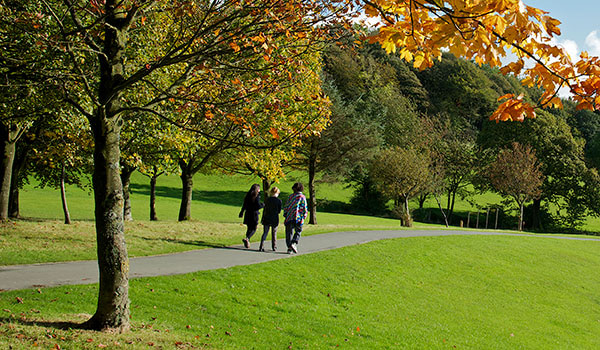
Take five minutes and we'll show you what our Top 10 UK university has to offer, from beautiful green campus to colleges, teaching and sports facilities.
Most first-year undergraduate students choose to live on campus, where you’ll find award-winning accommodation to suit different preferences and budgets.
Our historic city is student-friendly and home to a diverse and welcoming community. Beyond the city you'll find a stunning coastline and the world-famous English Lake District.