Meet some of our tutors in English Literature

Dr Philip Dickinson, Lecturer in Postcolonial Studies and World Literature

Dr Philip Dickinson, Lecturer in Postcolonial Studies and World Literature

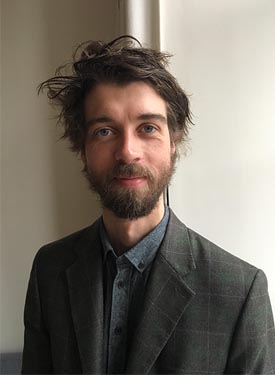
My love of literature really grew during my A levels. I remember reading stacks of books on family holidays — mainly the classics like Dickens and Austen but also more contemporary writers like Ian McEwan or Muriel Spark — whatever I could get my hands on at the school library. At university my horizons widened. I vividly recall reading Toni Morrison and Derek Walcott in my first year, both of whom used language in intense and unfamiliar ways, and accessed new and often painful horizons of experience. My research and teaching at Lancaster revolves around postcolonial literatures, including writing from Africa and the Caribbean, and I am also interested in connecting environmental questions to the legacies of empire and colonialism. Lancaster is the perfect place for me to pursue these interests, given the vibrant research community here exploring place, landscape and transcultural writing. What I most love about Lancaster are the students, who are engaged, committed and always challenging my own preconceptions.

Philip Dickinson's Profile
Professor Kamilla Elliott: Professor of Literature and Media.

Professor Kamilla Elliott: Professor of Literature and Media.

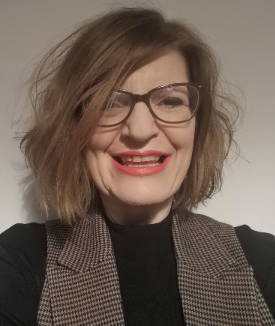
I grew up in a missionary family where daily life revolved around studying the Judeo-Christian Bible. At age 11, I read Shakespeare for the first time, and ran all the way home from school to tell my mother, ‘It’s just like the Bible!’ I still remember her puzzled and slightly disapproving face. My twin passions at school were reading and theatre; after a BA in Mass Communications and Theatre at the University of Colorado, I studied one year of an MSc in Film at Boston University. It wasn’t until relatively late in life, I returned to study literature, first at a night school, and later in the ‘day’ school of Harvard University. For my PhD thesis, I was torn between two topics: Protestant Mariology in American anti-slavery fiction and proto-cinematic techniques in Thomas Hardy’s fiction. I chose the latter and have never looked back, finding joy and constantly new discoveries about literature through the lenses of its relations with other media.

Dr Liz Oakley-Brown, Senior Lecturer in English

Dr Liz Oakley-Brown, Senior Lecturer in English

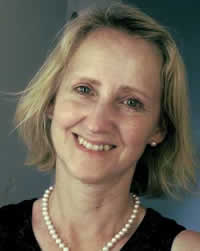
Nearly all of my childhood adventures took place via the written word. Saturday afternoons were often spent with the boarders at Elinor Brent-Dyer’s Chalet School series and I was inspired by Jo March’s writerly ambitions in Louisa May Alcott’s novels. My one act of rebellion at school involved the confiscation of The Man Who Fell to Earth when I should have been reading Great Expectations. My teenage passion for Thomas Hardy’s writing underpinned my desire to study for a degree in English literature. However, as a second-year undergraduate at Cardiff University I took a course which included Edmund Spenser’s The Fairie Queene and I was immediately fascinated by the Elizabethan epic. Almost all of my subsequent research can be linked to this compelling poem and I remain completely captivated by Tudor writing and its particular examination of what it is to be human.

Liz Oakley-Brown's Profile
Professor Catherine Spooner, Professor of Literature and Cultur

Professor Catherine Spooner, Professor of Literature and Culture

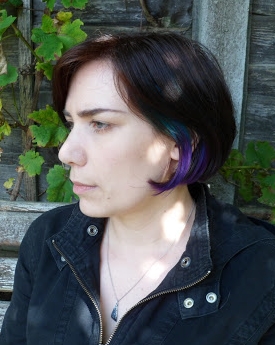
I discovered Gothic aged fourteen via The Cure, and scandalised my parents by dying my hair black and smothering myself in eyeliner. Then at A-level I studied Mary Shelley’s Frankenstein, and realised there was a whole world of Gothic literature out there to enjoy – from Ann Radcliffe to Angela Carter. But I never quite lost sight of the music and fashion that had drawn me to Gothic in the first place. I remain fascinated with the intersections between Gothic literature and film, fashion and popular culture. A typical research day for me might involve close-reading Victorian novels, or scrutinising the imagery used by fashion shoots in Vogue. What I love about Lancaster is that its open-minded, cutting-edge approach allows me to combine both – and share them with my students in classes like ‘Victorian Gothic’, where we use nineteenth-century painting and photography to contextualise fictions of vampires, werewolves and ghosts.

Catherine Spooner's Profile