Health, science, technology

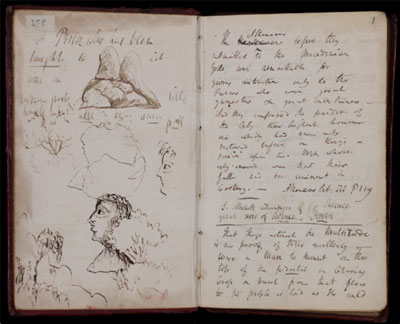
Image from Davy's notebook courtesy of the Royal Institution of Great Britain

Davy Notebooks

The Davy Notebooks Project (2019-24), funded by the Arts and Humanities Research Council and with the help of over 3,800 volunteer transcribers, transcribed Sir Humphry Davy's (1778-1829) entire notebook collection on Zooniverse, the world's largest and most popular platform for people-powered research, between 2019 and 2024. This work forms the basis of the crowdsourced transcriptions presented in this digital edition, alongside images of the notebook pages: Davy Notebooks Project.

Davy was a friend of William Wordsworth, Samuel Taylor Coleridge, Robert Southey, and Lord Byron. His scientific writings inspired Percy and Mary Shelley. He also wrote poetry which remained unpublished but can be read in his notebooks.

Walking for Wellbeing

This AHRC-funded Impact Accelerator Award project produced transformative public experiences, improving participants’ mental health and providing them with access to the cultural, literary and natural riches of the Morecambe Bay area.

Professor Simon Bainbridge (with professional guides) led four walks in places important to Wordsworth’s poetry: Black Combe; Piel Island; Fleetwood; and the Bay itself. Alongside research-informed commentaries, actors read from Wordsworth’s writing, bringing the area’s literature and history to life. The walks were linked to museum and archive-based public sessions held at Wordsworth Grasmere, Fleetwood Museum, and The Dock Museum, Barrow, that gave participants access to cultural materials such as Wordsworth’s manuscript writings about Morecambe Bay.

The walks included families, participants with learning disabilities, and ethnically diverse participants and resulted in creative outputs such as writing by young poets, an exhibition on Wordsworth and Morecambe Bay by mixed-media community group ‘Flax’, and the film ‘Walking for Wellbeing: Around Morecambe Bay with William Wordsworth’, shown at Kendal Mountain Festival. Project partners included Wordsworth Grasmere, Trek Therapy and Mosaic Outdoors.
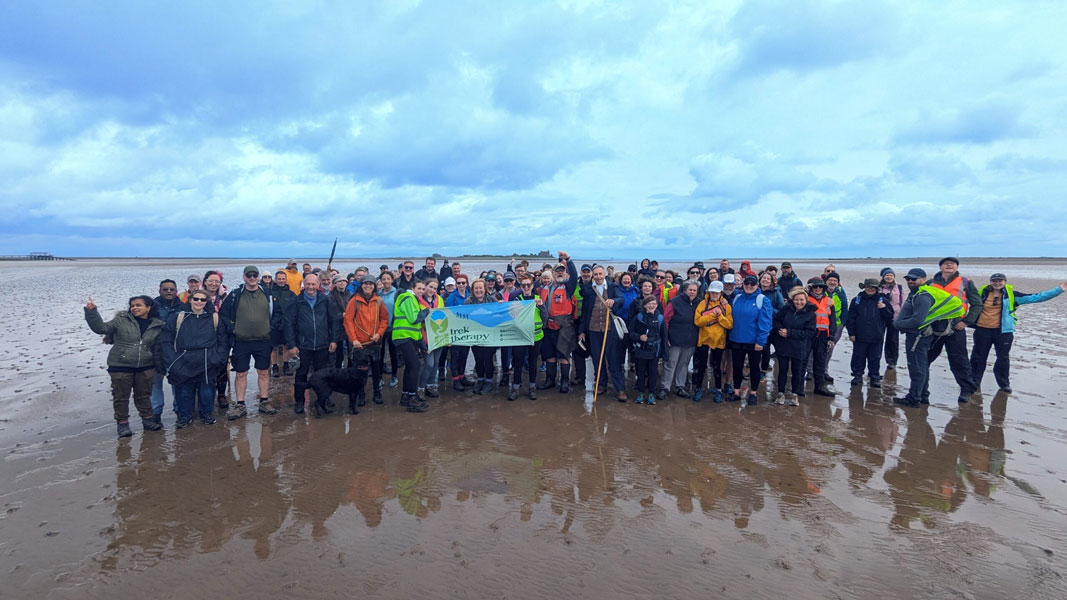
A large group of people on Morecambe Bay beach holding a banner
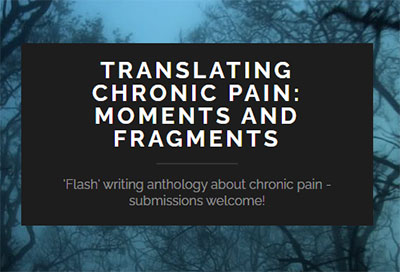
Header from the Translating Chronic Pain website branches of trees with a blue tint and text overlay

Translating Chronic Pain

Translating Chronic Pain: Moments and Fragments is an AHRC-funded online anthology of 'flash' short form writing. Pain can be hard to represent, and many people living with pain can endure a crisis of invisibility. In this online anthology, the short form allows unexpected 'moments and fragments’ and honours a polyphony of voices around pain experience, including experiences without closure. See Translating Chronic Pain: Moments and Fragments – 'Flash' writing anthology about chronic pain – submissions welcome!

dna helix on blue background, biology, ai generated

Future of Human Reproduction

The Future of Human Reproduction is an innovative, interdisciplinary research programme exploring the cultural, ethical, legal and social challenges that will emerge as technological advances fundamentally change the possibilities for human reproduction. Funded by a £1M Research Development Award from The Wellcome Trust, the programme pushes academic boundaries by developing new methods, research agendas and interdisciplinary ways of working to tackle the conceptual and ethical implications of a range of future reproductive scenarios likely to be technologically possible within a generation.

English Literature was one of the disciplines involved in the project and contributed by offering a programme of reading and discussion on (for example) ectogenesis, in-vitro gametogenesis, and genome editing.

Future of Human Reproduction

Writing for Wellbeing project

A creative practice and research initiative led by academics and facilitators from Lancaster University, focusing on journaling, mindfulness, and empowerment.

A notebook next to a bunch of tulips

Project partners

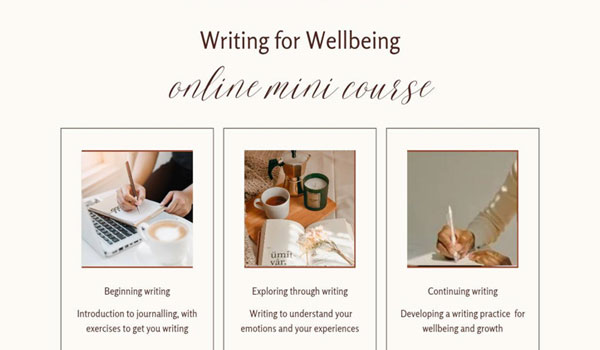
In our ‘Writing for Wellbeing’ initiative, we partnered with the Birchall Trust in Lancaster – which offers trauma-informed support services for survivors – to explore creative practice as adventure, solace and experiment, in an evidence-based practice to ground and support participants.

Screenshot of the flyer for the wellbeing online workshop

Supportive writing spaces

As part of our ‘Writing for Wellbeing’ initiative, we are developing supportive writing spaces where survivors of religious trauma can safely explore their experiences as well as build a sense of hope and post-religious identity through journalling and writing prompts.