

Animal communication has been a fascination of thinkers and scientists since Aristotle. Now, AI translation systems are offering the promise of actual inter-species translation: what could be a platform for a better understanding and support for biodiversity and conservation. Research led by translation scholar Dr Delphine Grass is examining how we can best ensure the interpretation of meanings avoids wishful thinking and exploitation.
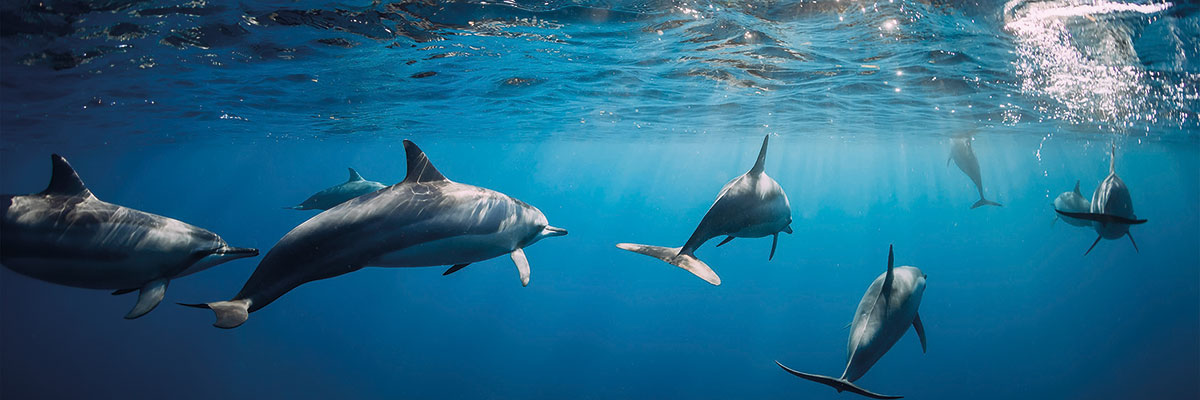
Developments in AI have meant a leap forward in the race to translate the language of animals. The technology’s ability to work with vast amounts of data — and critically, to make comparisons between different types of information in context, not just sounds but weather and the presence of other non-human life — means it can track and identify patterns of responses which might have particular significance.
There’s excitement and a new confidence. Google is pushing ahead with DolphinGemma, AI software trained using 40 years of data to translate the sounds made by dolphins. Project CETI has used AI to show how whales take turns to communicate and use distinctive sequences of clicks to refer to one another. The team has predicted it will have a system for “speaking whaleish” this year. And there’s the promise of rewards: the Jeremy Coller Foundation, as one example, has offered $10 million to the researchers who can “crack the code”.
But more than the source of eye-catching news stories, AI-assisted interspecies translation technologies could fundamentally change our social, cultural and political relationship to the non-human world, explains Delphine Grass, an expert in translation studies alongside environmental and digital humanities. These are some of the concerns at the heart of Animals in Translation: AI, Ethics and the Future of Interspecies Dialogue, an AHRC/BRAID-funded international research project led by Delphine Grass bringing together NYU ethologists Becca Franks, Christine Webb and Lauri Torgerson-White alongside Lancaster University colleagues Carolyn Pedwell, Céline Germond-Duret and Nicola Thomas.
“This could be the start of a wider cultural shift in terms of how we relate to the environment. So much of Western thinking is based on a belief that our language skills, our ability to think and express ourselves in rational ways, makes us a higher life form. Similarly to some languages and cultures having been marginalised by dominant human communication systems, other-than-human communication has been sidelined as a result.
“On the one hand, the use of AI to translate other-than-human communication could challenge this bias. But it may inadvertently concentrate even greater authority in the hands of AI systems as a source of authority on the environment. Too often, the new evidence from AI is being presented as being a ‘first contact’, ignoring what’s already known and how some cultures already interact with animals. There is also a danger of treating translation as a straightforward, transparent bridge between species whose bodies, senses, and ways of experiencing the world is in fact more different from us than we assume."
Talking, not listening
This is where the work of Delphine, with her team and her partners across academic disciplines, is so valuable: delivering the perspective that comes from translation studies, political science and media studies, working with colleagues able to provide perspectives from biology, environmental studies and computer science.
"The reality is that ethologists, for example, have always interpreted animal behaviour, and different cultures communicate with animals in different ways. And there is a history of mistranslation in science, where human-centric assumptions about what language or communication is have led to reductive representations of animals’ inner lives."
The history of colonialism also offers a sobering parallel for how the use of GenAI to translate non-human voices could be misapplied: mistranslation and deliberate misreading were instruments of domination, used to impose rule and extract unfair treaty arrangements. These technologies have not yet reached the stage where they can claim to ‘translate’ animal communication in practical terms, and even if we could, histories caution us against assuming that new capacities to decode animal communication will automatically serve animals' interests or lead to radical political change in how we treat other-than-humans. There is a real danger that such knowledge becomes the basis for new hierarchies, for ranking species by their communicative complexity, and assigning value accordingly.
“Rather than projecting familiar interpretive frameworks onto other-than-human communication, we need to develop listening practices that are genuinely animal-centred, and which clearly situate both AI and human interpreters in the loop. This is because translation is always a social situated practice, even when AI is involved. We also need to find ways of attuning to modes of existence and expression that exceed the bounds of human languages, looking beyond anglophone cultures’ understanding of what language and communication is. That includes making sure we’re not too focused on sounds, so we appreciate silences as the sign that something is not right, and pay attention to other forms of communication that aren’t aural.”
“We need to look to the history of both translation and animal behaviour science to appreciate what can go wrong, what the limits of our understanding can be. In other words, we need to be clear on what ‘good’ listening entails in order to create a positive framework that’s the basis for supporting conservation.”
More-than-human relations
Lancaster is bringing together researchers from translation studies, animal behaviour science, politics, literature, history and digital studies for an international conference (1-2 October 2026). Natures in Translation: AI, Ethics and Environmental Conservation will focus on the all-important question: do the emerging technologies genuinely serve the goals of environmental justice and conservation, or risk reinforcing human assumptions and biases? Can AI really be trusted to speak on behalf of the more-than-human world?
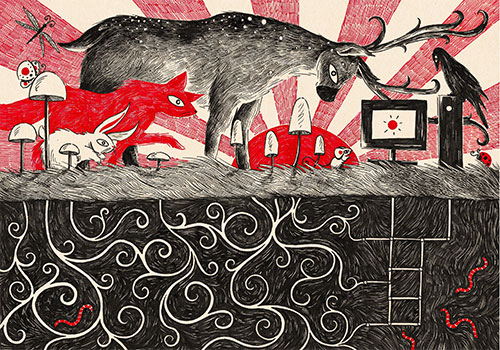
The conference aims to be a practical way to build bridges between researchers working in the sciences, humanities and social science, as well as practitioners working in conservation, animal welfare, AI development, animal studies, and environmental advocacy. Topics to be covered include what’s currently known about animal and plant communication systems, from what’s vocalised to chemical signals and fungal networks; the latest thinking from translation studies on making animal and plant communication understood by humans; corporate interests and the governance of AI animal translation projects; the knowledge of interspecies communications among indigenous cultures; creative arts-based approaches to engaging with more-than-human voices, and case studies of how AI is being used for conservation of endangered species.
Delphine has also been involved with supporting Liquid Tongues, the artwork selected to represent Poland at this year's Venice Biennale. The art installation raises awareness of the need to listen to marginalised voices, human and non-human.
“The Liquid Tongues installation, by the artists Bogna Burska and Daniel Kotowski. uses a combination of images and sounds to imagine forms of translation between humans and humpback whales, exploring the limits of interspecies communication through a layering of phonetic English, International Sign Language, and whale vocalisation. An important reference point for the project is Roger Payne’s 1970 recordings Songs of the Humpback Whale, which contributed to the introduction of the ban on whaling and played a significant role in the whales’ preservation. The complex sounds of whales drew global attention to the intelligence and richness of animal cultures, demonstrating that art can restore audibility to voices previously overlooked.”
Liquid Tongues is on show at the Polish Pavilion at the 61st International Art Exhibition of La Biennale di Venezia until 22 November 2026.
About the author
Delphine Grass is Senior Lecturer in French and Comparative Literature at Lancaster University. Her work sits at the intersection of translation studies, comparative literature, and the environmental humanities, with a particular focus on creative-critical practice and the politics of translation. Her scholarly work explores subjects including the translation memoir, eco-translation, and the relationship between AI and translation practice. She is the author of Translation as Creative-Critical Practice (Cambridge University Press, 2023). A bilingual poet and poetry translator, she works across English and French literary and scholarly contexts.
In 2026, Delphine became Principal Investigator of the AHRC BRAID-funded project Animals in Translation: AI, Ethics and the Future of Interspecies Dialogue, a UK/US collaboration with an interdisciplinary team of scholars at Lancaster University and New York University. This project explores how translation theory can illuminate the ways AI technologies mediate and shape meaning across species boundaries, and what this means for the ethics of more-than-human relations.
Dr Delphine Grass' profile