

Ideas of peace and conflict have taken on a new resonance as types of global instability change and grow in intensity. The potential for major disputes, unthinkable a decade ago, have become a pressing reality for policymakers internationally. Dr Lucia Ardovini explains how new generations of informed and skilled professionals are being supported to work on the implications of a changing world order.

Since 2012, Lancaster has run an internship programme for students with international policy and research organisations: the chance to work directly on real-world issues and see how their knowledge and skills can be put into practice to affect policy and lead to positive change.
“The Richardson Institute Internship Programme (RIIP) has been the only programme of its kind in the UK, and the reason why many students choose to come to Lancaster,” says Lucia Ardovini, Director of the Richardson Institute since 2023. “The internships are an important bridge between academic studies and an understanding of how the skills and knowledge are applied in practice. Complex issues, challenging situations and contexts in terms of political situations and changing events.”
A total of 30 internship places are made available each year for Part II Undergraduates and Master's students in the School of Global Affairs. Students take part in activities over the course of a full year, working in groups of five on projects within an NGO, think tank or research institution. The Institute has long-standing relationships with internship partners such as Archipelago of Design (a not-for-profit organisation based in Canada that supports the sustainable evolution of national security organisations among NATO members and partners); with SALAM for Democracy and Human Rights (working with European and UN representatives to foster awareness of human rights and democracy issues in the Middle East); and the international affairs think tank The Foreign Policy Centre.
Interns have also been working with Lancaster researchers on university-run projects, including the Ethics and Values Policy Initiative which is aiming to put ethics and values at the heart of policy-making. And SEPAD (the Sectarianism, Proxies and De-Sectarianization Project, www.sepad.org.uk) which was awarded $500,000 of funding by the Carnegie Corporation of New York. SEPAD has investigated the roots and interplay of religious tensions in Middle Eastern politics.
“We have more than a hundred applications from students for the internships and that means making some very difficult choices — but we need to ensure the numbers are manageable and that everyone gets as much from the experience and opportunity as possible,” explains Lucia. “While working with their organisation they’ll be working on writing reports and contributing to policy briefs. Besides the experience of learning about future working roles, there’s the chance to learn important transferable research and critical thinking skills. Practical hands-on skills like carrying out surveys and data gathering, arranging interviews, delivering presentations and public speaking in general, consulting with other stakeholders, and how to extract core information from large amounts of material and sources of data.”
“Traditionally so much of the thinking in the discipline has been around the impact of ‘boots on the ground’, of military interventions in specific war zones and the impact on wider populations. Now we are increasingly seeing how peace is a matter of human rights and the protection of civilians and their security.”
Past student interns have pointed to the value of their experiences in terms of team working and networking — and the very real chance of gaining a paid internship or employment with the organisation after graduation.
“The students who take part have to give up their own time outside of their usual studies. So they need to have a make a true commitment to the area they’re working in, they need to want to step up and make an impact on the issues being faced by people.”
A history of peace
Based within the School of Global Affairs, The Richardson Institute is the oldest peace and conflict research centre in the UK. The original Lancaster Peace Research Centre was formed in 1959 — in the same year as what’s considered to be the first independent centre, the Norwegian Peace Research Institute Oslo — before evolving into The Richardson Institute in 1969 (named after the Quaker scientist Lewis Fry Richardson, a conscientious objector in World War I who was then disqualified from taking any formal academic positions).
The Institute engages in a series of activities, ranging from conducting and supporting academic research, hosting externally funded projects, and engaging with policy actors and stakeholders. In 1998 an MA in Conflict Resolution was established, and the following year a combined major in Peace Studies and International Relations was approved.
One of the current areas of focus for the Institute is in the complex area of Transnational Repression, where authoritarian states around the world reach across national borders to silence, intimidate or coerce their own citizens or dissidents.
“Our work is an example of how ideas of peace and conflict have changed,” said Lucia. “Traditionally so much of the thinking in the discipline has been around the impact of ‘boots on the ground’, of military interventions in specific war zones and the impact on wider populations. Now we are increasingly seeing how peace is a matter of human rights and the protection of civilians and their security — based on the principle that people should be entitled to a dignified life. We need to be thinking in a more holistic way about an ever-shifting field of threats and pressures and what that really means for people on the ground.”
The Institute’s Transnational Repression working group has been a strong example of what can be achieved, turning research into impact. It has brought together champions from across legal firms, think tanks, diaspora groups and the media to build a body of thinking and evidence that has played an important part in informing the UK government’s Transnational Repression inquiry of 2025, meeting with the Joint Committee on Human Rights, the Home Office and Foreign and Commonwealth Office.
“In April this year we briefed UK MPs on the latest developments in terms of how Transnational Repression is affecting people in this country, and laid out the working group recommendations for a new, proactive policy. Two of the Richardson Institute interns also took part.
“Our proposals are based on improving monitoring and reporting, clarifying the support available in order to rebuild trust in UK institutions among the people targeted by authoritarian states, and establishing clear legislation and regulations in response to repressive activities that can make authoritarian countries accountable for what they do.”
About the author
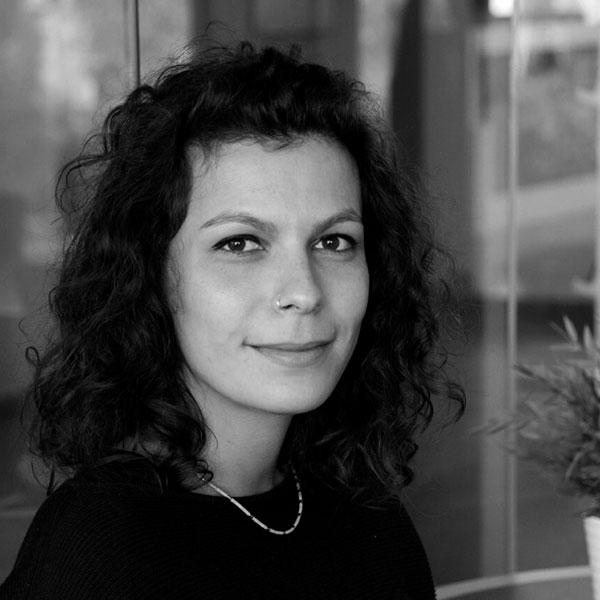
Dr Lucia Ardovini is a Lecturer and Programme Lead for International Relations. She is also the Director of the Richardson Institute and a Research Fellow at the Foreign Policy Centre. Lucia is a founding member of the "Tackling Transnational Repression in the UK" Working Group and the "Tackling Transnational Repression" European Coalition.
Her work spans academia and policy, and focuses on the intersection of transnational diaspora activism and transnational repression. She is particularly interested in exploring host states' policy responses to TRN, and actively works with the UK Parliament and the EU Parliament on informing institutional strategies to tackle this issue.
Dr Lucia Ardovin's profile