

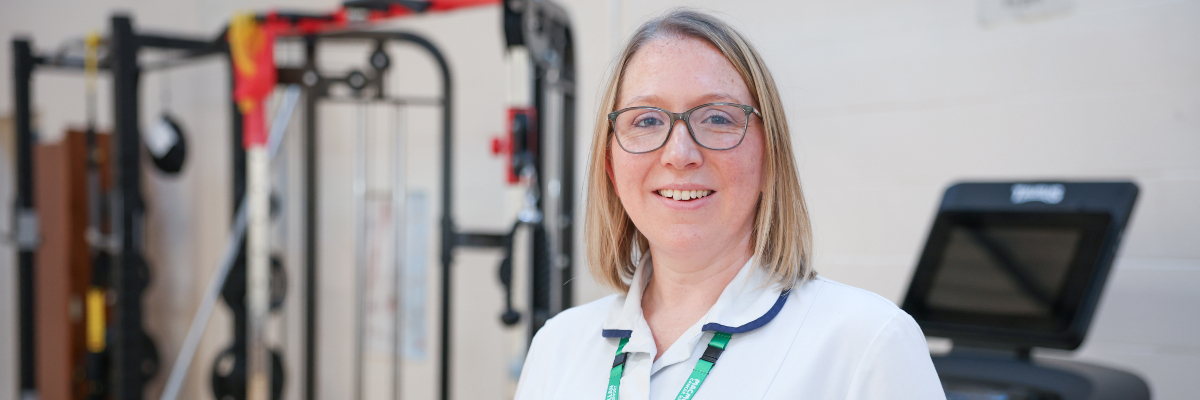
Hi Susan, hope you're ok. Can you paint a portrait for us of yourself and your role?
I am a Macmillan physiotherapist working in a cancer prehabilitation service, supporting patients to improve their health before treatment such as surgery or chemotherapy. I use assessment, motivational interviewing, and physical activity - delivered at home or through gym and hydrotherapy sessions - to help patients. I’m working with the Lancashire and South Cumbria Cancer Alliance to expand prehabilitation across the region, including partnering with football club community organisations (FCCOs) to deliver care in familiar, supportive environments.
What does a typical working day look like for you?
My week is split between clinical and non-clinical work. On clinical days, I assess new patients, create home exercise plans and support people through the gym or hydrotherapy sessions I run. I can also arrange equipment or onward referrals as needed.
Non-clinical days focus on project management - leading the work with football club community organisations, developing surgery school initiatives and collaborating with local leisure centres to improve access to physical activity for people affected by cancer.
I often present at regional conferences and education days to promote the service and help improve clinician knowledge on the importance of prehabilitation.
What motivates you to do what you do?
My motivation stems from personal experience. My Gran’s cancer diagnosis and passing while I was at university inspired me to work with cancer patients. Cancer prehabilitation is still a developing area and our region has room to grow in what we offer.
I’m passionate about improving services and ensuring patients receive the best possible support before treatment. Knowing this work can positively impact outcomes and quality-of-life for people with cancer continues to drive me every day.
What is/has been your favourite aspect of being part of the collaborative community through the Health Innovation Campus?
Working with people who are equally passionate about improving health services has been incredibly rewarding. The collaborative environment brings fresh perspectives and ideas I wouldn’t have considered alone.
Having Lancaster University involved in evaluating our prehabilitation project has provided valuable insights that have helped us refine the service and promote it more effectively to clinical teams.
What future projects and collaborations are you excited about?
I’m currently working with Lancaster University on an exciting project delivering cancer prehabilitation in three local borough council leisure centres. The aim is to make this a permanent offer and eventually roll it out across Lancashire and South Cumbria.
Having the University’s evaluation team involved from the outset is invaluable, they’re not only guiding the process to help capture meaningful data but bringing in experts in their field, all of which will support service development and sustainability.