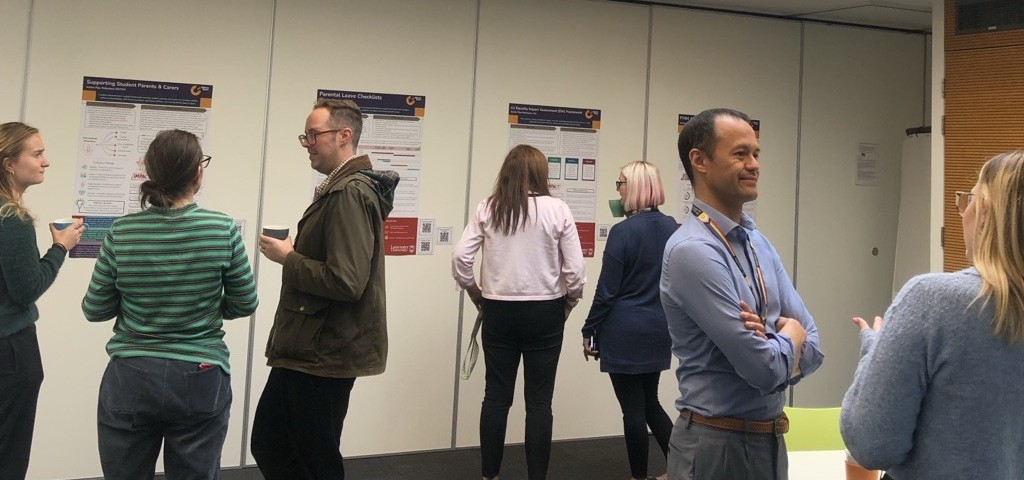
In October, the Athena Swan Implementation Group (ASIG) organised an event to recognise contributions to gender equality and encourage discussion on how Athena Swan initiatives align, reinforce progress, and support our strategy for institutional change.
Departments, faculties and divisions showcased their Athena Swan initiatives through posters designed by the Athena Swan team, highlighting objectives, actions, impacts, and contributions to cultural and institutional change. Reflections on achievements, challenges, and future aims demonstrated how teams learn collaboratively and support one another, emphasising interconnectedness and the overall impact of their projects.
Attendees gained insights into Athena Swan and our commitments. Deputy Vice-Chancellor Rebecca Lingwood shared reflections, and members of the Athena Swan team were available to provide further insights and answer questions.
The accordion lists the titles of the good practice case study posters. An accessible pdf is followed by an A1 printable version accordion
Approach: Baby care facilities were expanded, and digital visibility was improved by updating webpages, MazeMaps filters, and inclusive messaging to foster a sense of support and inclusion among staff and students.
Impact: The number and accessibility of facilities increased, awareness of available support grew, communications became more inclusive, and staff and student confidence improved.
Reflections: User satisfaction and visibility increased, but the limited estate space restricts further expansion. Next steps include adding another room, improving digital accuracy, and strengthening feedback mechanisms.
Approach: Workshops, one-on-one support from Promotions Champions, and real case studies were provided, along with improved guidance and feedback for applicants.
Impact: Success rates rose from 63% to 81%, professor promotions increased from 50% to 70%, female representation grew, and transparency reduced leaky pipeline effects.
Reflections: Workshops and case studies were highly valued, but inconsistent capacity across divisions affected consistency. Enhancing Champion coverage and utilising data more strategically are essential for success.
Approach: A consistent, transparent EIA process was established with a standard template, guidance, and training. It was piloted with faculty and PS teams, refined from feedback, and approved for full rollout.
Impact: EIAs are now integrated into decision-making, improving transparency, accountability, staff confidence, and promoting better consultation and evidence-based, fair practices.
Reflections: Clear guidance, practical templates, and strong engagement fuelled progress. Maintaining a consistent focus on standards and support is key.
Approach: A unified, structured data catalogue was developed, with defined data cycles, metadata requirements, and a repeatable reporting framework to support evidence-based gender equality monitoring.
Impact: The evidence base improved, enabling better identification of gender gaps, increased engagement, and consistent reporting.
Reflections: Collaboration and effective use of existing data strengthened the approach, though remaining gaps indicate the need to embed the catalogue into annual processes.
Approach: Centralised checklists, automated communications, and consistent HR guidance were developed in collaboration with staff who have lived experience and implemented across the university.
Impact: Processes have become more transparent, equitable, and consistent, resulting in increased manager confidence, reduced administrative burden, and greater visibility of institutional support, which aligns with our gender equality objectives.
Reflections: While the checklists improved clarity and reliability, variations in managerial practices persist. Continuous training, monitoring, and fostering a strong culture are essential for maintaining hope and collective effort towards consistency.
Approach: A hybrid careers event was organised, accompanied by a series of video case studies highlighting diverse PS career paths and development experiences.
Impact: The initiative gained over 1,200 views, enhanced understanding of career paths, increased staff confidence, and was a key part of OD communications supporting diversity and inclusion goals.
Reflections: Accessible digital content expanded reach and promoted broader conversations. Improved outcome monitoring and more varied case studies would increase impact.
Approach: Short-term contract extensions of up to three months were offered to externally funded researchers, with applicants required to demonstrate retention potential. Decisions were made collaboratively across RES, POE, and the faculties.
Impact: Twelve researchers gained stability, retention improved, gendered impacts of precarity were reduced, and increased awareness led to stronger processes.
Reflections: The scheme is highly valued but depends on external budgets. Developing long-term funding strategies and better alignment across faculties are the critical next steps.
Approach: A comprehensive support framework was established, including paid PGR leave, standard templates, risk assessments, approval processes, and central webpages.
Impact: Support is now clearer, more consistent, and credible at undergraduate and postgraduate levels, aligning with EDI commitments and improving stability and equity.
Reflections: Strong cross-departmental collaboration and practical tools facilitated progress. Next steps involve adapting complex situations flexibly, continuous monitoring, training, and regular reviews.