Case studies

A woman talking to two other people presenting from a laptop.

Innovation through partnerships

MARS is leading on mathematics and AI innovation in partnership with a wide range of organisations. Our academics and researchers are working at the interface of applied mathematics and machine learning to tackle complex organisational challenges that require sophisticated data-driven solutions. Here are just some examples of the work we’ve been doing to translate our research into real-world impact.

Case studies

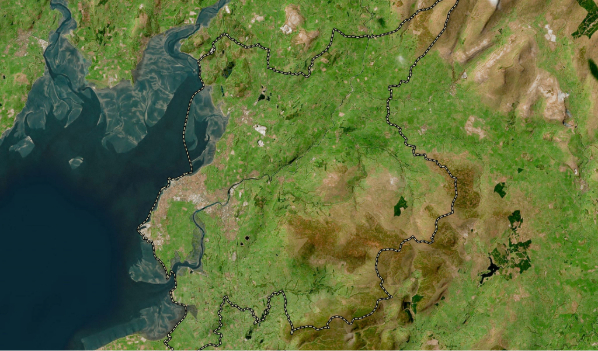
Satellite view of Lancaster

Maximising value from airborne and satellite data with JBA Consulting

Acquiring land-based, airborne and drone survey data is expensive and logistically challenging, yet important to provide the high-resolution insights critical for environmental monitoring and decision-making. MARS is collaborating with JBA Group to develop methodologies that extract maximum value from these datasets, combining them with more widely available but lower-resolution satellite sensor data.

By using techniques such as geostatistical downscaling, machine learning and data fusion, this project enhances both the accuracy and efficiency of environmental analyses, enabling insights that would otherwise require prohibitively costly data collection. The result is a smarter, more cost-effective way to monitor and understand complex environmental systems.

We urgently need to understand, at many different levels, which AI tools are appropriate, when to use them, and how to use them effectively. MARS has anticipated these needs and presents a valuable opportunity to develop that essential understanding.

A quote from Professor Rob Lamb, Director of the JBA Trust
Steel girders

Efficient material design with Tata Steel

Steel is the second most used material in the world, underpinning modern life across construction, infrastructure, automotive, energy and manufacturing. Its performance depends on its microscopic internal structure, which can be carefully engineering to deliver specific mechanical properties such as strength, robustness and durability.

MARS is working with Tata Steel to develop efficient algorithms for generating realistic synthetic microstructures, a crucial step in accelerating materials design and performance modelling. By improving the speed, scalability and reliability of simulation workflows, this research supports faster innovation in steel development. Looking ahead, the project is also exploring how generative AI methods could further enhance and automate the materials design process.

Bridging mathematics and physics-based modelling with industrial workflows is essential for advancing sustainable steel design, with generative AI offering promising opportunities to further accelerate innovation.

A quote from Karo Sedighiani, Principal Researcher, Tata Steel Research & Development
Digital network with nodes connected by lines.

Scalable knowledge-base construction with Microsoft Research

Large language models are increasingly being connected to external sources of knowledge, helping them remain up to date, provide more transparent answers, and avoid storing all information implicitly in model parameters. A major challenge is turning large, messy, unstructured text collections into reliable structured knowledge bases. This requires identifying when different fragments of information refer to the same underlying entity, even when the evidence is incomplete, ambiguous, or arrives sequentially over time.

MARS is working with Microsoft Research to develop scalable probabilistic algorithms for online model-based clustering, motivated by knowledge-base construction. The project uses Sequential Monte Carlo methods to represent uncertainty over possible clusterings, while introducing new mathematical structure that decomposes large clustering problems into approximately independent subproblems. This makes it possible to retain principled uncertainty quantification while reducing the memory and computational cost that usually prevents particle-based methods from scaling.


Linked icons