Visiting Fellows Scheme

An aerial view of Lancaster University campus

MARS Visiting Fellows Scheme

A core part of our mission is to develop the next generation of mathematicians working at the interface of applied mathematics and machine learning. Our Visiting Fellows Scheme enables PhD students and postdoctoral researchers to engage in focused collaboration with our nationally distinctive research group, contributing to the advancement of next-generation mathematics and AI for real-world systems.

Students walking through the foyer of the Charles Carter building.

Visiting fellowships for PhDs and postdocs

Our Visiting Fellows Scheme is available annually to PhD students and postdoctoral researchers for funded visiting fellowships hosted in the School of Mathematical Sciences at Lancaster University.

Successful candidates will collaborate with MARS staff on either mathematical machine learning and AI methods, or applied mathematics, with a focus on solving real-world problems.

Examples of relevant research areas include epidemiology; generative machine learning; mathematical biology and/or medicine; mathematics of optimisation; multi-scalar modelling of materials; probabilistic machine learning; and quantum modelling.

Find out more about MARS research.

We are no longer taking applications for 2026-27 but will reopen the scheme for 2027-28 next year so watch this space!

A group of students talking.

What we’re offering

We aim to award three fellowships lasting four weeks each. Fellowships can be taken up between 1st October and 31st July each year. Permissible travel and accommodation expenses will be reimbursed up to £4,000.

Students working in a library.

What we’re looking for

You will have a strong academic track record in mathematics or a related subject and hold a PhD or postdoctoral position at a recognised Higher Education Institution. If you are already in an academic post (e.g. Lecturer or Assistant Professor) you are not eligible to apply.

You can be from the UK or overseas.

Overseas applicants requiring a visa will need to make, and fund, their own visa arrangements.

Meet our 2026 visiting fellows

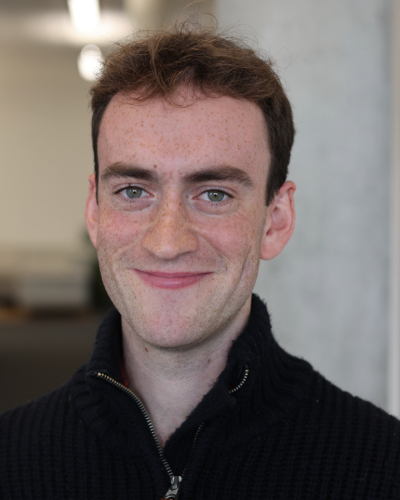
Thomas Christie

Thomas Christie

Thomas is a PhD student in the Methods of Machine Learning group at the University of Tübingen, Germany, supervised by Professor Philipp Hennig. His research focuses on uncertainty-aware decision-making in tasks such as Bayesian optimisation and active learning, and on the use of generative models as a tool for tackling such problems. He is particularly interested in applying these methods to challenging scientific applications, such as optimising the properties of materials and molecules.

During his visit to Lancaster, Thomas is working with Dr Henry Moss and his group on improving large language model (LLM) pre-training by leveraging recent techniques from the field of Bayesian optimisation. If successful, the project will be submitted at a leading machine learning conference, such as ICML or NeurIPS.

Connect with Thomas on LinkedIn.

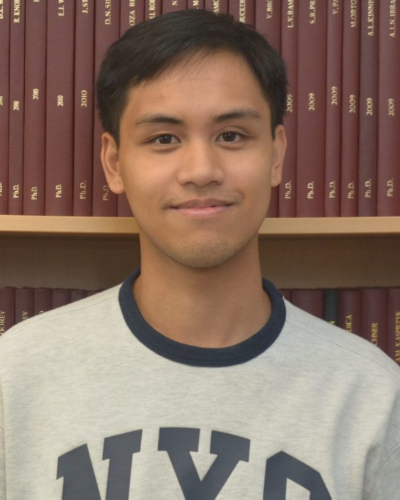
John Carlo Dimaculangan

John Carlo Dimaculangan

John Carlo is currently a PhD student at the University of Bath, conducting research in mathematical biology with a focus on developing realistic models of the cell cycle.

During his visit, John Carlo will develop and investigate biologically informed spatial agent-based models (ABMs) of cell proliferation and migration, incorporating realistic mechanisms of density-dependent cell-cycle progression and cell movement. These models will be calibrated and validated using experimental datasets generated during the placement, and ABM parameters will be estimated using Bayesian inference methods.

The resulting models have the potential to provide valuable insights into biological processes such as wound healing and cancer invasion. In particular, they could help explain how individual cell behaviours influence tissue-level dynamics.

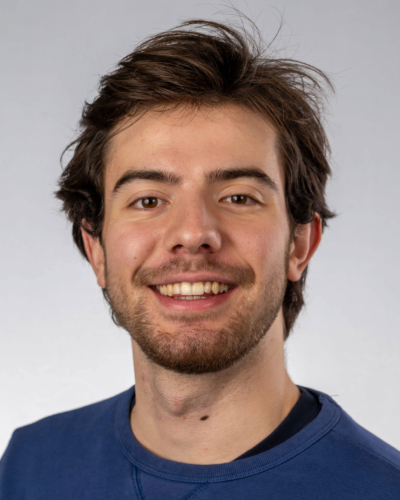
Colin Doumont

Colin Doumont

Colin is a second-year PhD candidate in Philipp Hennig's group at the University of Tübingen and the International Max Planck Research School for Intelligent Systems (IMPRS-IS). Previously, he spent some time studying and performing research at various institutions, such as University College London, the Vector Institute, the University of Cambridge, and ETH Zürich.

His research interests are still wide, but often contain an element of probabilistic learning or sequential decision-making, potentially applied to scientific problems. So far, this has meant designing different kernels for combinatorial and high-dimensional Bayesian optimisation, as well as developing new data-selection algorithms for diffusion-based LLMs.

During his visit to Lancaster, Colin is working with Dr Henry Moss and some of his PhD students on improving LLM pre-training using ideas from Bayesian optimisation. If successful, this new project will be submitted at a leading machine-learning conference, such as ICML or NeurIPS.

Connect with Colin on LinkedIn.

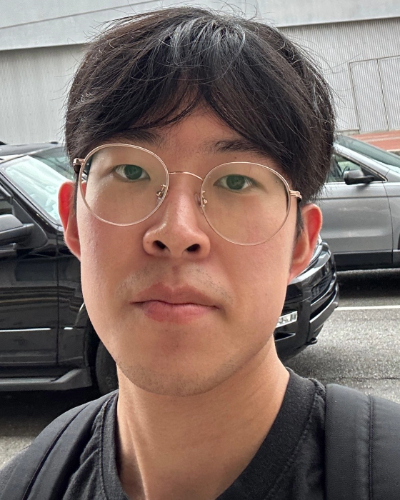
Sungbin Shin

Sungbin Shin

Sungbin is a PhD student in Computer Science and Engineering at POSTECH, South Korea, advised by Professor Namhoon Lee. Sungbin’s research focuses on large-scale optimisation for foundation models, with an emphasis on distributed and collaborative learning. The work explores the algorithmic foundations that enable efficient, scalable training of billion-scale models across diverse participants. Recent work centres on asynchronous pipeline parallelism and collaborative LLM pre-training (ICML 2026), building on earlier contributions in optimisation theory (UAI 2025) and LLM pruning (EMNLP 2024). Sungbin was previously a Student Researcher at Google and is a recipient of two of South Korea’s most prestigious graduate scholarships: the Kwanjeong Educational Foundation Scholarship and the PhD Excellence Scholarship.

Training today’s largest AI models is largely confined to a few institutions with access to dedicated data centres. Collaborative learning offers an alternative by pooling geographically distributed devices, but these devices have limited memory and communicate over low-bandwidth connections. During the visit, Sungbin will work with Dr Mher Safaryan to develop new communication- and memory-efficient optimisation algorithms that make collaborative training of large models more practical.

Connect with Sungbin on LinkedIn.

Linked icons