Plastic Packaging in People’s Lives: In the Loop

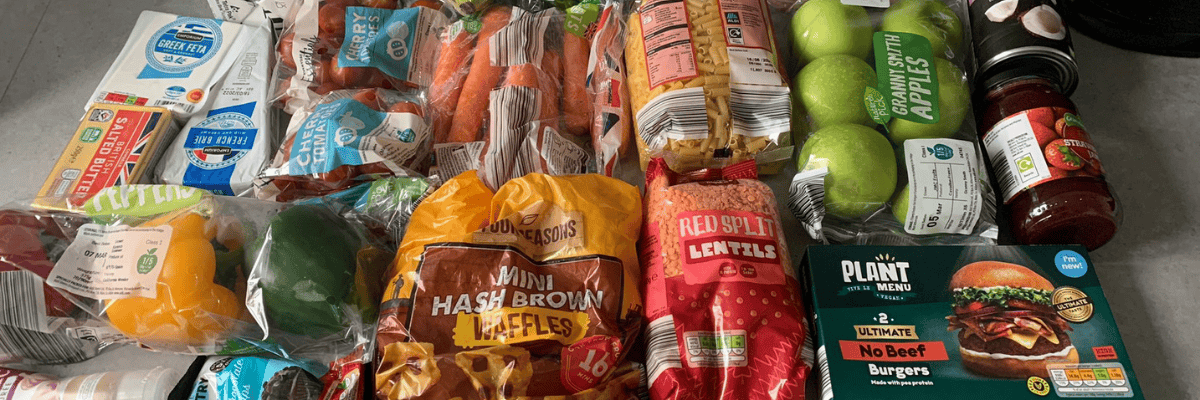
A selection of food produced wrapped in plastic packaging

Our project

This research is funded by UKRI Engineering and Physical Sciences Research Council (EPSR) Impact Accelerator Account awarded to Lancaster University (EP/X525583/2) and the UK Shared Prosperity Fund

The ‘In the Loop’ project is a project focuses on accelerating the dialogue between Booths supermarket, their customers, and Lancaster City Council (LCC) on several interconnected issues, including recycling, plastic packaging circularity, and food packaging innovation. The project aligns with the UK’s circular economy, net zero and zero waste agendas.

Building on the 3.5-year UKRI Plastic Packaging in People’s Lives (NEV/VO10611/1) project, we conducted two pilot projects—one with Booths and the other with Lancaster City Council (LCC), both of whom are core partners working closely with our team. The pilots revealed important insights: Booths’ customers expressed a lack of trust in the fate of recycled packaging and the use of recycled content in food packaging, while LCC faced challenges in engaging households to recycle and recapture materials for reuse in production.

EPSRC and IAAP lockup logos
new logos loop

In the Loop aims to:

  • Foster greater transparency among key stakeholder groups (e.g. Booths, customers, LCC and residents), serving as a foundational step towards building trust as the foundation for co-creating initiatives aimed at improving recycling food plastic packaging.
  • Highlight and promote the role of customer recycling efforts at home and the use of recycled food plastic packaging within the broader context of plastic packaging circularity and sustainable packaging innovation.
  • Clarify and explain the journey of recycled food plastic packaging, from kerbside recycling collection to its reappearance on Booths’ shelves, making the process more accessible and understandable.

In the Loop’s objectives are to:

  1. Facilitate open dialogue among different stakeholder groups (e.g. Booths, customers, LCC, and residents) about recycled food plastic packaging and recycling practices.
  2. Reframe decision-making around plastic packaging by emphasising its value as a resource and highlighting the role of ‘waste’ within the broader context of the circular system and climate emergency.
  3. Showcase the positive impact of responsible recycling efforts (e.g. washing recyclables and avoiding contamination) on the processes of plastic packaging circularity and the environment.
  4. Emphasise residents’ role in the larger system of plastic packaging circularity (including fate of food plastic packaging), distributing responsibility across the entire system rather than focusing on one group.
  5. Demonstrate how recycled food plastic packaging is part of a broader strategy for sustainable packaging and innovation, including engaging with re-use and re-fill system, and reducing the plastic usage in Booths’ own-brand food products.

Outputs and deliverables

The outcomes from the project will ultimately impact a reduction in plastic packaging waste and encourage better recycling and recapture of plastics.

A key deliverable is the co-creation of a communication roadmap to enhance decision-making practice across the circular supply chain. This communication roadmap includes Booths (as both a producer of own-brand products and a retailer), Booths’ consumers (from purchase to disposal), and Lancaster City Council (responsible for collection, recapture, and recycling).

Food Plastic Packaging - 'Caring and Beyond'

As part of the 'In the Loop' project, we work directly with the Booths Supermarket, their customers and Lancaster City Council to better understand the journey of food plastic packaging after purchase and use at home. The following information highlight what happens to bread bags (LDPE) and meat trays (rPET) once they have been disposed of. The infographic was designed by Nifty Fox Creative 2025.

A Bread Bag Journey

What happens to Booths’ bread bags once they are returned in-store? Discover how their journey through the recycling process demonstrates how shared responsibility and collaboration between retailers and customers can lead to more positive environmental outcomes.

1. After purchase, how can households dispose of bread bags?

Customers can dispose of Booths’ bread bags correctly by checking the label to identify the type of material and bringing them to our stores, where collection bins are available. It is important that customers bring only the correct material and ensure that the items are clean and free from food residues. Avoiding contamination helps ensure that the items can be properly recycled and reused.

2. How do bread bags get collected after disposal?

After disposal, bread bags from our in-store collection bins are collected by Booths’ lorry fleet and brought to the Preston Distribution Centre. This part of our efforts towards decreasing our carbon emissions – our lorries never travel empty. Our commercial waste management contractors will then pick up the bags for recycling.

By recycling our clean bread bags in-store, you ensure they can be reused, and you do your part to help the Planet!

3. What happens to bread bags after they are collected from our stores?

From our Distribution Centre, bread bags will be processed by our commercial waste management contractors. Bread bags will be sorted with other flexible packaging items and then sorted per colour at plastic recovery facilities.

4. Where is packaging waste (e.g., bread bags) processed?

From plastic recovery facilities, our bread bags recycled in-store are then sent and processed in plastic recycling facilities according to colour (clear to heavy coloured).

5. Where is packaging waste recycled (transformed into another object)?

The final destination of our bread bags is recycling within the global packaging production network. As such, they may be used to produce new flexible tertiary packaging, such as pallet wrap made from high-grade, clear pellets, or new carrier bags, such as shopping bags made from lower-grade, coloured pellets.

A Meat Tray Journey

What happens to Booths’ meat trays after being disposed of at home? Discover how their journey through the recycling process demonstrates how shared responsibility and collaboration between retailers, local government and individuals can support more positive environmental outcomes.

1. After purchase, how can households dispose of meat trays?

Customers can dispose of Booths’ fresh meat trays correctly at home by:

  1. Checking the label to see the type of material
  2. Determining if the meat trays are recyclable according to the local council’s regulations, such as LCC’s
  3. Washing and squashing the trays
  4. Disposing of the film lid at home according to LCC’s regulations
  5. Disposing of the cardboard label according to LCC’s regulations

Our packaging design makes it easy to rinse and squash the trays as suggested by LCC guidance. These actions help avoid contamination, increase the chance that the packaging can be reused, save space in your bin and money to the Council that can be used to support other fundamental services (watch the video “Use the right bin”).

2. How do meat trays get collected after disposal?

After disposal, and if done correctly at home, our fresh meat trays are collected with other recyclable items from your kerbside by LCC according to their waste management system.

Sorting, washing, and squashing waste at home helps LCC to recycle more, reach their recycling target, and support the Council’s plan to address the Climate Emergency declared in 2019. This plan includes moving towards zero waste to landfill and incineration by 2030.

By recycling, you do your part to help the Planet!

3. What happens to packaging after they are collected from the household?

From your kerbside, Booths’ disposed fresh meat trays will be transferred, together with other recyclable items from your bin, to the Middleton Transfer Station, a waste transfer station.

From there, recyclables are sent to the Farington Waste Recycling Centre, a material recovery facility, where they are further sorted and separated (depending on the type of materials, including types of plastics) for processing and eventual recycling.

4. Where is packaging waste (e.g., fresh meat trays) processed?

Once further sorted, our fresh meat trays will travel with other rPET packaging to waste plastic processing facilities. Here, the rPET packaging is processed and, in some cases, sorted again to separate single-polymer items, such as our trays. Single-polymer rPET items are then sent to recycling facilities in the UK to be given a second life.

5. Where is packaging waste recycled (transformed into another object)?

The final destination of our fresh meat trays is a plastic recycling facility, where they are reprocessed and sold to be recycled into new plastic objects, including food plastic packaging such as new fresh meat trays. Currently, about 49% of plastic packaging, including our trays, is recycled in the UK.

Linked icons