
grey zone warfare

Into the Grey: Grey Zone Warfare in Past, Present, and Future

Download 'Into the Grey: Understanding Grey Zone Warfare'

The Centre for War and Diplomacy (CWD) at Lancaster University is pleased to announce the release of Into the Grey: Understanding Grey Zone Warfare, the flagship analytical report of the AHRC-funded project Into the Grey: Grey Zone Warfare in Past, Present, and Future. The report offers the first truly global and longue durée examination of grey zone competition, showing that ambiguous forms of rivalry between war and peace have existed across cultures and centuries—from the Han Empire to the French Wars of Religion, from Cold War borderlands to today’s cyber-enabled geopolitical contests. Download the full report here.

Download report

‘Grey Zone Warfare’ has emerged since 2014 as one of the key strategic challenges of the 21st century. The ‘Grey Zone’ lies between peaceful (white) action carried out by a nation and hostile (black) action, which could be seen as an act of war. Hence it can be a nebulous concept. Yet the threat is real. NATO has identified ‘growing global uncertainty, more sophisticated and disruptive cyber and hybrid threats, and exponential technological change’ as significant dangers.

We aim to provide clarity by characterising ‘Grey Zone Warfare’ in order to develop understanding of the present and most likely future of warfare. To do this, we have developed a network to study ‘Grey Zone Warfare’, to classify it and develop case studies. Our audience includes academics, practitioners and policymakers, the media, NGOs, and the public. Our work will help make sense of Grey Zone Warfare and put it into perspective.

About

Into the Grey: Grey Zone Warfare in Past, Present, and Future began in early 2023 and will continue into 2025. Our first workshop will be in Lancaster in June 2023 followed by workshops in Amsterdam (September 2024), in Rome (late 2024), and will end with an event organised in the UK (2025). It is an interdisciplinary project including scholars from history, law, international relations and philosophy to ensure the project embraces all aspects of Grey Zone Warfare. It is also an international collaboration, built on an existing strategic partnership between the Universities of Lancaster and Amsterdam and includes researchers from Europe, Asia and North America. The project is funded by the Arts and Humanities Research Council and Lancaster University.

The project recognises that Grey Zone Warfare is far from a recent development in conflict, and we argue the perceived dichotomy between “past” and the “present” dominant forms of warfare is a deeply flawed basis for our understanding. The guerrilla during the Peninsular War of the early 19th century, the ‘petites guerres’ that accompanied early modern sieges and the Ottoman Empire’s employment of Barbary Pirates to harass shipping of states it was formally at peace with, can all be characterised as Grey Zone Warfare. Analysis of historic experiences will contribute to future-proofing and enriching debates and policies on the pressing issue of Grey Zone Warfare.

Members

Principal Investigator: Professor Marco Wyss, Professor of International History and Security, Lancaster University

Co-Investigator: Dr Samuël Kruizinga, Senior Lecturer in Contemporary and Military History, University of Amsterdam

Network Members

Associate Professor TSE Wai Kit Wicky, Associate Professor, Chinese University of Hong Kong

Professor David Parrott, Professor of Early Modern History, New College Oxford

Dr Bruno Cardoso Reis, Researcher, Centre of Religious History Studies, Universidade Catolica Portugesa

Professor Gunhild Hoogensen Gjørv, Professor in Critical Peace and Conflict Studies (Security and Geopolitics) and Arctic 5 Chair in Security Studies, UiT The Arctic University of Norway

Professor Sir Hew Strachan, Bishop Wardlaw Professor, University of St Andrews

Professor Donald Stoker, The Eisenhower School for National Security and Resource Strategy

Professor Wim Klinkert, Chair in co-operation with the Netherlands Defence Academy, University of Amsterdam

Dr Collin Koh Swee Lean, Research Fellow, S. Rajaratnam School of International Studies, Singapore

Professor Lise Morje Howard, Professor, Government and SFS, Georgetown University

Dr Lukas Milevski, Assistant Professor, University of Leiden

Dr Chiara Libiseller, Lecturer, University of Leiden

Dr Christophe Paulussen, Senior Researcher & Associate Fellow Rule of Law Responses to Terrorism International Centre for Counter-Terrorism, Asser Institute

Dr Brianna Rosen, Visiting Fellow of Practice, Blavatnik School of Government, University of Oxford

Dr Huw Bennett, Reader in International Relations, Cardiff University

Dr Aleksandra Pomiecko, Lecturer in Modern Russian History, University of St Andrews

Dr Jenny Benham, Reader in Medieval History, Cardiff University

Associate Members

Dr Sarah White, Lecturer in Medieval History, Lancaster University

Professor Isabelle Duijvesteijn, Professor of International Studies and Global History, University of Leiden

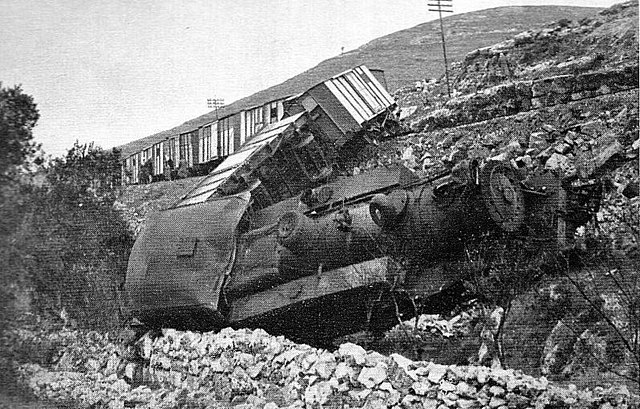
A black and white photo of a derailed train and rubble in the foreground.

Into the Grey: Understanding Grey Zone Warfare

The Centre for War and Diplomacy (CWD) at Lancaster University is pleased to announce the release of Into the Grey: Understanding Grey Zone Warfare, the flagship analytical report of the AHRC-funded project Into the Grey: Grey Zone Warfare in Past, Present, and Future. Led by Marco Wyss (Lancaster University) and Samuël Kruizinga (University of Amsterdam), and authored by Johanne Marie Skov, the report offers the first truly global and longue durée examination of grey zone competition.

Bringing together scholars from history, law, international relations, and security studies, the project challenges the dominant assumption that grey zone activity is a novel or exclusively contemporary phenomenon. Instead, the report shows that ambiguous forms of rivalry between war and peace have existed across cultures and centuries—from the Han Empire to the French Wars of Religion, from Cold War borderlands to today’s cyber-enabled geopolitical contests.

A central finding is that the grey zone is inherently fluid, impossible to fix in clear legal, spatial, or temporal terms. Rather than a tightly defined category, it is best understood as an ideational space between war and peace—a space that states and non-state actors exploit to pursue strategic objectives without triggering open conflict. The report also warns against what it calls “defence orientalism”, noting that Western governments frequently portray grey zone activity as something others do, even though Western powers have long operated in similar ways themselves.

Other key insights include:

  • Purpose and strategic value: Grey zone methods allow states to alter or preserve the status quo, gain advantage, or avoid undesirable escalation—even when they have the capability to wage war.
  • Actors beyond the military: Civilians, proxies, private military companies, and informal networks play decisive roles, often blurring the boundaries between combatant and non-combatant.
  • Whole-of-society vulnerability and resilience: Disinformation, sabotage, and societal pressure points make the civilian sphere central to both threat and defence.
  • Continuity over time: While technologies evolve, the fundamental nature of sub-threshold rivalry remains strikingly consistent.
  • Conventional forces still matter: Deterrence and escalation control require credible military capabilities—grey zone competition cannot replace them.

The report concludes with practical implications for policymakers, including the need to distinguish clearly between grey zone activity and hybrid warfare; invest in societal resilience and strategic communication; understand how legal ambiguity shapes competition; and develop flexible frameworks that account for the shifting thresholds of contemporary rivalries.

A black and white photo of a derailed train and rubble in the foreground.

Download 'Into the Grey: Understanding Grey Zone Warfare'

The Centre for War and Diplomacy (CWD) at Lancaster University is pleased to announce the release of Into the Grey: Understanding Grey Zone Warfare, the flagship analytical report of the AHRC-funded project Into the Grey: Grey Zone Warfare in Past, Present, and Future. The report offers the first truly global and longue durée examination of grey zone competition, showing that ambiguous forms of rivalry between war and peace have existed across cultures and centuries—from the Han Empire to the French Wars of Religion, from Cold War borderlands to today’s cyber-enabled geopolitical contests. Download the full report here.

Download report

Contact

Principal Investigator: Professor Marco Wyss m.wyss@lancaster.ac.uk

Administrator: Amy Stanning BA, AKC, MA a.l.stanning@lancaster.ac.uk