Projects

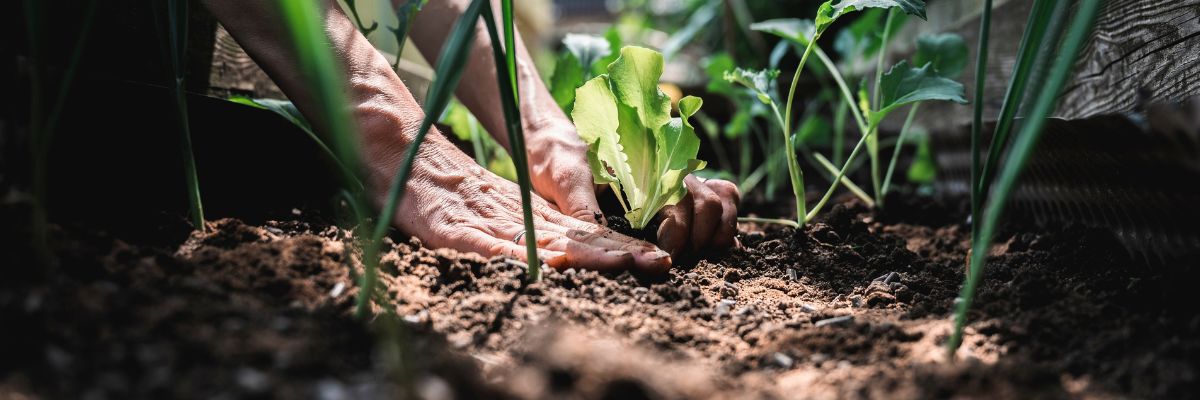
A person planting a crop

Our projects

We have an open call for the development of student-led and research-led projects - see our application process section for more details. Please check back later to view our advertised projects and apply to study with us at the Food for Nature and Society Doctoral Programme.

Why Lancaster?

Lancaster University has long been recognised for its strengths in food, agriculture and environmental research. Food production, security, and sovereignty are central to several key fields of research at Lancaster, spanning bioengineering, political ecology, critical accounting, and food policy. Our work has contributed to the development of drought-resistant crops, embedded ecological principles into the rearing and harvesting of cultivated and wild foods, and uncovered the role of power, agency, and care in enabling access to healthy and sustainable foods. With our extensive record of innovative research being delivered from within these core disciplines, Lancaster is positioned perfectly to provide a rigorous programme for doctoral study that bridges both the natural and social sciences.

Lancaster is already home to several leading research institutions, such as the new Centre for Sustainable Soils, the Pentland Centre for Business Sustainability, the Wolfson Centre for Photosynthetic Diversity, and the Institute for Planetary Repair. Whilst our scholars will be based within Lancaster's world-class Environment Centre, our programme draws upon expertise from across these research groupings, including scholars in the Management School and School of Social Sciences, providing our doctoral candidates with interdisciplinary supervision that is grounded in both a strong history of research excellence and industrial and global realities. By the end of their studies, our PhD scholars will be ready to address the overlapping issues of global food networks as the next generation of sustainable food system scientists

Application process

The Leverhulme Doctoral Programme on Food for Nature and Society aims to develop interdisciplinary researchers able to address food system challenges intersecting nature and society.

To achieve this, the programme utilises three multiscale themes, encompassing Global North and Global South contexts across terrestrial and aquatic domains, wild and cultivated food systems and large-scale, smallholder and indigenous farmers. Each project will be required to focus on a primary theme while demonstrating a link to a secondary theme from the following list. Note, the Themes are broadly defined: we present working definitions, but encourage applications to critically engage with these concepts from within your disciplines;

  • Resilient food systems will draw on divergent perspectives to develop and harness the science and/or indigenous knowledge systems necessary for food systems to cope with or adapt to the increasingly variable and unpredictable environmental, economic, and political conditions
  • Regenerative food systems will challenge dominant production approaches and examine ways to enhance biodiversity, ecological and soil functions, or reduce inputs such as land and water.
  • Reparative food systems will confront the spatially uneven, historically entrenched, injustices and the often-opaque power imbalances of the food system

There will be two routes available for PhD project development to maximise the potential for the development of innovative and impactful project ideas:

  • Prospective students can select a project designed by our supervisory teams, and apply directly to participate in that project. The expectation, through this route, will be that once enrolled, students will refine, innovate, and co-develop the PhD project with the supervisory panel.
  • Prospective students can instead contact a supervisory team directly and co-create a project from scratch. This route is designed for exceptionally strong, self-motivated students to own their project ideas from an early stage.

Developing your own proposal

To develop your own proposal, we suggest you reach out to one of our supervisors and work with them to develop an idea together. All project proposals need to identify a primary theme focus and demonstrate a link to a secondary theme to ensure interdisciplinarity. Supervisors will submit an EOI to the Leadership Team and support you in developing a full application.

Whether you are selecting a predetermined project or suggesting your own, ensure you submit your application (or ensure your supervisor has submitted an EOI) before the listed closing date and make sure that all of the relevant documentation is attached to your application. More information on submitting your application will be available in due course.

  • Provisional closing date for student-led project proposals: 26 February 2027
  • Provisional closing date to apply for supervisor-led projects: 12 February 2027

Timeline and key dates

Student-led projects

  • Supervisor to submit EOI on student's behalf - 20 November 2026
  • Projects selected for full proposal notified - 1 December 2026
  • Supervisors submit full proposals and applicant details for Leadership Team interviews - 26 February 2027
  • Leadership Team review and interviews of short-listed applicants - W/C 1 March 2027
  • Offers - 12 March 2027

Supervisor-led projects

  • Advertising of projects - 1 December 2026
  • Deadline for applications - 12 February 2027
  • Supervisory team interviews short-listed applicants - 15-26 February 2027
  • Supervisors notify and submit selected applicants (one per project) for Leadership Team interviews - 26 February 2027
  • Leadership Team review and interviews of short-listed applicants - W/C 1 March 2027
  • Offers - 12 March 2027

Interview process

Both supervisor short-listed applicants and students involved in co-created projects will be invited for a panel interview with our Leadership Team as a part of the recruitment process. We will ensure that our panels are flexible in order to consider each of our applicants' needs. More information about our interview process will be available shortly.

After your interview, we will aim to notify you as quickly as possible as to whether or not you have been successful in securing a place on our Doctoral Programme. If we feel that you are an excellent candidate, but would benefit from some additional training, you may be offered a Master's plus doctoral route as an alternative to progressing immediately onto the Doctoral Programme.

Master’s plus doctoral route

In addition to our standard Doctoral Programme, Food for Nature and Society also offers a Master's plus doctoral route, which is available through one of three pathways:

  1. Prospective students may opt to self-select this route, if they believe this opportunity will benefit them. This option will be available during the application process.
  2. Highly ranked applicants to our Doctoral Programme who are deemed to have great potential but would benefit from some additional training and time to develop their skills and research capacity may be offered this route as an alternative to immediately embarking on one of our Doctoral Programme projects.
  3. Our summer school, existing Lancaster-based career activities, and targeted outreach activities may identify and encourage a promising candidate to co-develop a Master's by Research project to be submitted through the general application process.