
Primary

Developing personal connections and knowledge of place

Primary Approach

The primary approach to the Morecambe Bay Curriculum helps children develop their understanding and love of where they live through outdoor learning, storytelling and creative practice to bring STEM, Geography and local history to life.

This cross-curricular work focuses particularly on:

  • Ecology and biodiversity
  • Geographical features
  • History of the Bay
  • Impact of humans
  • Intersections of art and science
‘Why Walk?’: A Campaign for Getting Outdoors!

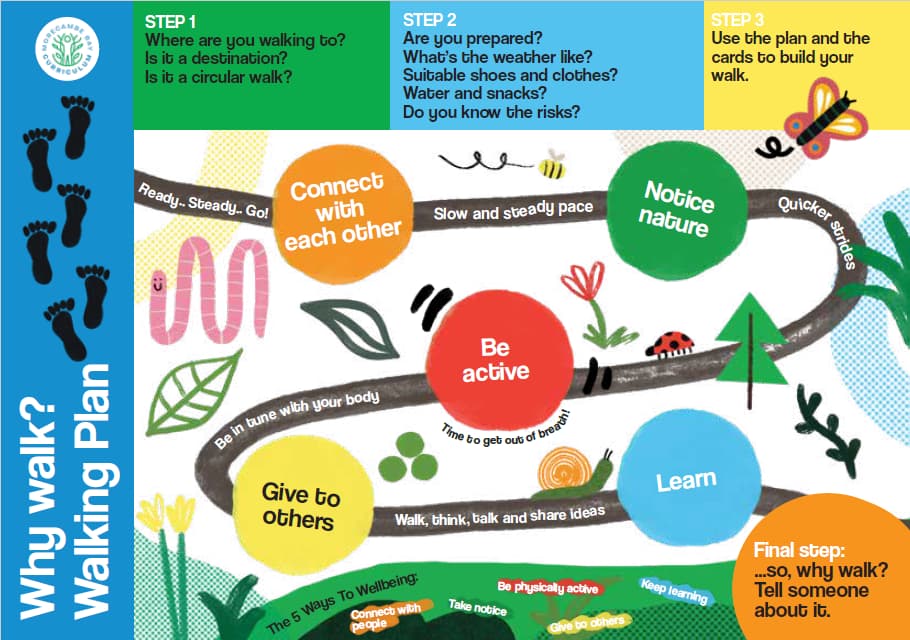
Throughout 2025 and 2026 the MBC Primary Working Group have been exploring the theme of ‘Health and Wellbeing’ and have developed the ‘Why Walk?’ cards, designed to encourage children to get outdoors and reap the physical and mental health benefits of walking.

The 'Why Walk?' resource is a set of cards that can be used by anyone, anywhere and at any time whilst out on a walk, to structure and enhance the experience.

By inspiring everyone to walk more frequently, encouraging people to notice more as they walk, promoting connection with nature and each other, suggesting ways to give back to the community and teaching about the benefits of physical exercise, the 'Why Walk?' cards target the Five Ways to Wellbeing for anyone who uses the resource.

map overview showing the different stages of the map

The 'Why Walk?' map, to plan your walk

‘Resources for our Bay’: Research-Enhanced Primary Teaching Resources

Aligning with the National Curriculum, Lancaster University researchers have been working alongside primary teachers to develop educational resources that link to cutting-edge research on topics such as ecology, history, geography and art.

Explore the resources below, designed to be adaptable to different settings around the Bay:

National Curriculum: Geography

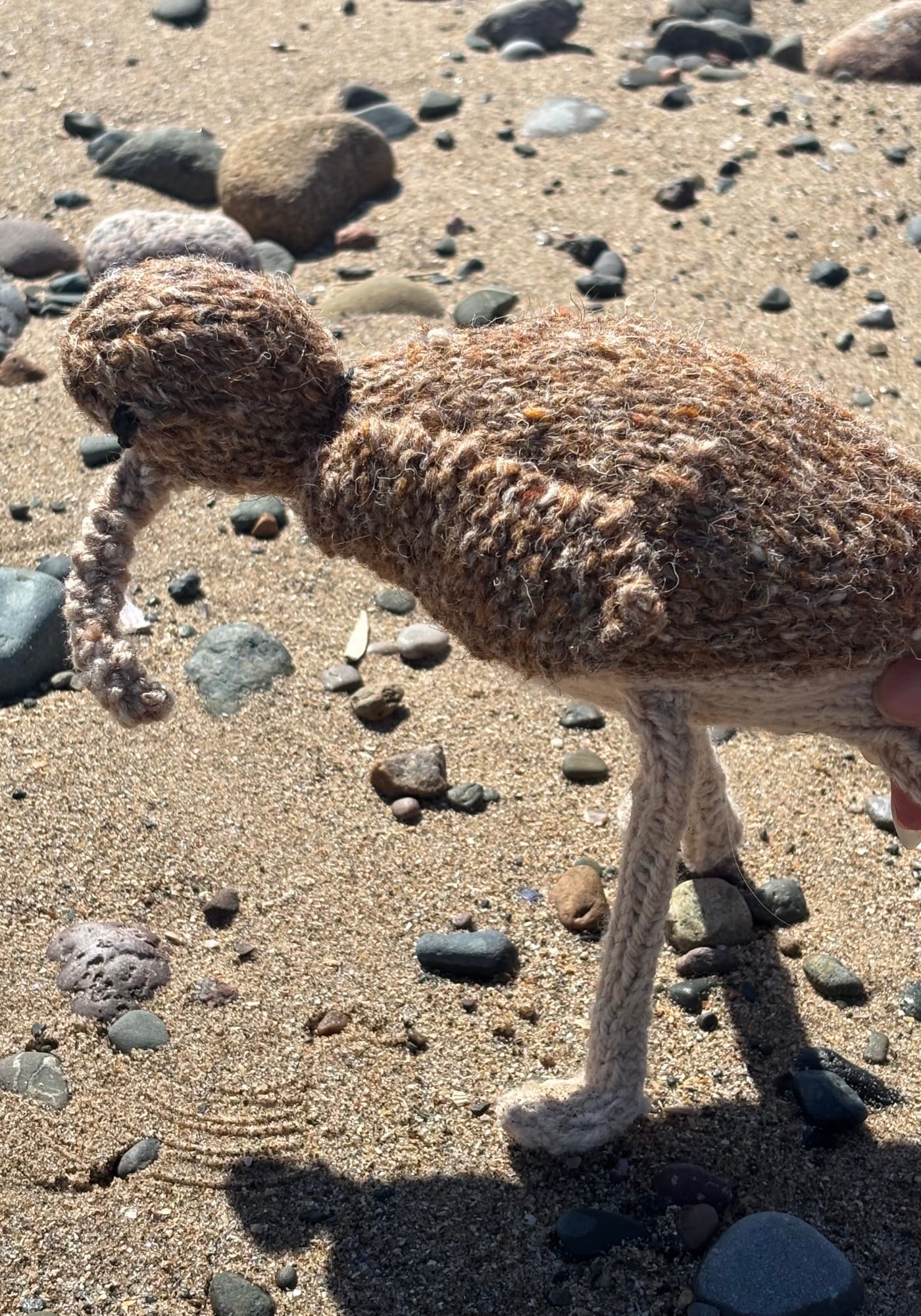
Knitted Curlew on Beach
Colin the curlew on tour in Fleetwood!

How Resilient is our Coast? Become a Coastal Defender!

Developed by: Helen Bielec, Shakespeare Primary and Alex Scott, JBA Trust

Fly through this work and coastline with Colin the Curlew and become an informed coastal defender! Using role-play this game puts pupils at the heart of decision making, much like the real-world work of Our Future Coast. Facing challenges as a team and developing their knowledge with cutting-edge research, pupils make choices based on Shoreline Management Plans to connect knowledge to positive transformation of their own community.

How Resilient is our Coast Overview

How Resilient is our Coat Resources - Free Dropbox Download

Pupils investigating wildlife on the beach
Greengate Juniors pupils investigating beach finds!

A Day at the Beach: Present and Future

Developed by: Lynn Reddy, Greengate Juniors and Dr Suzi Ilic, LU

This resource helps you take trips to the beach, exploring the present and imagining the hopeful future. This resource fosters great connections between you, your class and the environment. There are fantastic opportunities for children to ask questions and for classes to learn together. These beach visits help secure the learners’ knowledge of marine ecology whilst encouraging care and responsibility for their local beach.

A Day at the Beach Overview

A Day at the Beach Resources - Free Dropbox Download

National Curriculum: History

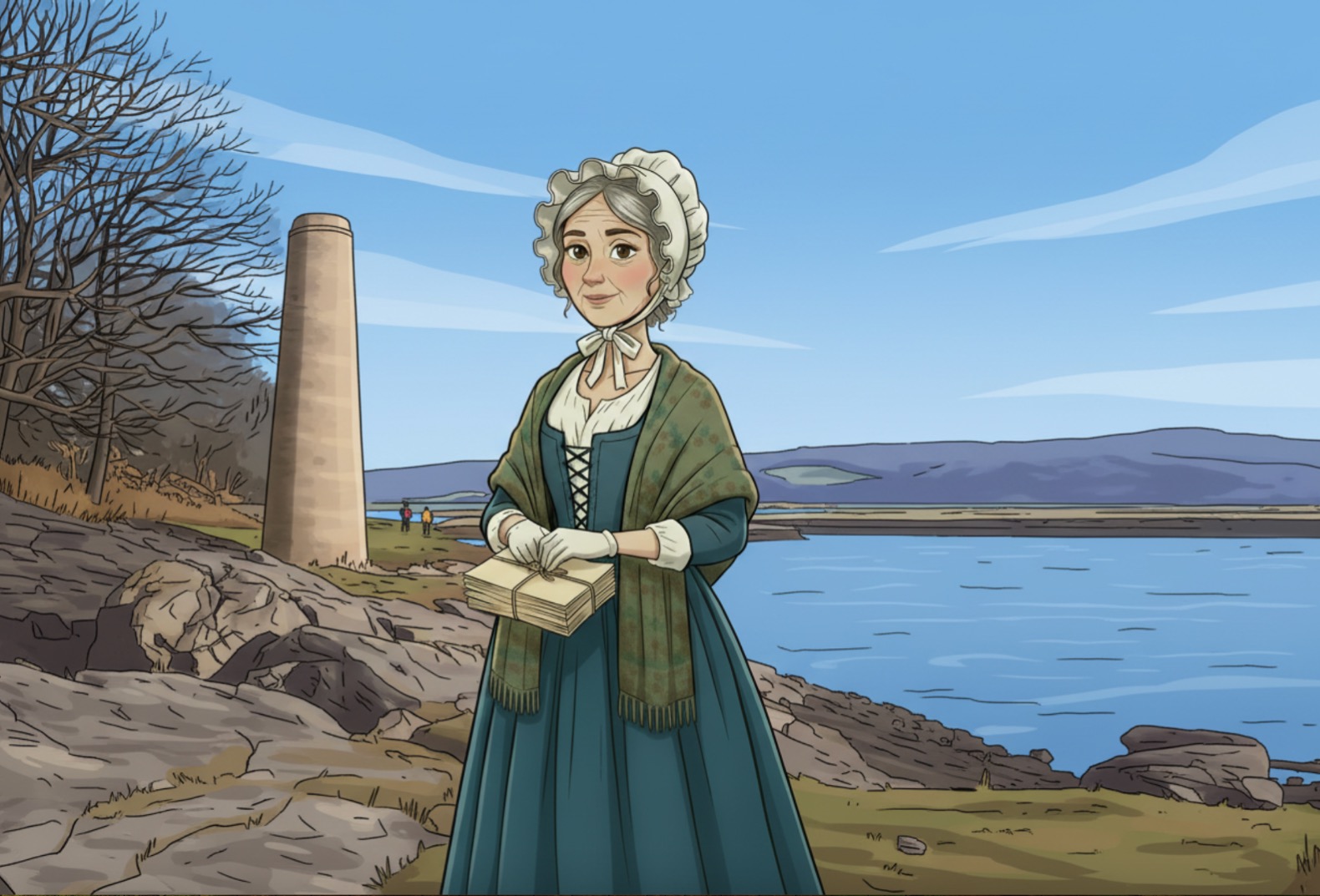
Jenny Brown's point, next to the coast with an illustrated picture of imagined Jenny Brown
Meet Jenny Brown(s) throughout history!

Time, change and action: Imagining Jenny Brown’s Point

Developed by: Eleanor Hooson, Beetham C of E Primary and Professor Deborah Sutton, LU

The mysterious character of Jenny Brown through the ages is used as an exciting liaison to introduce students to different episodes of local history. Go on a Silverdale journey with her to gather powerful local knowledge, learning about the value of social and generational knowledge as a vital way in which we come to know about the past of our localities.

Imagining Jenny Brown's Point Overview

Imagining Jenny Brown's Point Resources - Free Dropbox Download

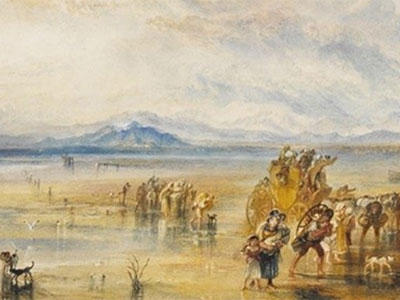
Period water painting showing people crossing Morecambe Bay
JMW Turner ‘Crossing Lancaster Sands’ c.1826

The King’s Guide to the Sands

Developed by: Duncan Webster, Willow Lane Primary and Dr Chris Donaldson, LU

The sands of Morecambe Bay are rich with stories. The acquisition of landscape literacy, like alphabetic literacy, can nurture students intellectually and imaginatively. As your learners develop their understanding of the King’s Guide’s role, they will recognise local landscapes, historical monarchs, industry and infrastructure.

Your learners will uncover our connection to people and places by viewing, reading and listening to accounts of people from Morecambe Bay through history.

The King’s Guide to the Sands Overview

The King's Guide to the Sands Resources - Free Dropbox Download

National Curriculum: Science

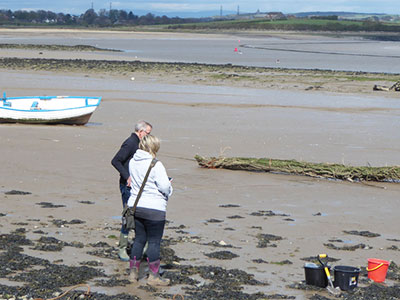
Two people on a beach
Co-design pair, Helen and Gordon on the beach at Sunderland Point

Rhythms of the Bay: Living Things and Their Habitats

Developed by: Helen Marsland, Overton Primary and Professor Gordon Walker, LU

Dive into this resource rooted in the planetary and natural rhythms of Morecambe Bay to explore how the moon affects our tides.

By observing, identifying and naming local flora and fauna and cycles of local habitats, your learners will explore the Bay’s natural classroom!

Rhythms of the Bay Overview

Rhythms of the Bay Resources - Free Dropbox Download

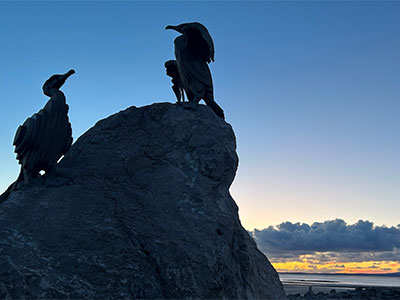
Silhouette of bird statue
Birds and Art on Morecambe Promenade

The Birds of Morecambe Bay: Teaching Science Through Art in Year 4

Developed by: Corinne Beveridge, Cathedral Primary and Dr Jen Southern, LU

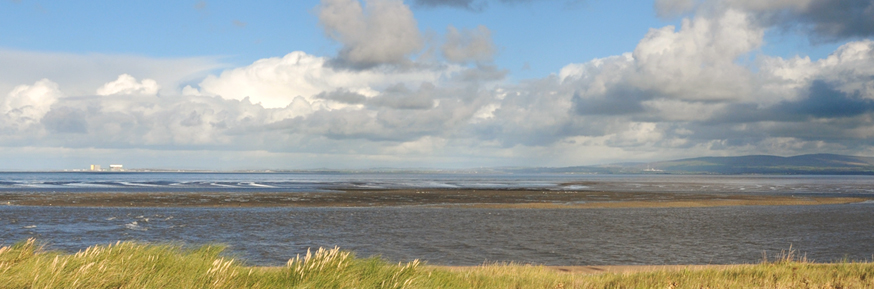
Did you know that Morecambe Bay is one of the top three UK sites for overwintering birds? Its mudflats, salt marshes and sands are internationally important habitats.

This resource focuses on twelve birds and their beaks, feet, habitats, food sources, migration and birdsong. Featuring sound waves, migration and representations of nature, learners will strengthen their emotional connection to local wildlife.

The Birds of Morecambe Bay Overview

The Birds of Morecambe Bay Resources - Free Dropbox Download

National Curriculum: English

Storytelling and Local Legends: Our Cultural Inheritance

The north-west has a rich storytelling history and the landscapes and seascapes have inspired writers and poets for centuries. From the ancient folklore and Viking tales, to the beloved characters of Beatrix Potter and the poems of William Wordsworth. The MBC Primary Working Group have leant into storytelling as a powerful device for embedding place-based learning.

With support from Morecambe Bay Partnership, the MBC Primary Working Group have been focused on storytelling over the last few years, below you will find resources that will help you embed this work in your classroom.

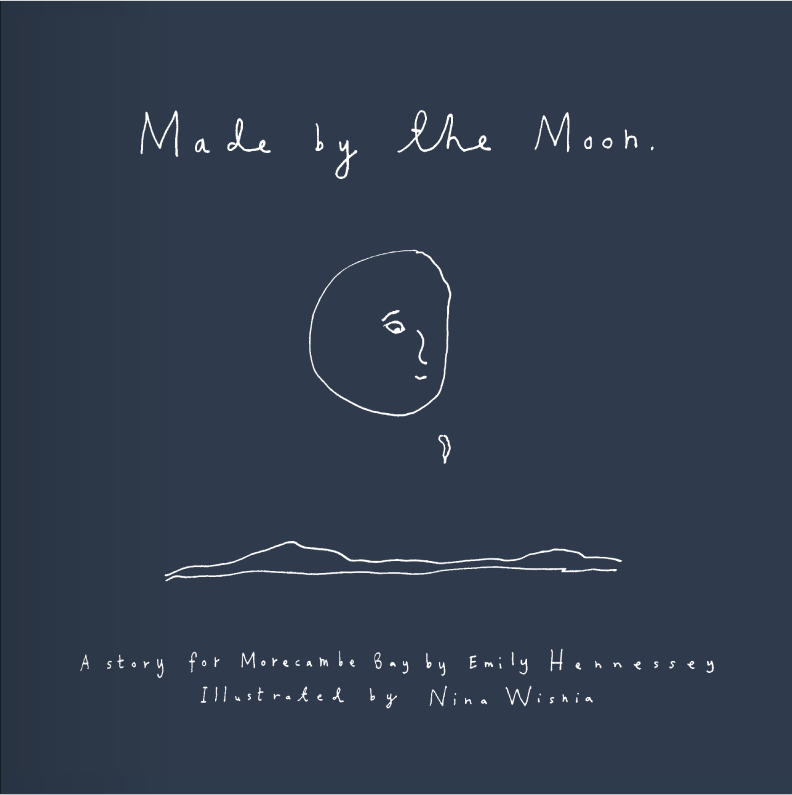
Front cover of Made by the Moon
Origin Story for the Bay

Made by the Moon

Teachers have been using Made by the Moon as part of the primary curriculum to explore place, storytelling and legend. Their aspiration is that Made by the Moon becomes a story that all children around Morecambe Bay know, just like they will know Little Red Riding Hood or the Three Bears.

Made by the Moon, by Emily Hennessey and Made by the Moon teaching materials, hosted on the University of Cumbria Digital Resources Library

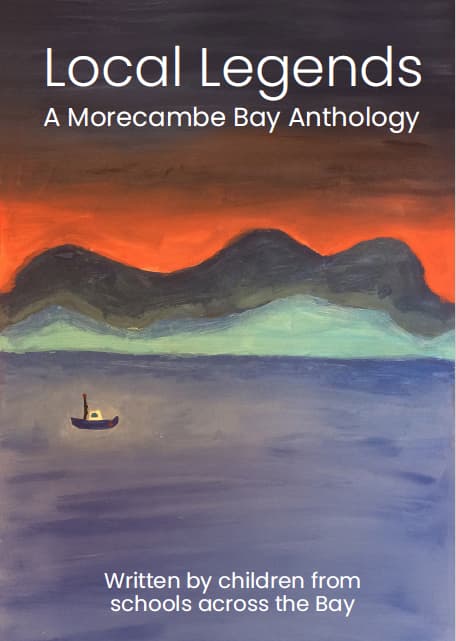
Front cover of Local Legends booklet with a child's painting of the Bay at sunset
Pupils Creating Local Myths, Legends and Historical Stories

Local Legends

‘Local Legends’ contains 7 new stories, written by and for children from Carter's Charity Primary, The Cathedral Catholic Primary, Heysham St Peter's CE Primary, Morecambe Road School, Overton St Helen's CE Primary, Quernmore CE Primary and Ryelands Primary and Nursery School.

Inspired by Made by the Moon; children and teachers researched, wrote and presented stories rooted in their local environment with support from Lancaster University. Story creation and development workshops were delivered by storyteller Emily Hennessey, Primed for Life and Lancashire County Council and Professor Uta Papen.

The stories and teaching guide are here: Local Legends Booklet and Teaching Guide

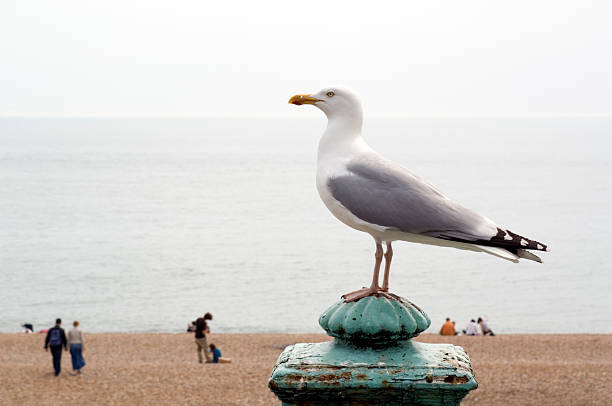
seagull on the beach

Seaside Play, The Poetics of the Beach: English x MBC

Morecambe Bay’s beaches are a wonderful resource for local schools. This project and resource seeks to explore play as fruitful for creative activities in ways that encourage proficiency in writing, oral and artistic skills.

Thanks to Dr Jo Carruthers, Izzy Hoggsmascall, Nan Song, Overton St Helen’s Primary School and Thurnham Glasson Primary School

Download the poetry resource here: MBC Seaside Play

STEM Skills

Birds at Heysham
Birds of Morecambe Bay at Heysham

Grow Up! and Grab It! Resources: Engineering x MBC

Creative problem solving inspired by the nature of the Bay

KS2 Science, Design and Technology

The two activities, Grab It and Grow Up! link the engineering thinking process with exploration and observation of the biodiversity of plants and birds found in the habitats of Morecambe Bay. Thank you to Dr Irene Wise!

Grab It! Engineering challenge is based on solving a problem of reaching to pick something up, taking inspiration from the Bay's birds, to design and create an extendable grabber.

Grow Up! Engineering challenge is based on the need for creative ways to grow more food in a small space. Structures and 3D shapes are tested for stability and strength. The structure of plants is observed for inspiration to create and test a vertical growing farm.

Engineering: Grow up! and Grab it! Challenges Overview

Grow up! Teaching Resources and Facilitator Notes - Free Dropbox Download

Grab it! Teaching Resources and Facilitator Notes - Free Dropbox Download

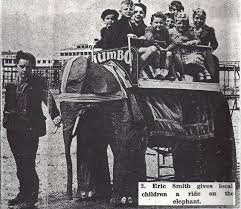
black and white newspaper image of man leading mechanical elephant through morecambe with children
Eric Smith, mechanical engineer gives local children a ride on Rajah the mechanical elephant!

Engineer! What's your story?

Four non-fiction stories that explore the engineering heritage of Morecambe Bay, stories told by Ursula Holden-Gill

Click the videos below, to hear these wonderful tales:

Assembly Topic: Safe by the Sea

A Young Person's Guide to Sea Safety in Morecambe Bay. Start conversations around safety and the sea using the video and downloadable resources below

Resources and the video have been kindly made by The Morecambe Bay Poverty Truth Commission in partnership with Lancaster & Morecambe College, Stanleys Community Centre and Morecambe Bay Curriculum

Helping young people access nature

This film features a collection of experiences, stories and facts made with and for young people in Morecambe Bay. Featuring contributions from local experts including Michael Wilson, King's Guide to the Sands, the film offers young people clear advice on how best to explore The Bay safely.