
Boundaries of Being

Exploring how emerging technologies reshape identity, security, and what it means to be human in the future.

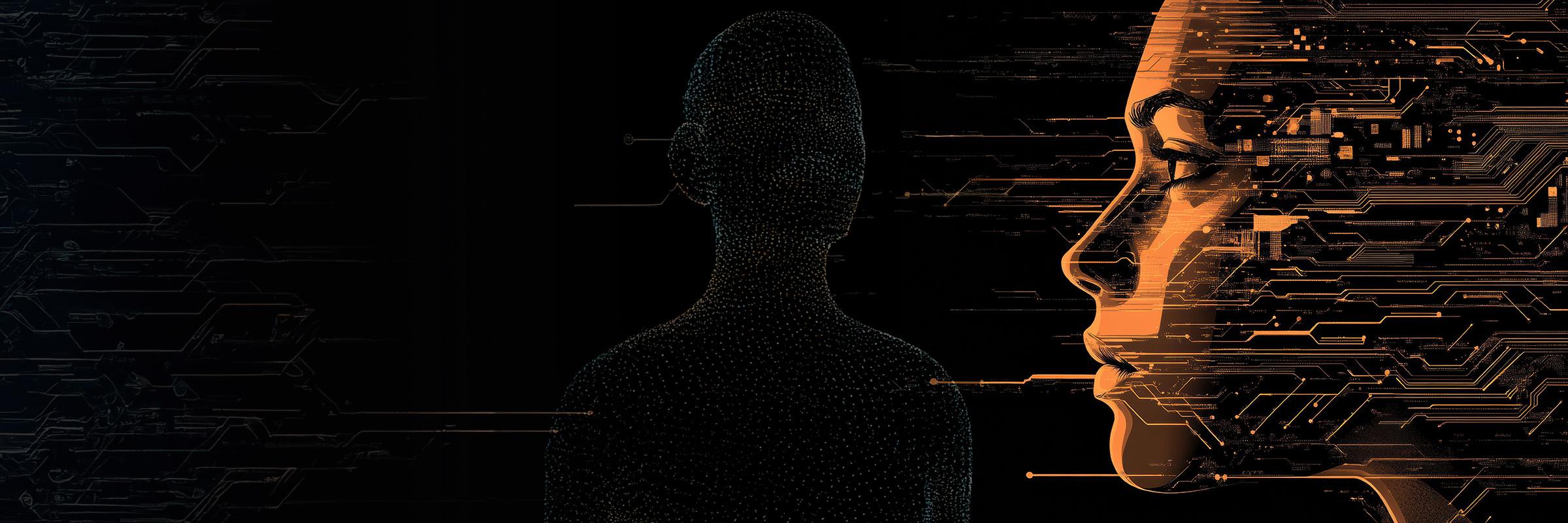
A digital human in an overlay network web

Navigating Humanity’s Next Frontier

Technology not only extends humans, but also fundamentally alters the way we interact with one another and the world around us. As we become embedded in the digital world and modern technologies, our physical and digital selves become all the more inseparable, while the boundaries that define us as human grow increasingly blurred. Our identity comes under threat, as malign actors are enabled by rapidly developing ways to undermine our personal security, while the ways we change risk opening ourselves up to new vulnerabilities. In a world of evolving cyber-physical pressures, we ask what it means to be human as a physical, digital, and social being, what defines us as unique individuals, and what draws us together as humanity, to the end of developing tools and solutions to safeguard the security of the human self.

Objectives

  • To investigate how emerging technologies reshape human identity, security, and the boundaries of the self.
  • To evaluate the vulnerabilities and risks arising from the integration of digital and physical human experiences.
  • To develop tools, frameworks, and policies that safeguard personal and collective security in a tech-driven future.
  • To engage the public and policymakers in critical discussions on what it means to remain human.

Questions

  • What are the security implications of the interaction between, and integration of, humans and technology?
    • What opportunities and security-challenges do digital twins present in exploring the boundaries of identity and humanity?
    • What vulnerabilities emerge from the increasing dependence on technology and digital services? How do we protect ourselves from such vulnerabilities?
  • How can we spot the human in the digital world?
    • What is the future of biometrics?
    • How do humans interact with deepfake technology in the real world?
  • How do legal and social structures respond to the evolving relationships between humans and technology?

Lead Academics

Lena Podoletz

Dr Lena Podoletz

Lecturer - Security and Protection Science

Policing Academic Centre of Excellence

Justin Lo

Dr Justin Lo

Lecturer - Security and Protection Science

Phonetics Lab

Members

Charlotte Baker

Professor Charlotte Baker

Professor of French and Critical Disability Studies

African Studies Group, FASS Health Hub, Multilingual Creativities, Performing Identities, Poetics of Resistance

B171, B - Floor, County Main
Georgina Brown

Georgina Brown

Senior Lecturer in Forensic Linguistics

Phonetics Lab

Basil Germond

Professor Basil Germond SFHEA FRGS

Professor of International Security

Centre for War and Diplomacy, ESRC Centre for Corpus Approaches to Social Science, Richardson Institute for Peace Studies, Security Lancaster

Claire Hardaker

Professor Claire Hardaker

Professor of Forensic Linguistics

DisTex - Discourse and Text Research Group, ESRC Centre for Corpus Approaches to Social Science, Forensic Linguistics Research Group , Security Lancaster, Security Lancaster (Behavioural Science)

Sarah Hitchen

Dr Sarah Hitchen FHEA

Lecturer in Philosophy

Matthew Ivory

Matthew Ivory

Senior Research Associate: Protecting Ordinary People from Deepfakes

Security Lancaster, Security Lancaster (Software Security), Social Processes

Nathan Jones

Dr Nathan Jones

Senior Lecturer in Fine Art: Digital Media

Institute for Social Futures Fellow, ISF Fellows 2019/20, Morecambe Bay Curriculum, Practices

Diane Potts

Dr Diane Potts

Lecturer

Lancaster Literacy Research Centre

Tharindu Ranasinghe

Dr Tharindu Ranasinghe

Lecturer in Security and Protection Science

SCC (Data Science), UCREL - University Centre for Computer Corpus Research on Language

Heather Shaw

Dr Heather Shaw

Lecturer in Psychology

Micro:bit Innovation and Research Lab, Policing Academic Centre of Excellence, Security Lancaster, Security Lancaster (Behavioural Science), Social Processes

Kwasu Tembo

Dr Kwasu Tembo

Lecturer

Emily Winter

Dr Emily Winter

Lecturer in Computer Science

Education (SCC), SCC (Software Engineering), Security Lancaster, Security Lancaster (Software Security)

C42, C - Floor, InfoLab21
Shiyan Zhang

Dr Shiyan Zhang

Lecturer in Information Systems

Centre for Technological Futures , Information Systems