

Our selections event

When do we select our trainees?

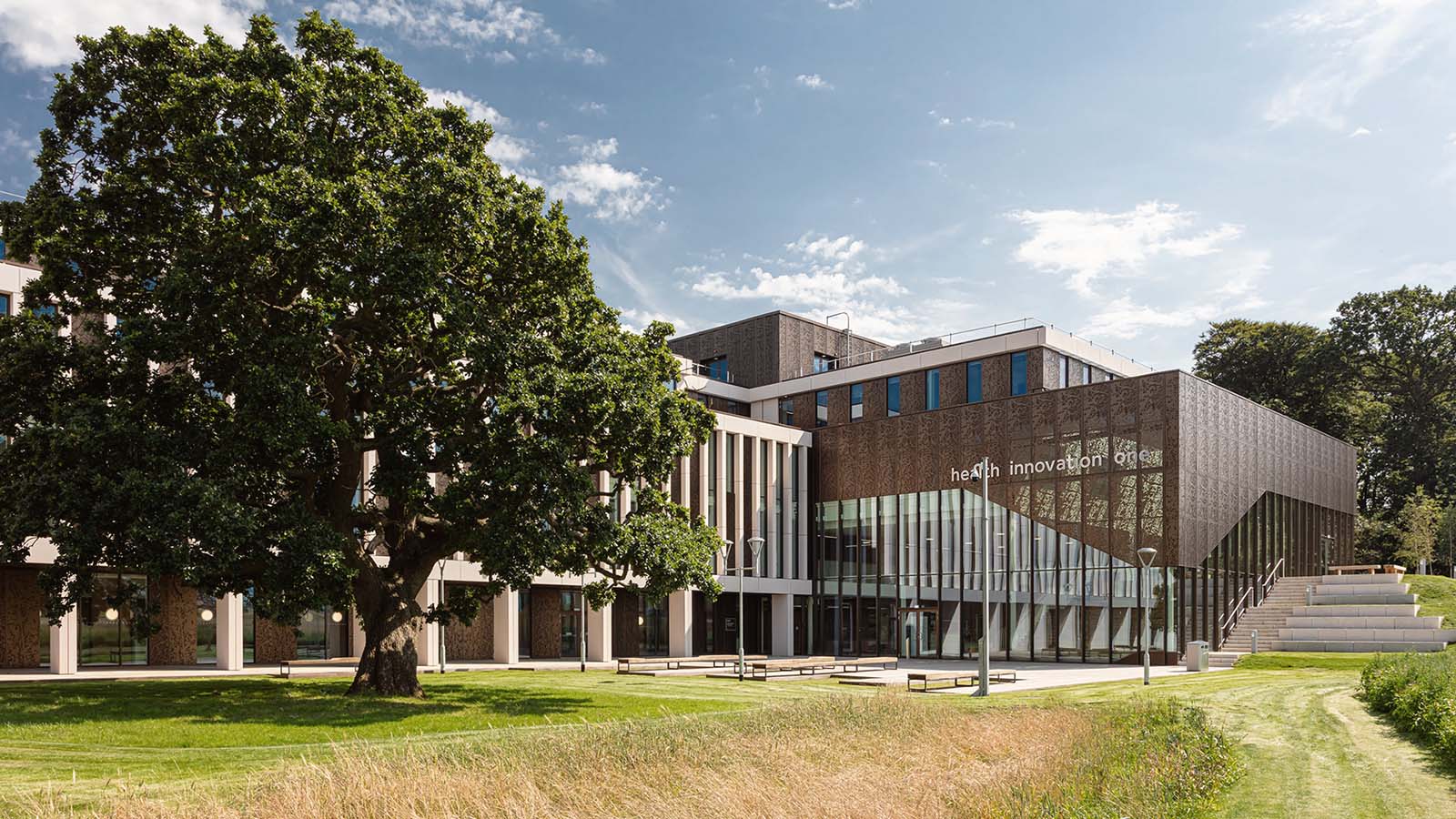
Candidates will be notified of the outcome of screening in early March. Approximately 200 candidates will be invited to attend a face to face selections half day at Lancaster University's Health Innovation campus. Those successful at the first stage will be invited to return for a final interview. Attendance in person at both days is required and selections cannot be undertaken online under any circumstances.

Selections interview dates

First round interviews (AM or PM): -

  • Monday 22nd March 2027
  • Tuesday 23rd March 2027
  • Wednesday 24th March 2027

Second round interviews (~90 minutes): -

  • Monday 5th April 2027
  • Tuesday 6th April 2027
  • Wednesday 7th April 2027
  • Thursday 8th April 2027
  • Friday 9th April 2027

Competency based live tasks and interviews

We use a number of live in the moment tasks and scenarios coupled with a competency based interviewing approach to assess your potential for training. Understanding how this works will allow you to best show your potential.

Our live in the moment tasks interograte your ability to meet the competency standards for the role as laid out in the job description and person specification. Competency based interviewing uses behavioural and situational questions to assess your previous behaviour as a predictor of future behaviour, coupled with your own reflections and learning from situations and experiences.

It is important to try and be yourself while undertaking the live tasks as this will best enable you to show the competencies listed below. There are many websites with more information on competency based interviewing and models which you can use to help you structure answers so that you remember to cover everything you need. You might want to start with the jobs.ac.uk page on competency based interviewing.

The live activities and questions during our selection events are designed to offer applicants opportunities to demonstrate competence in the following areas: -

  • Oral communication skills
  • Self-awareness and openness to learning
  • Personal maturity
  • Warmth and empathy
  • Resilience
  • Professional skills
  • Motivation and application
  • Contextual awareness
  • Problem-solving and decision making
  • Commitment to fairness and inclusivity

These competencies are based on a job analysis exercise which established what is important to success as a trainee clinical psychologist. You do not need to have clinical examples to evidence competencies - they can be shown through a wide variety of life experiences which will be equally valued by our panels.

We aim to be inclusive in our selection process so that people from varied backgrounds can become trainee clinical psychologists. However, it is still vital for those applying for the job of a trainee clinical psychologist to understand what the role may entail and the context of the NHS.

The time slots for selections interviews are fixed and cannot be rearranged unless you have specific support requirements.

Our selections interviews are designed to support us in interviewing as many candidates as possible. This requires us to run to a strict timetable to ensure fairness for all candidates. Please arrive promptly for your selections interview as you will not be able to complete an interview if you arrive late as it would unfairly impact other candidates.

Selection interview process

Approximately 200 candidates will be invited to a first round interview based on scores in the screening test. Up to 120 of these will be invited to return for a second interview.

Selections panels for first round interviews typically include a member of the programme staff team and a current trainee. In the second round they will be joined by one or more local stakeholders such as a community representative, social worker, clinical psychologist, third sector worker, or other professional. Candidates may see different panels at each visit.

Activities during the selections interviews

First round interviews - Working together group task. Candidates will work in a group with an external stakeholder while members of the programme team observe and assess the interactions within the group.

First round interviews - Written task. Candidates will be asked to produce a piece of written work in exam conditions using a laptop. Additional time for those with a disability may be available upon the provision of appropriate evidence.

First and second round interviews - Role play task. A member of the panel will undertake a role play with you of a challenging social situation followed by a brief discussion of the issues raised. This is not an assessment of your clinical skill but of your social and communication skills.

Second round interviews - Video task. You will be shown a video of people discussing a difficult non-clinical scenario and asked questions about the interactions in the video.

Second round interviews - Vignette exercise. You will be given a short vignette, which outlines a professional or ethical dilemma, and a number of questions for you to answer.

Second round interviews - Structured interview. The panel will collect evidence relevant to the competencies listed above by asking questions which will encourage you to talk about these areas. The panel will not have read your application form so do not assume they have prior knowledge of your experiences.

Activities are subject to change prior to interviews commencing without notice. All activities may be recorded for the purposes of internal quality assurance.

At second round interviews, candidates will be required to produce the original or genuine replacement degree certificate and transcript for the qualification which is conferring eligibility for GBC with the BPS or have already provided us with access to this via their institutions electronic verification system. We will not proceed with any interview where both certificate and transcript are not presented or previously verified.

Support for individuals with a disability

Our interview process has been developed to be inclusive by design and so adjustments for most disabilities are not required. All candidates have the opportunity to take notes in interviews, write down questions, and are given time to understand the questions being asked. Additional time may be provided for our written task. Candidates should refer to the disabilities and equal opportunities page for further instructions.

Offers and feedback

Provisional offers

Following the final stage of the interview process, we will contact attendees to notify them of the outcome as soon as possible. We ask candidates who are made an offer to repeat the screening test under supervised conditions - these will be arranged on an individual basis to fit with candidates' schedules and within a timescale that allows candidates to make a genuine choice between programmes where multiple offers are received. All offers are conditional on the retest result, a satisfactory DBS check and registration with the DBS update service, employment references, and an occupational health check.

Interview feedback

Feedback on your performance will be emailed to candidates following the selection process. Please do not telephone or email the programme for this information.

Tab Content: Criminal convictions and GDPR

Applicants should note that all Clinical Psychology trainees are subject to an enhanced Disclosure and Barring Service (DBS) check as a condition of a place on the course. Applicants selected for interview are asked to complete a self-declaration form that details any relevant convictions and/or pending convictions. Applicants who fail to disclose relevant criminal convictions or pending convictions that later become known as part of their enhanced DBS check may be excluded from the programme. Please note that spent convictions, cautions, warnings and reprimands that would not normally appear on your record may be disclosed through an enhanced DBS check.

Applicants that contact the department before the interview stage to disclose criminal convictions will be treated in the same manner as those that disclose using the self-declaration form.

Lancaster University will only have access to an applicant’s self-declaration form. Lancashire Care NHS Foundation Trust receives the results of the enhanced DBS check and these are not made available to any staff at the University. The University is informed of the outcome only. Please note that offer holders are required to register with the DBS update service which incurs an annual cost to the applicant. Please check the Gov.uk website for current costs. For more information about how Lancashire Care NHS Foundation Trust uses and secures personal data, please refer to the LSCFT Privacy Notice. For information about how criminal convictions can affect your application for study, please refer to the self-declaration form or contact the programme.

The information applicants provide via the self-declaration form is collected in line with the General Data Protection Regulation (GDPR) and the Data Protection Act 2018. Received self-declaration forms will be scanned electronically with the paper copies being destroyed in a confidential manner. The application cycle for the Doctorate in Clinical Psychology begins in May and ends by 1st September the same year. All self-declaration forms are securely deleted from University systems on, or before, the 1st September in the year of application.

Information will be stored securely within the University systems and will only be accessed by appropriate University staff. To learn more about how Lancaster University ensures the security of personal information please refer to the University's Information Security Policy.

GDPR grants individuals certain rights in relation to their own personal data. For more information on these rights, please refer to the Rights of the Data Subject page on the University website.

For more information about how the University uses student and applicant data, please visit the Student Privacy Notice on the University’s website.

Students also have a responsibility to inform the University if they receive a criminal conviction during the course of their studies on the Doctorate in Clinical Psychology. Students who wish to disclose a criminal conviction ‘in-year’ should contact Katherine Thackeray, Programme Administrator.

Tab Content: Referees and references

Successful applicants are required to provide the programme with satisfactory references after a provisional offer is made. These must cover the previous 3 consecutive years of employment or training.

  • Reference requests will only be sent to your named referees in the event that you accept a place on the programme
  • It is the responsibility of the applicant to chase the return of references
  • These are factual employment references which are usually completed by HR departments. They are not looking for opinions on applicants suitability for the position.