
We offer a range of Master's by Research funded by different sources, such as research councils, industries or charities. As a MSc-R student, you will become a valued member of a research group. Here you will work with internationally respected academics, post-doctoral research associates and technicians. Find out more about our research groups below.
How to Apply
To apply for a funded Master's by Research, please read the advertised project information carefully as requirements will vary between funders. The project information will include details of funding eligibility, application deadline dates and links to application forms. Only applicants who have a relevant background and meet the funding criteria can be considered.
Current Master's by Research Opportunities
Current Master's by Research Opportunities List accordion
Supervisors
Professor Ian Dodd
Professor Dave Johnson
Project Description
Conventional arable agriculture with extensive tillage, application of biocides and synthetic fertilisers degrades soil structure, decreases soil organic matter and alters soil microbiology. There is increasing interest in soil amendments and commercial products to reverse these trends. While supplying single strain microbial inoculants with specific plant growth-promoting traits can enhance crop growth (Teijeiro et al. 2020), variable responses occur as introduced microbes have to compete with indigenous microbes. Instead, land management can alter the frequency with which such plant growth-promoting traits occur in the microbial community (Ruscoe et al. 2021). Thus several products aim to stimulate the soil microbial community, but the mechanisms by which these products promote plant growth remain elusive.
Bio Charged Compost Company sells plant growth promoting Compbucha Extract™, derived from composting specific vegetation types in a proprietary process. Field trials demonstrate positive effects (including increased drought tolerance) of adding this product on the growth of several crops, but its performance has not been assessed in structured trials that vary soil water and nutrient status. Thus we seek to:
- Evaluate the biochemical composition of Compbucha Extract™ via high performance liquid chromatography to suggest possible plant growth-promoting mechanisms
- Determine the growth, water use and nutrient uptake of crops grown with Compbucha Extract™ and relevant controls in glasshouse experiments
- Conduct field trials (in several locations) of the most responsive crop to assess crop quality using standardised indicators
What’s in it for you ?
Using greenhouse and field experiments, we seek to understand how Bio Charged Compost Co’s Compbucha Extract™ enhances crop growth and assess its performance relative to comparator products and conventional chemical fertilisers. After analysing the extract’s biochemical / nutritional composition with LU technical staff support, you will grow crops in unamended or amended soils to measure their growth, water use and nutrient uptake. Greenhouse experiments (pot trials) allow precise plant water use (gravimetrically) and leaf growth (with a ruler and/or image analysis) measurements. Soil and plant nutrient content will be determined via ICP-OES. Since Compbucha Extract™ is expected to enhance crop water stress resilience, you will also impose different irrigation treatments, to measure leaf water status (thermocouple psychrometry) and stomatal conductance (transient time porometry). There will be opportunities to undertake field work.
References
RG Teijeiro, AA Belimov, IC Dodd (2020) Microbial inoculum development for ameliorating crop drought stress: a case study of Variovorax paradoxus 5C-2. New Biotechnology 56, 103-113.
HL Ruscoe, R Taketani, IM Clark, G Lund, DJ Hughes, IC Dodd, P Hirsch, T Mauchline (2021) Land management legacy affects abundance and function of the acdS gene in wheat root associated pseudomonads. Frontiers in Microbiology 12, 611339.
General eligibility criteria
Enthusiasm, independence, self-motivation, curiosity and the ability to communicate to a range of audiences are all distinctly advantageous qualities for a Master's by Research (MSc-R). Applicants would normally be expected to hold a minimum of a UK Honours degree at 2:1 level or equivalent in a relevant degree course. However, applicants who have gained experience in relevant fields through non-traditional routes are strongly encouraged to apply. We particularly welcome applications from Black, Asian or Ethnic Minorities candidates, candidates who are in the first generation of their family to go to university, candidates who have been in care or who have been a young carer, and candidates from a low-income background.
English language requirements for international students.
Studentship funding
This funding covers the tuition fees for UK students only, plus a stipend of £21,805.
Dates
Deadline for applications: Friday 30 October 2026
Provisional Interview Date: week commencing 16 November 2026
Start Date: January 2027
Application process
- Download the LEC Funded PhD/MSc-R Application Form and LEC Funded PhD/MSc-R Reference Form
- Complete the Application Form, renaming the document with your 'Name and Application Form' e.g., Joe Bloggs Application Form.
- Submit the completed Application Form and a CV to lec.pgr.applications@lancaster.ac.uk
- Please note only Word or pdf files are accepted.
- Rename the referee form with your ‘Name and Reference’, e.g., Joe Bloggs Reference. Send the renamed reference form to two referees and request them to forward the referee document to lec.pgr.applications@lancaster.ac.uk
- Please note only Word or pdf files are accepted. It is important that you ensure references are submitted by the closing date or as soon as possible.
- You will receive a generic acknowledgement in receipt of successfully sending the application documents.
- Please note that only applications submitted as per these instructions will be considered.
- Please note that, if English is not your first language, you will be required to provide evidence of your proficiency in English. This evidence is only required if you are offered a funded PhD and is not required as part of this application process.
- Please note that, if you do not hear from us within four weeks of the closing date then you have been unsuccessful on this occasion. If you would like feedback on your application, please contact the supervisors of the project.
Submit all applications and references to this email address: lec.pgr.applications@lancaster.ac.uk
How the application process works
- Select the project you wish to apply for. You can make informal enquiries to the project supervisors if you wish. Please ensure that you check the application deadline dates and eligibility criteria.
- Complete your application by following the links to the application form. At this stage, you are able to apply for more than one advertised project if you wish.
- After the closing date, the Department will consider all applications. Shortlisted candidates will be invited for an interview. Interviews can be arranged by Teams or telephone. The timescale for this will vary but is in the region of 4 weeks.
- If you are successful at interview for the studentship, you will be invited to formally apply via the admissions portal online. This ensures that you receive a formal offer of admission. Please submit one application only, and state the studentship that you have applied for in the source of funding section.
- Once a formal offer has been made, you will need to check the conditions in your offer letter and supply any outstanding documents by the required deadlines. If your offer is unconditional then this will not apply to you.
Research Groups



Facilities
-
Laboratories
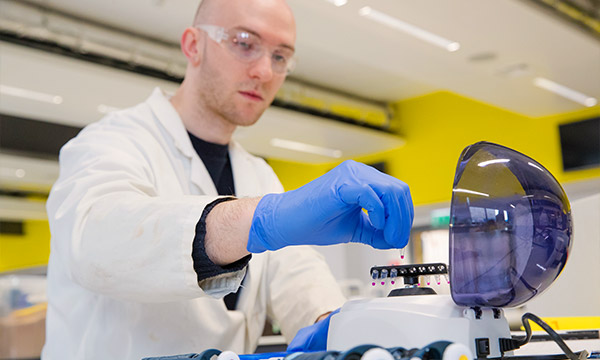
You will find yourself taking advantage of several laboratory facilities at Lancaster Environment Centre. There are our £4.4 million Teaching Labs, for example, as well as specialist facilities for Environmental Chemistry, Noble Gas, and Plant and Soil Ecology.
-
Research Facilities
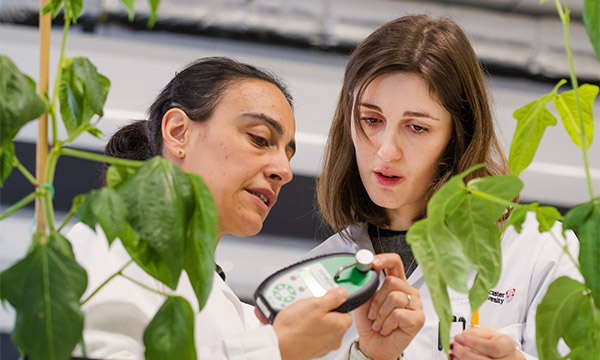
There are no fewer than 15 purpose-built glasshouse modules, 16 controlled environment plant growth rooms, 4 solar domes based at the Hazelrigg Weather Station and a suite of ultraviolet radiation research facilities that can truly claim to be world-class.
-
Field Sites
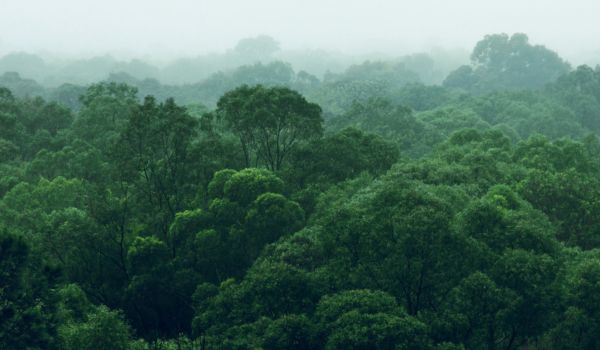
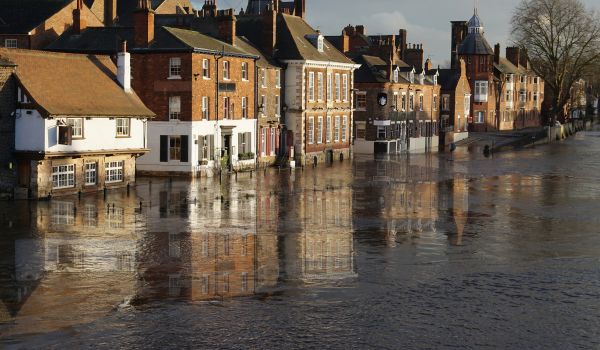
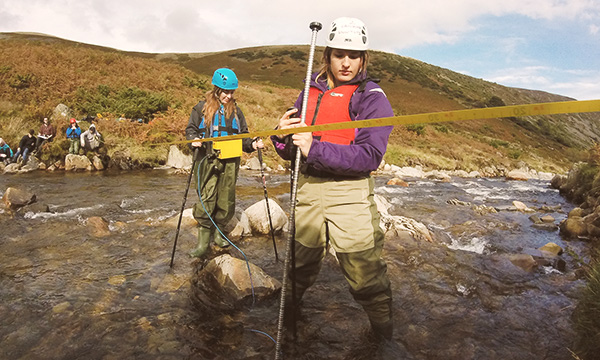
You could find yourself working at a range of catchment science sites across England and Wales, including the local River Eden Valley, or they can travel much further afield to the tropical forests of the Amazon and Borneo.
-
Cutting-Edge Technologies
You can be trained to use a range of equipment, such as our Stable Isotope Ratio Mass Spectrometer Facility, X-ray CT Scanner, Magnetometer or the LI-COR Portable Photosynthesis System, which has the capacity to measure plant gas exchange with exceptional speed and precision.
-
Rich Data Resources
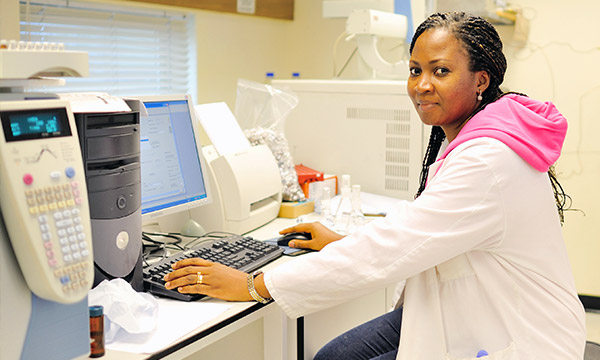
Dedicated support staff with expertise in GIS, statistics, modelling, information technology and programming are available to provide specialist training in all aspects of data acquisition, processing and analysis.