Fellowships

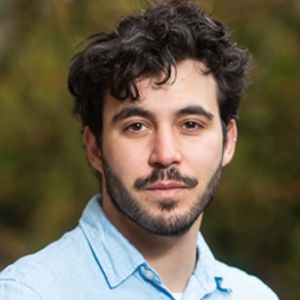
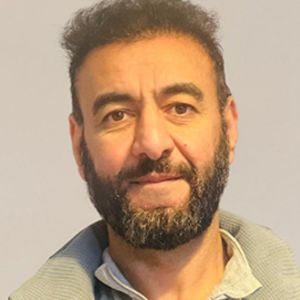
Dr George Dimitriadis

Dr George Dimitriadis - Marie Curie Fellow 2025

About the Researcher

Dr George Dimitriadis is an observational astrophysicist specialising in transient astronomy, with a particular focus on Type Ia supernovae, their progenitor systems, and the diversity of thermonuclear transients. He completed my PhD in Astronomy at the University of Southampton, following an MSc in Physics and Astronomy at the Anton Pannekoek Institute for Astronomy in Amsterdam and a Bachelor’s degree in Physics at Aristotle University of Thessaloniki.

About the Project

MC PDF: Mapping the diversity of Type Ia supernovae explosions

Type Ia supernovae (SNe Ia) are powerful white dwarf explosions that astronomers use to measure the expansion of the universe. They’ve been essential in discovering dark energy, but not all of them behave the same way, with some “peculiar” ones showing unexpected brightness and evolution. The project aims to understand these unusual explosions by studying the galaxies they occur in and estimating how old their parent star systems are. Using data from the Zwicky Transient Facility (ZTF), it will build the largest consistent sample of these peculiar events and compare them to theoretical models of how white dwarfs explode. The goal is to map out the full diversity of these supernovae, figure out their origins, and help ensure that future surveys like the Vera Rubin, Legacy Survey of Space and Time (LSST) can use only the most reliable ones for studying the universe.

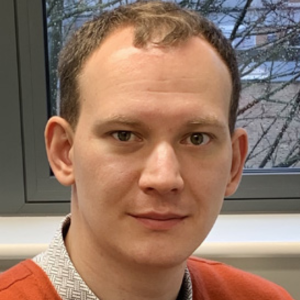
Dr Songjun Hou

Dr Songjun Hou - Leverhulme Research Fellow 2024

About the Researcher

Songjun is a Research Fellow in Physics working at the interface of nanoscience, quantum physics, and molecular electronics. His research focuses on understanding and controlling charge transport at the single-molecule level, with the aim of developing next-generation electronic devices that are smaller, more energy-efficient, and functionally novel. He has a particular interest in quantum interference effects in molecular systems and how these can be harnessed to design innovative device architectures.

About the Project

ECF: Towards Energy-efficient Nanodevices based on Quantum Interference (ENano)

The ENano project (Towards Energy-efficient Nanodevices based on Quantum Interference) aims to explore the use of individual molecules as functional components in electronic devices, particularly memristors. By leveraging quantum interference effects, the project seeks to design molecular-scale devices with tunable electrical properties, offering a potential pathway toward ultra-low-power computing technologies. This is especially relevant in the context of the rapidly increasing energy demands of artificial intelligence, where new device paradigms are needed to improve efficiency beyond conventional silicon-based electronics.

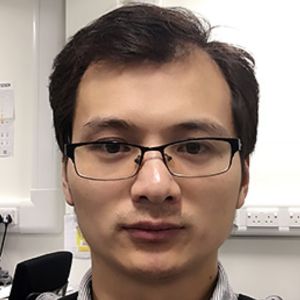
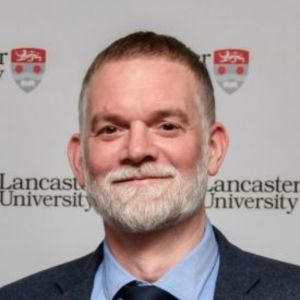
Dr Samuli Autti

Dr Samuli Autti - EPSRC Fellow 2022

About the Researcher

Samuli Autti is a Lecturer and EPSRC Fellow at Lancaster University in the UK. He has been awarded the IUPAP Young Scientist Prize 2020 for a range of superfluid discoveries, and the 2023 Nicholas Kurti Prize for his work on low-temperature physics.

About the Project

Pushing the boundaries of superfluid vacuum and coherence

Samuli's EPSRC fellowship supports investigations of the interfaces between classical and quantum physics in superfluid 3He, aiming to answer questions such as “what does it feel like to touch a quantum fluid” and “can we melt a time crystal”. He is also working on a superfluid-based dark matter detector, laboratory simulations of phase transitions in the early universe, and neutron star superfluid and vortex dynamics.

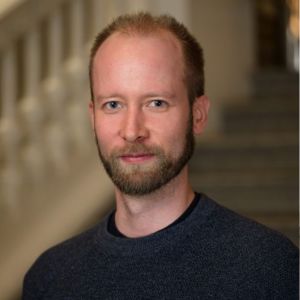
Professor Edward Laird

Professor Edward Laird - ERC Fellowship 2019

About the Researcher

Professor Edward Laird is an experimentalist in quantum electronics. He completed his PhD at Harvard University, before undertaking a postdoctoral position at Delft University in the Netherlands. Prior to starting at Lancaster in 2018, he was an RAEng Fellow at Oxford University.

About the Project

MSI: ERC:MesoPhone

Edward's ERC project studied some the smallest moving objects that can be fabricated – carbon nanotubes, which vibrate like tiny guitar strings. Because they are so small and so light, they are ideal for measuring tiny forces, such as those due to quantum tunnelling by electrons, or due to residual damping in superfluids. As well as being a fascinating way to study quantum effects in electronics, they may one day allow for new types of microscope. The project allowed Professor Laird to establish his lab in the low-temperature group.