Self-Aware Power Networks

Harnessing the power of AI for autonomous operation of power networks.

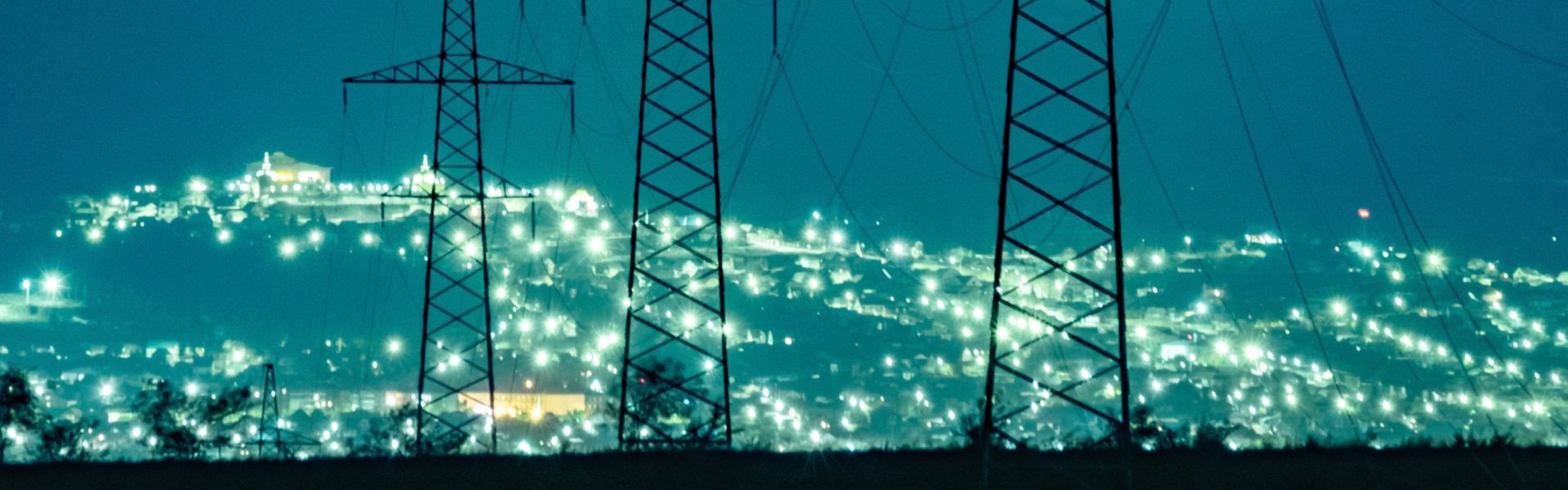
Pylons and a city at night

About us

The aim of this project is to provide sustainable system operation with optimised conditions. The research will support the autonomous operation of modern power grid systems to achieve self-maintenance, self-healing, and self-reconfiguration capabilities

For the open challenge of provisioning self-organising capabilities in upcoming large-scale distributed power networks, such as the Smart Grid, we propose a paradigm-shift approach to support real-time adaptivity.

Our objective is to provide real-time self-maintenance, self-healing, and self-reconfiguration capabilities for future-generation distributed power systems.

Our novel approach allows for:

  • A scalable, high-accuracy real-time distributed monitoring scheme for highly dynamic, complex systems.
  • An autonomous search and learning framework via self-control of exploration and exploitation.
  • An autonomous network topology reconfiguration framework in response to dynamic changes in supply and load demands.

Leverhulme logo

Funded by the Leverhulme Trust

This project is funded by the Leverhulme Trust to enable the development of autonomous power and energy systems inspired by the self-organisation of living systems.

The project is entitled “Self-Aware Power Networks: Autonomous Operation at Scale”. The modern power grid is a complex and interconnected cyber-physical system comprising physical components such as power generators and cyber components that control the grid’s operation. Taming the complexity in such dynamic systems is an open research problem, while traditional approaches to addressing this are primarily limited to conventional decentralised and multi-objective resource management.

This project explores a radically new holistic approach to power grid operation by developing a paradigm-shift approach—aided by advanced machine and deep learning – to mimic the self-organisation of living organisms.

The modern power grid system has fundamentally changed from a classical hierarchical generation-transmission-distribution approach to an on-demand dynamic geo-distributed cyber-physical system. It also experiences various operating conditions as power generation profiles from renewable energy sources and user consumption patterns vary dynamically across physical locations and over time.

The success of the project would transform future power generation systems to ensure their safe, stable, and optimised operation.

The project is a collaboration between the School of Engineering and Security Lancaster at Lancaster University.