


Institute of Planetary Repair

Leaves outlined with gold

What is the Institute of Planetary Repair?

The Institute of Planetary Repair is an interdisciplinary initiative in the Lancaster Environment Centre that complements our five disciplinary Research Groupings. Our focus on planetary repair encapsulates a shared desire to work collectively to push the boundaries of knowledge around people and the environment. The Institute aims to contribute meaningfully towards building a fairer society and repairing the planet, and our relationships with it and each other. Created in 2025, the Institute also aims to encourage and support a vibrant research culture built on interdisciplinary dialogue and collaboration. Through exciting and challenging conversations, we are working to foster creativity, productive tensions, and experimentation. We treat interdisciplinarity as an ongoing process rather than an outcome or endpoint.

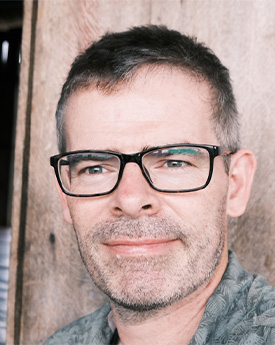
Leads

Christina Hicks

Professor Christina Hicks

Professor

Human Geography, Pentland Centre, Political Ecology

Luke Parry

Dr Luke Parry

Reader in Environmental Social Science

Centre of Excellence in Environmental Data Science, DSAIL - Health, Human Geography, Improving global stewardship, Political Ecology , Understanding a changing planet

Working together

The Institute of Planetary Repair is inclusive of researchers from diverse disciplines, career stages, and backgrounds, and may be particularly important for our non-disciplinary staff and postgraduate students. Our work necessarily means working across disciplines and engaging with alternative ways of understanding the world. Facilitating this requires first building an open and supportive environment with a culture of respect, that welcomes enquiry and is open to constructive critique. One that recognises differences exist in ways of communicating, and where researchers listen to understand and ask to develop ideas. To build a trusted environment, we recognize the need for self-scrutiny and humility, especially in relation to our training, privileges and research experiences. We will remain open to engaging with practitioners and others outside of academia, drawing on new insights and experiences. We will proactively use guidance and tools to ensure that participants in the Institute give and receive fair credit for their contributions to our collective work. Our ways of working together should be dynamic and open to revision and development from all members, as we develop.

Our approach to planetary repair

The Institute invites researchers to explore new ideas and ways of working in the context of planetary repair. Some key ideas have emerged from our discussions so far that are shaping our understanding of planetary repair. We are not seeking consensus, but welcome debate on these:

Interconnections

Societal and environmental systems and their interconnections are complex and planetary repair is therefore about more than just scaling up, and requires thinking differently.

Alternatives

Planetary repair requires a focus on how alternative social and environmental futures can be brought about. This requires deliberate care (intentional and thoughtful) and attention to past injustices and exploitation.

Breakages

Planetary repair requires breakage, too. We need to understand how new possibilities arise out of cracks and ruptures of socio-technical systems, and of how to reckon with the torn fabric of planetary social life.