

Recent News
Loading News
No news articles found
Something Went Wrong
Sorry, we ran into an issue when trying to load more news articles
Upcoming Events
Sorry, we looked but there are no events currently scheduled in this area.
More Events
Limestone Pavements: Life Between the Cracks
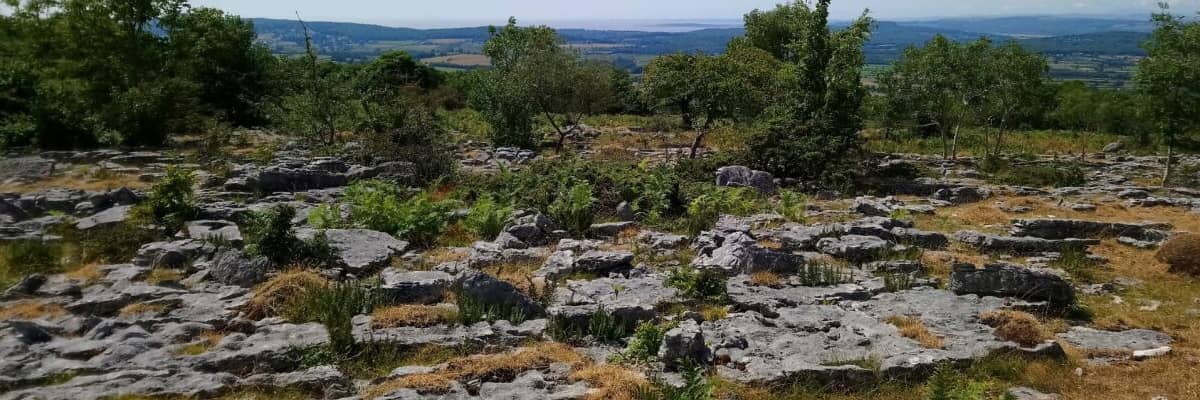
The Limestone Pavements Partnership recently delivered a travelling photography exhibit (featuring the work of Oana Bakovic) across the libraries of Lancashire and Cumbria, depicting the limestone pavements of Hampsfell, in Grange-Over-Sands. The display was curated by Carly Stevens and Ali Birkett, and featured audio recordings from members of the Partnership.
Damage
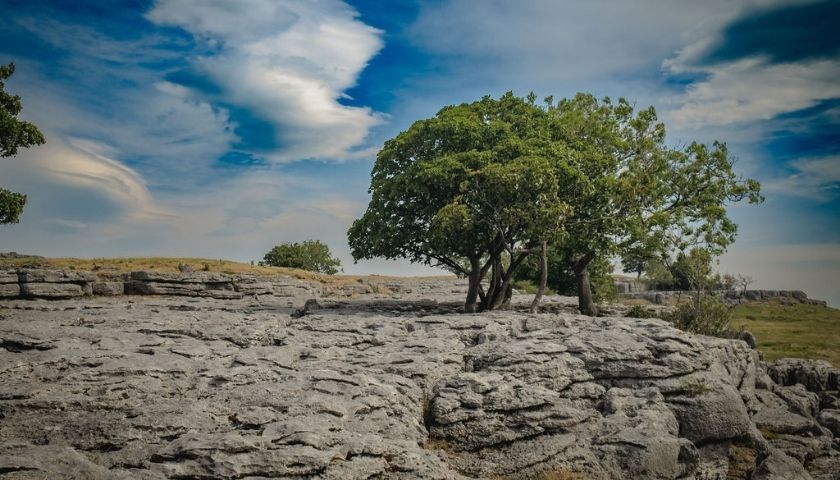
Limestone pavements have been extensively damaged in the past, they provide an easy source of stone and in more recent history the attractive clints have been widely used as decorative stone. You can see examples of this on the tops of garden walls and as gateposts throughout the region.
Damage pt.2
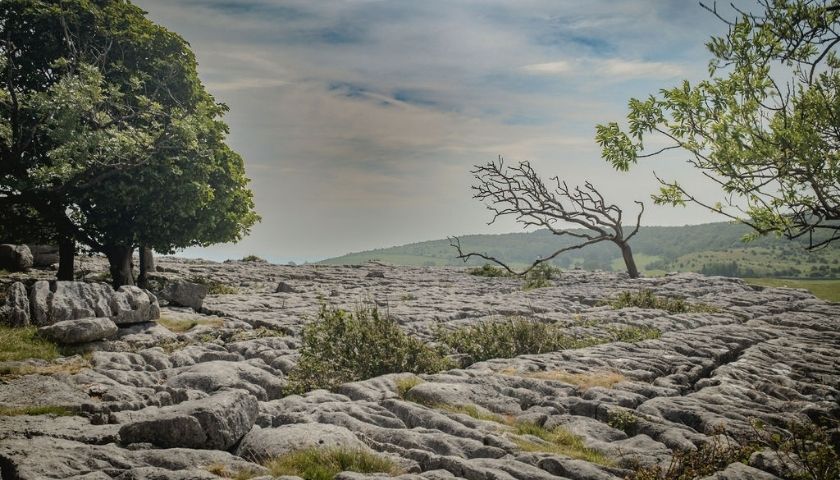
Limestone pavements are now protected through limestone pavement protection orders, which prevent damage to the stone on the pavements. Many areas of limestone pavement are also protected for conservation, including in some local National Nature Reserves like Hutton Roof Craggs. This is important because limestone pavements are an irreplaceable habitat.
Limestone pavements at Hutton Roof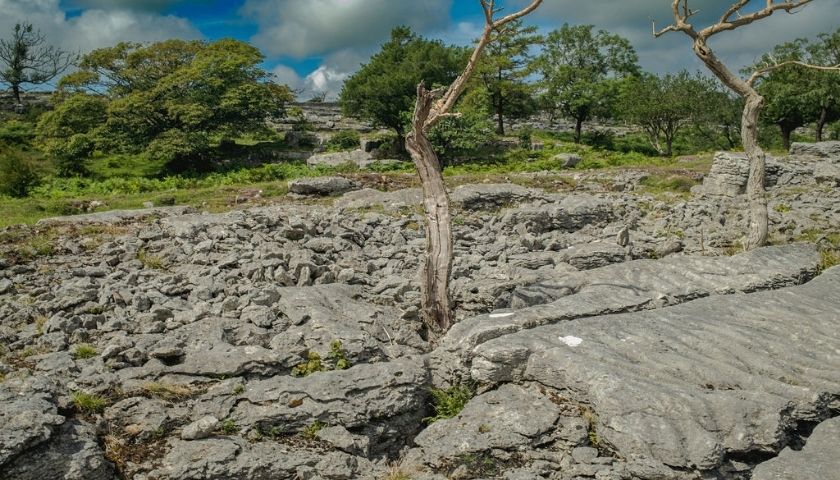
New Challenges
Limestone pavements face many other challenges including invasive species, climate change and air pollution. Ash dieback is a disease that is killing ash trees.
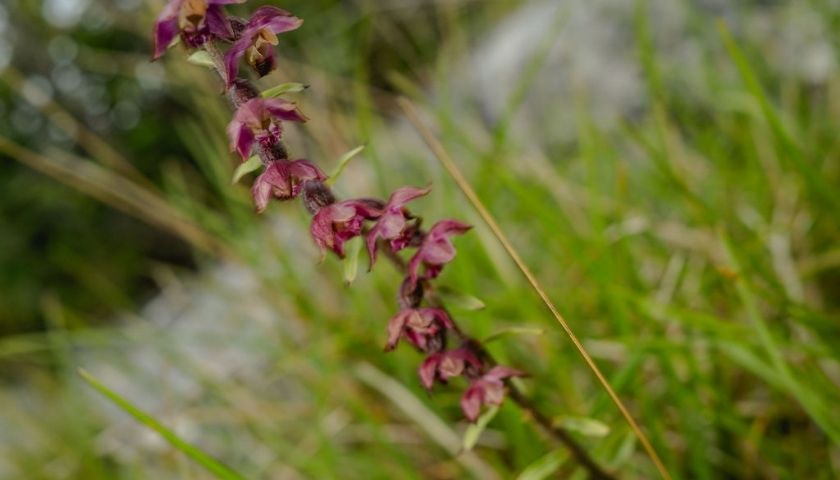
Maintenance
In order to maintain limestone pavements in good condition, management is needed. If left unmanaged, trees and shrubs colonise, which can be a good thing ,but in time they can take over and rare species may be lost. A delicate balance has to be maintained.
Broad-leaved Helleborine (Epipactis helleborine), a rare flower found on the pavements, is one such flora we are trying to preserve.
The importance of pavements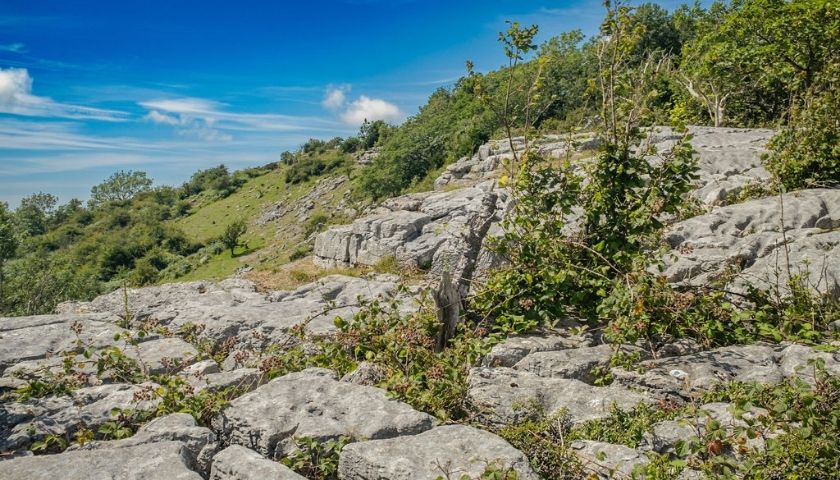
Management Challenges
Management of limestone pavements is actually very challenging. Optimal management would maintain a balance between open and wooded areas within the landscape but at the moment, we don’t really know the best way to achieve this. More research is needed on this topic. One of the biggest challenges is that limestone pavements often occur within a patchwork of other habitats such as grassland and woodland, so compromises often have to be made to ensure the needs of all habitats are met.
Undermanagement of pavements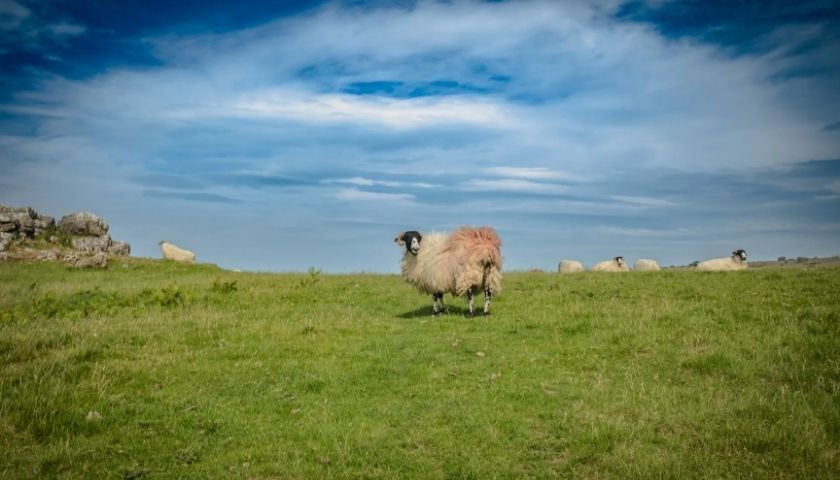
Management Challenges
Grazing plays a role in the management of limestone pavements but we don’t have any evidence to tell us the best time to graze or when to use different animals. We also don’t know how best to restore degraded habitats.
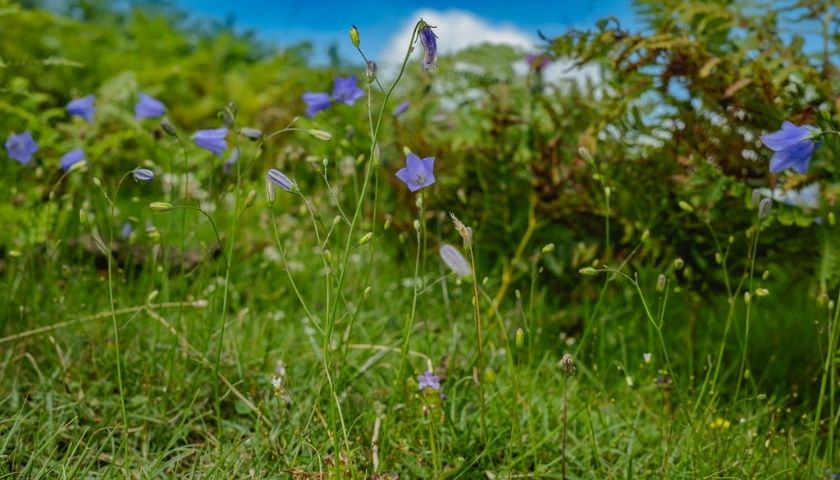
Harebell
Harebells (Campanula rotundifolia) are a common flower in calcareous grasslands.
.jpg)
Hart’s-tongue fern
Hart’s tongue fern (Asplenium scolopendrium) are commonly found growing in the grikes of limestone pavements.
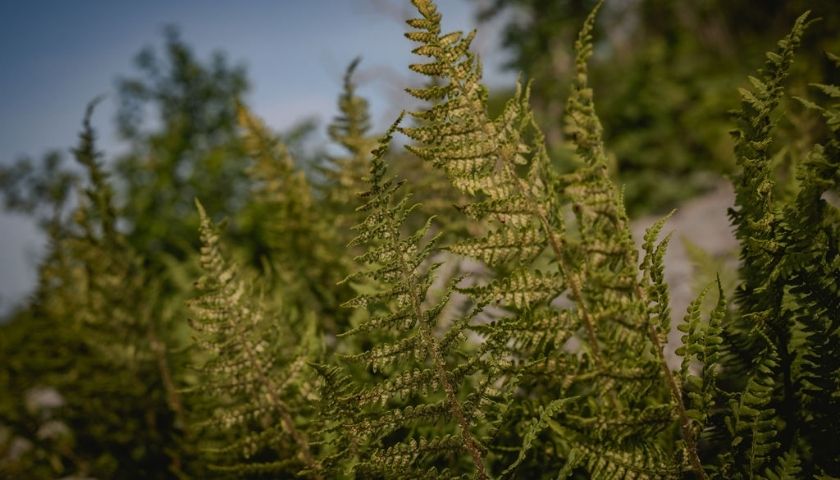
Rigid Buckler fern
Rigid buckler fern (Dryopteris submontana) is a scarce species, mainly found in limestone pavements.
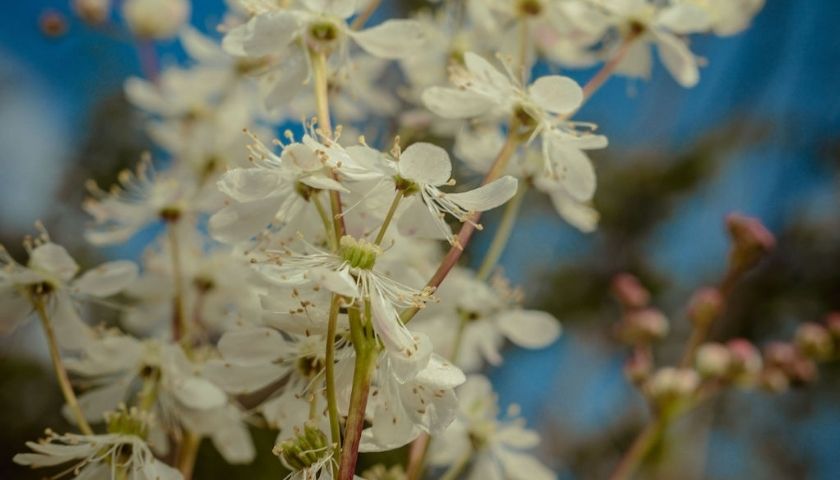
Dropwort
Dropwort (Filipendula vulgaris) is commonly found growing in lime-rich soils.