
Fluid and Granular Materials Characterisation Facility

Fluid and Granular Materials

About the facility

The Fluid and Granular Materials Characterisation Facility comprises three complementary laboratory spaces within the Lancaster Environment Centre and houses a world-class suite of unique and cutting-edge instrumentation for addressing research questions across the Earth, Environmental, and Planetary Sciences. We are thankful for generous investment and funding from the Royal Society, the Natural Environment Research Council (NERC), Lancaster University and a UK Research and Innovation Future Leaders Fellowship (UKRI FLF) awarded to Dr Thomas J. Jones.

Access is open to both internal and external users. Prospective users are encouraged to get in touch with Dr Thomas Jones (Academic Director) or Dr Pier Paolo Comida (Technical Lead) to discuss their requirements and potential applications.
Fluid physical property characterisation

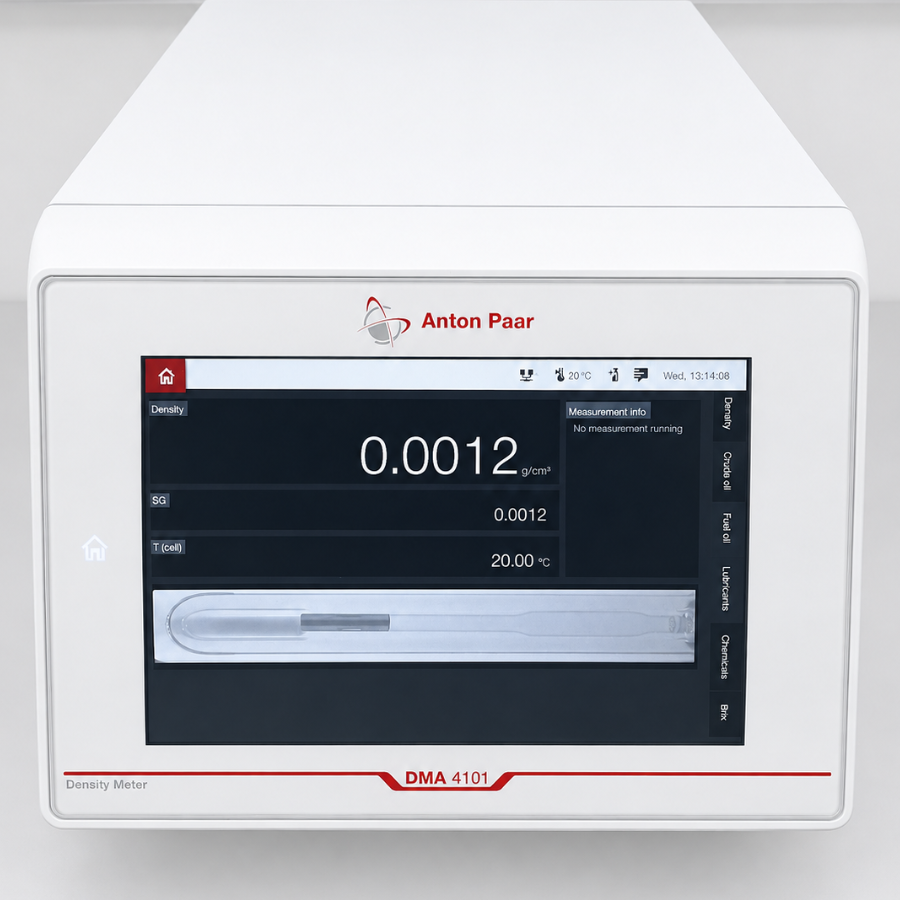
Liquid Density Meter (Anton Paar 4101)

Liquid Density Meter (Anton Paar 4101)

A benchtop liquid density meter used to accurately determine the density and specific gravity of liquids and fine-grained particle suspensions. It requires approximately 1 mL of sample and measures density over 0–3 g/cm³, with a density accuracy of ±0.0001 g/cm³ and temperature control from 0–100 °C.

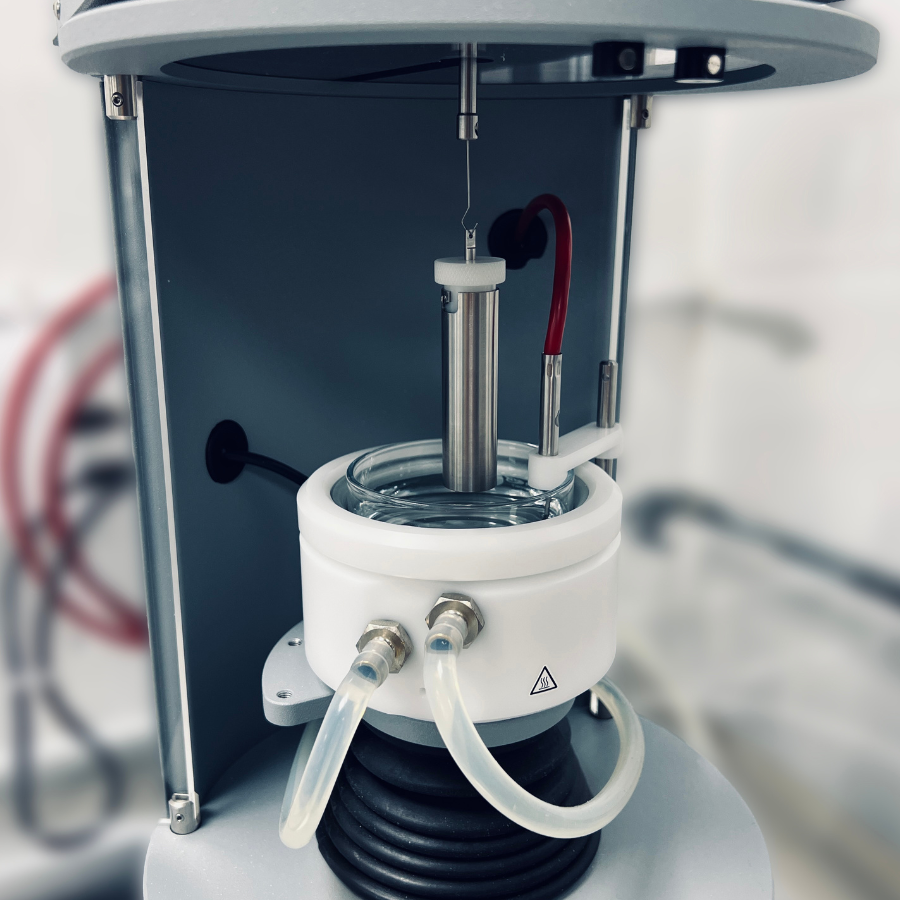
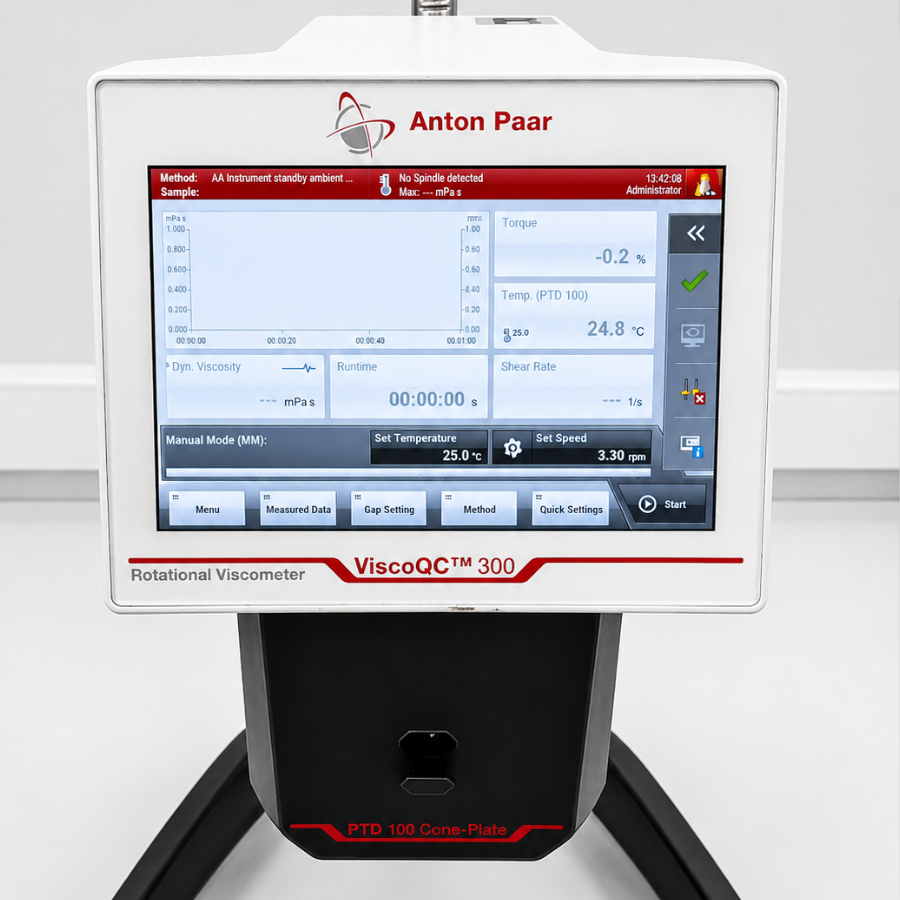
Viscometer (Anton Paar ViscoQC 300-R)

Viscometer (Anton Paar ViscoQC 300-R)

A rotational viscometer for multi-point viscosity measurements across different shear rates. Our PTD 100 Cone-Plate attachment uses small sample volumes (0.5–2 mL) and provides integrated Peltier temperature control from 0–100 °C. Our base ViscoQC 300-R unit has a viscosity range of approximately 1.3 to 40,000,000 mPa s.

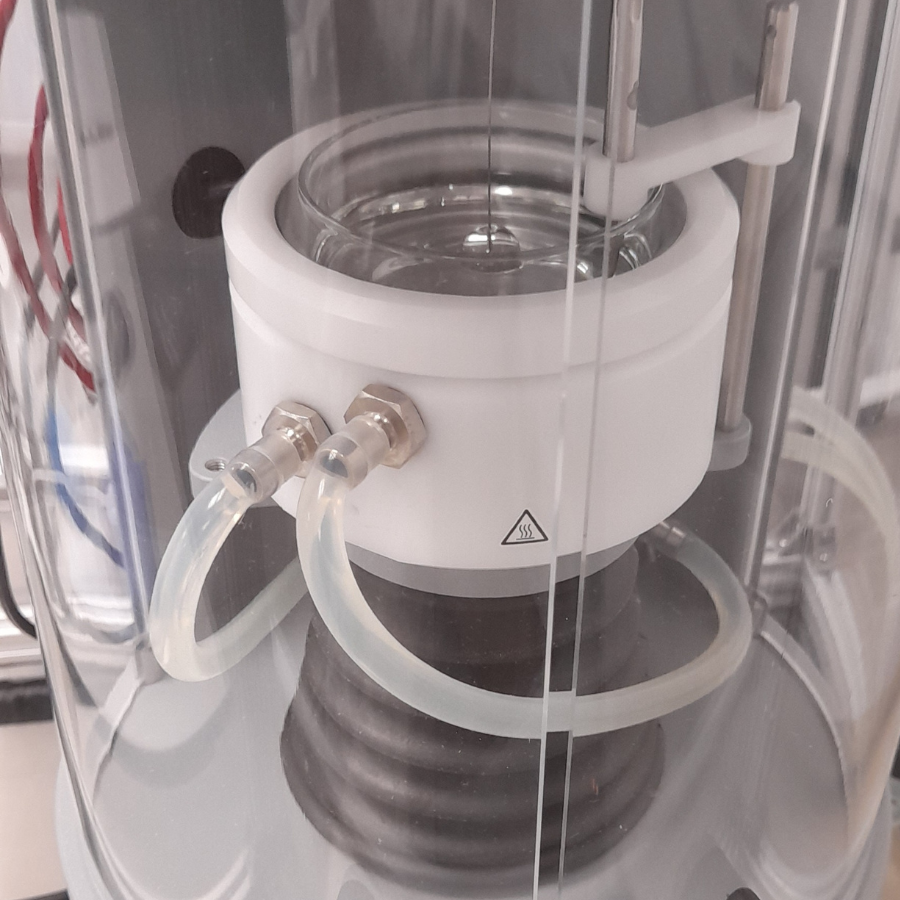
Force tensiometer (Biolin Scientific Sigma 700)

Force tensiometer (Biolin Scientific Sigma 700)

A force tensiometer used to measure the surface tension and interfacial tension of liquids, as well as contact angle and wettability. It uses techniques such as the Wilhelmy plate and Du Noüy ring methods, with a measuring range of approximately 1–2,000 mN/m and force resolution down to 0.1 µN.

Contact Angle Goniometer (Ossila)

Contact Angle Goniometer (Ossila)

Used to measure contact angle and surface wettability, helping assess how readily a liquid spreads across a solid surface. It measures contact angles from 5–180° with ±1° accuracy, using a 25 µL glass syringe to dispense droplets onto samples, and can also determine liquid surface

Particle/granular media characterisation

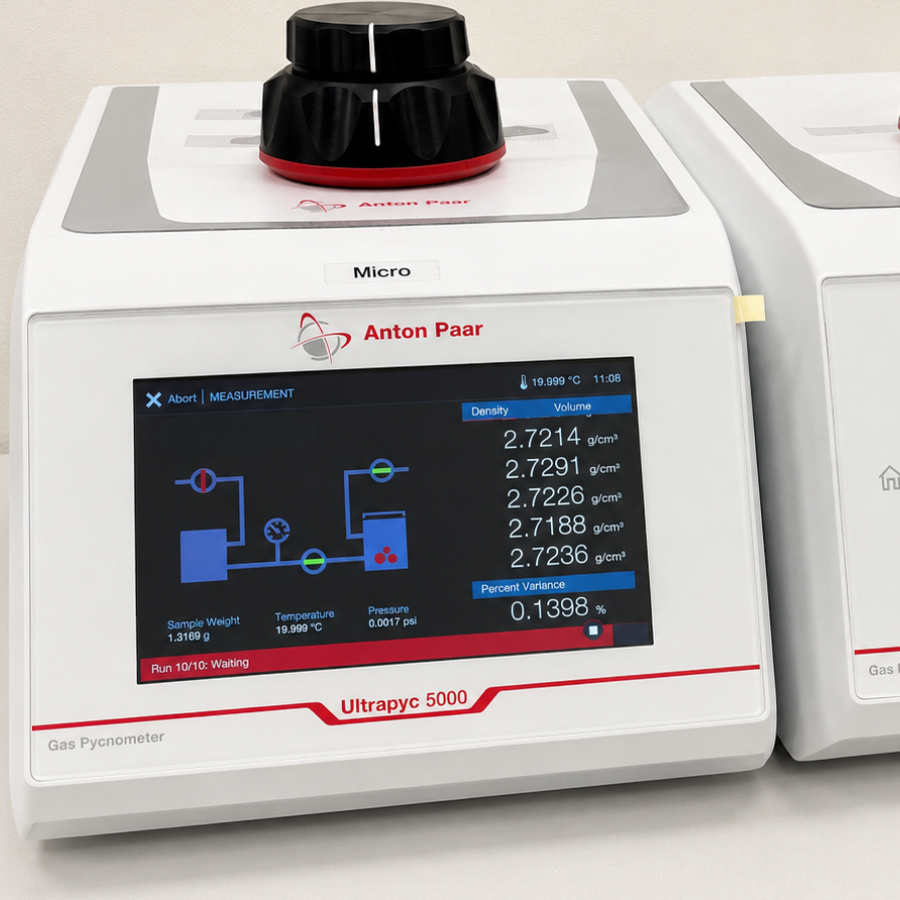
Anton Paar Ultrapyc 5000 and 5000 Micro gas pycnometers

Anton Paar Ultrapyc 5000 and 5000 Micro gas pycnometers

These He/N gas pycnometers are used to determine the skeletal (true) density of solids, powders and semi-solids by measuring the volume of the material excluding accessible pores. The Ultrapyc 5000 is designed for larger samples, with sample cells ranging from 4.5 to 135 cm³, while the 5000 Micro is intended for limited sample quantities, measuring volumes from 0.1 to 10 cm³.

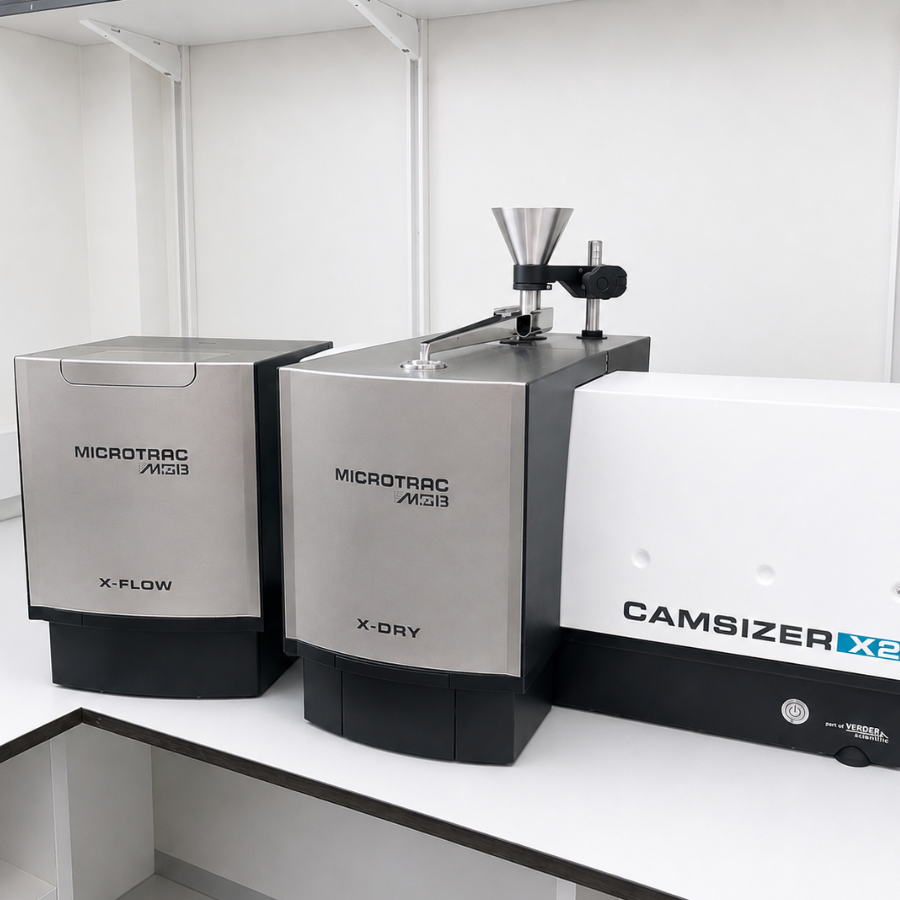
Camsizer X2 Particle size and shape analyser

Camsizer X2 Particle size and shape analyser

A dynamic image analysis system used to characterise the particle size and shape of powders, granules and suspensions. It can analyse sample quantities ranging from less than 20 mg up to 500 g, depending on the material and measurement mode, with a particle size range of approximately 0.8 µm to 8 mm; it provides parameters such as particle size distribution, length, width, aspect ratio, sphericity and convexity. We have the X-Fall, X-Jet and X-Flow modules enabling dry particle dispersion under free fall, in a gas stream (to prevent aggregation) and in a liquid (wet dispersion).

Force tensiometer (Biolin Scientific Sigma 700)

Force tensiometer (Biolin Scientific Sigma 700)

For granular materials, our force tensiometer can also be used to determine liquid–solid wettability and contact angle using the Washburn method. The granular sample is packed into a measurement tube and the instrument measures the penetration of a liquid into the powder bed, allowing parameters such as wetting behaviour, contact angle and surface characteristics to be evaluated.

Rheometry and Dynamic Mechanical Analysis (DMA

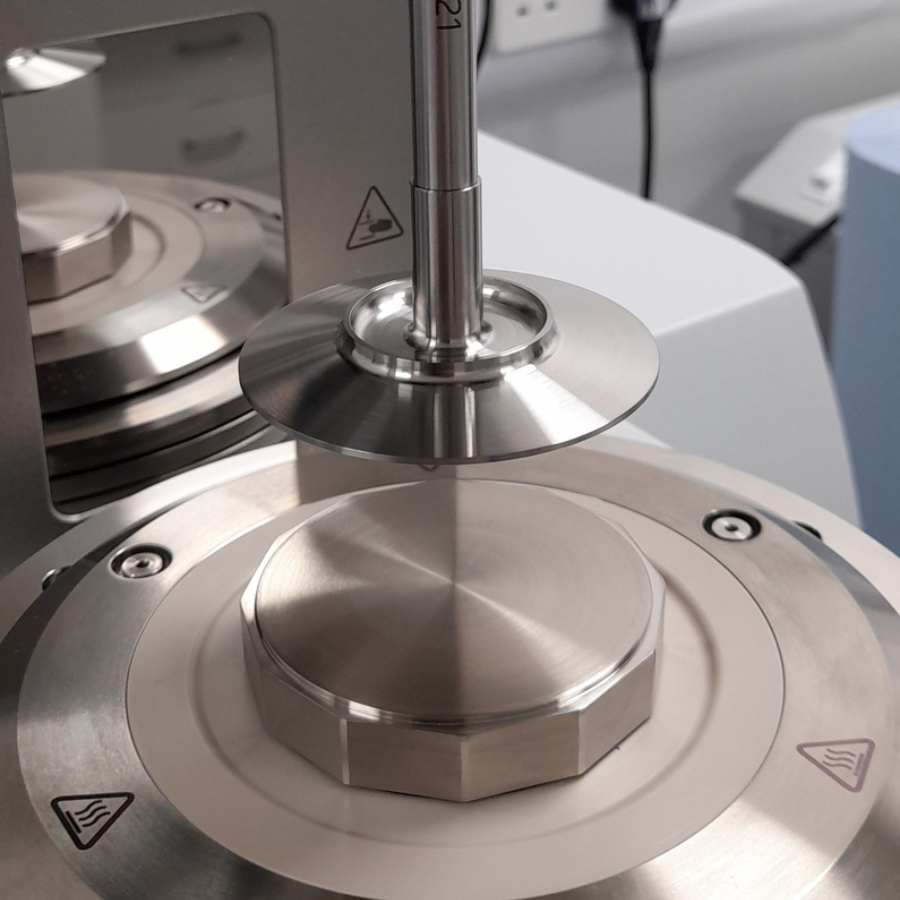
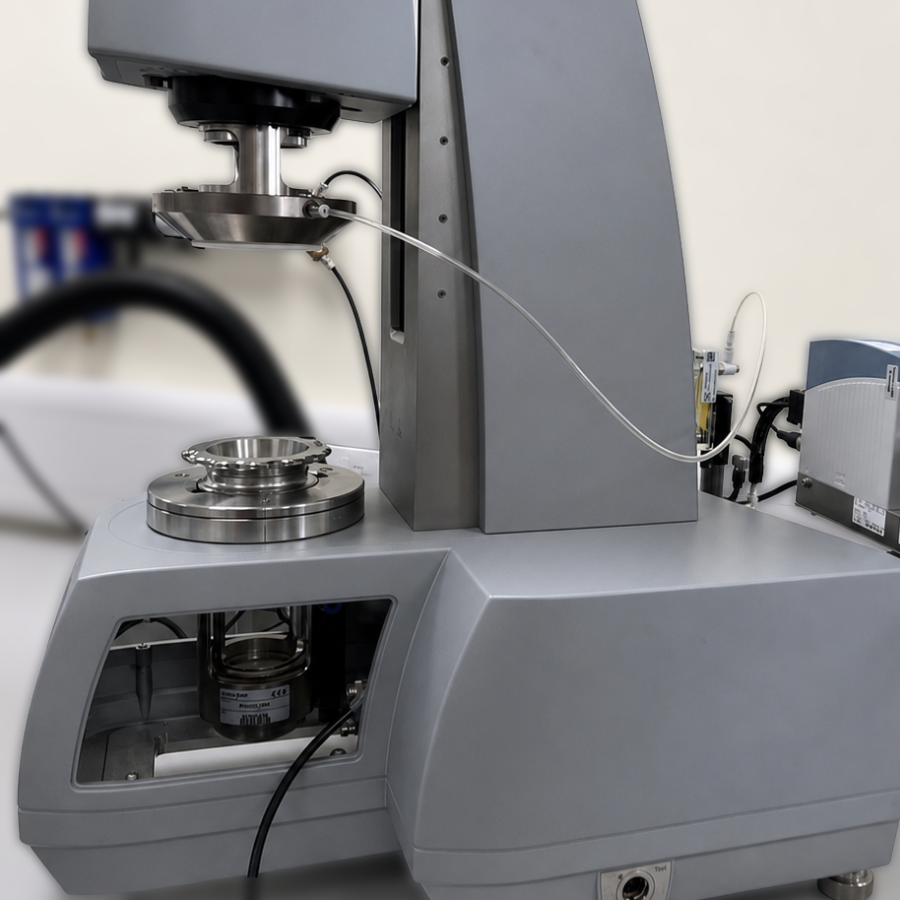
Rotational and oscillatory rheometers (Anton Paar MCR302e & MCR302 rheometers)

Rotational and oscillatory rheometers (Anton Paar MCR302e & MCR302 rheometers)

Advanced rotational and oscillatory rheometers used to characterise the flow and deformation behaviour of materials. They measure properties such as viscosity, shear stress, yield stress and viscoelastic behaviour, helping to investigate how materials flow, deform and respond to changing conditions such as temperature, shear rate and applied stress. We have a range of measuring geometries and Peltier temperature control systems capable of performing measurements from -20–220 °C.

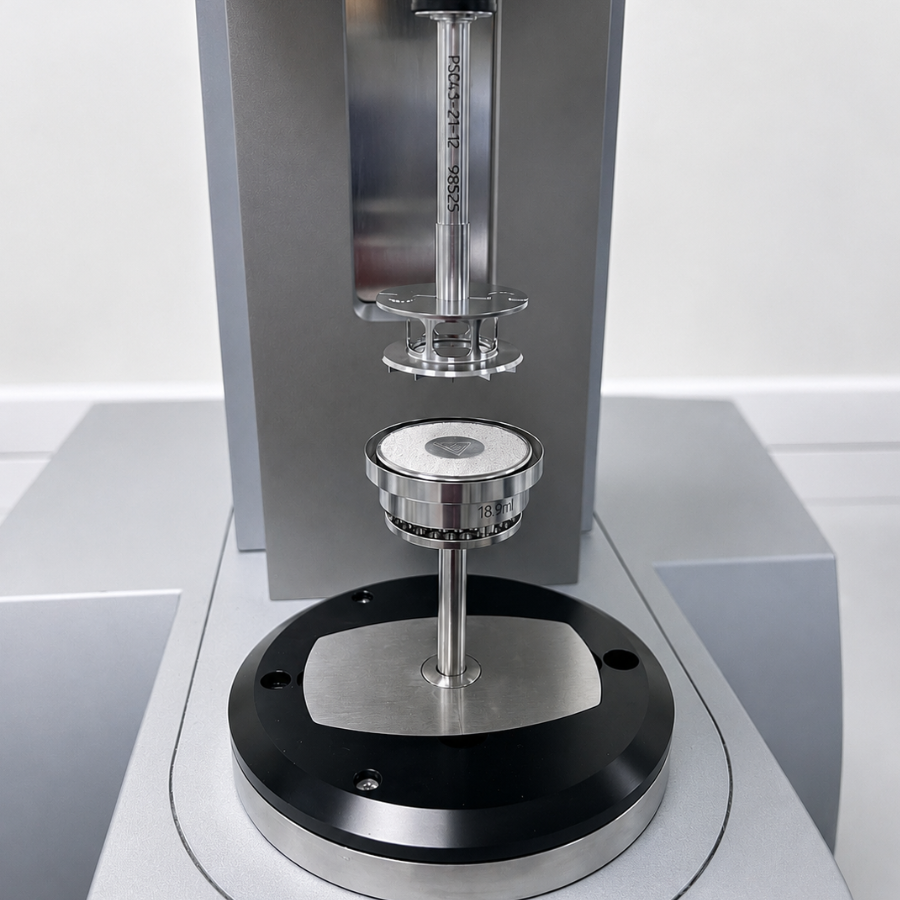
Granular media shear testing (Anton Paar Powder Shear Cell)

Granular media shear testing (Anton Paar Powder Shear Cell)

A ring (annular) shear tester, run on our Anton Paar MCR rheometer platform, used to characterise the flow and failure behaviour of consolidated powders and other granular media. A sample is compacted under a controlled normal stress and then sheared to failure, from which the yield locus, flow function, angle of internal friction, wall friction/adhesion and time-consolidation (caking) behaviour can be derived. It uses small sample volumes of 4.3 mL or 18.9 mL, applies normal stresses of up to 30 kPa while shearing (up to 110 kPa during compaction).

Granular media flow testing (Anton Paar Powder Flow Cell)

Granular media flow testing (Anton Paar Powder Flow Cell)

A modified concentric cylinder setup, used to characterise how powders and granular media behave under aerated and fluidised conditions. Depending on cell size, it accommodates sample volumes of roughly 21–120 mL and normal stresses up to about 22 kPa, providing parameters such as basic flowability energy (BFE), specific energy, cohesion strength, permeability, and aeration/fluidisation behaviour. A dust-containment hood allows the measurement of particles down to ~ 5 µm. The same platform also accepts a profiled concentric cylinder measuring geometry for shear-rate sweeps and direct viscosity determination of granular mixtures across fluidised and non-fluidised states.

Dynamic Mechanical Analyser (Anton Paar MCR702e)

Dynamic Mechanical Analyser (Anton Paar MCR702e)

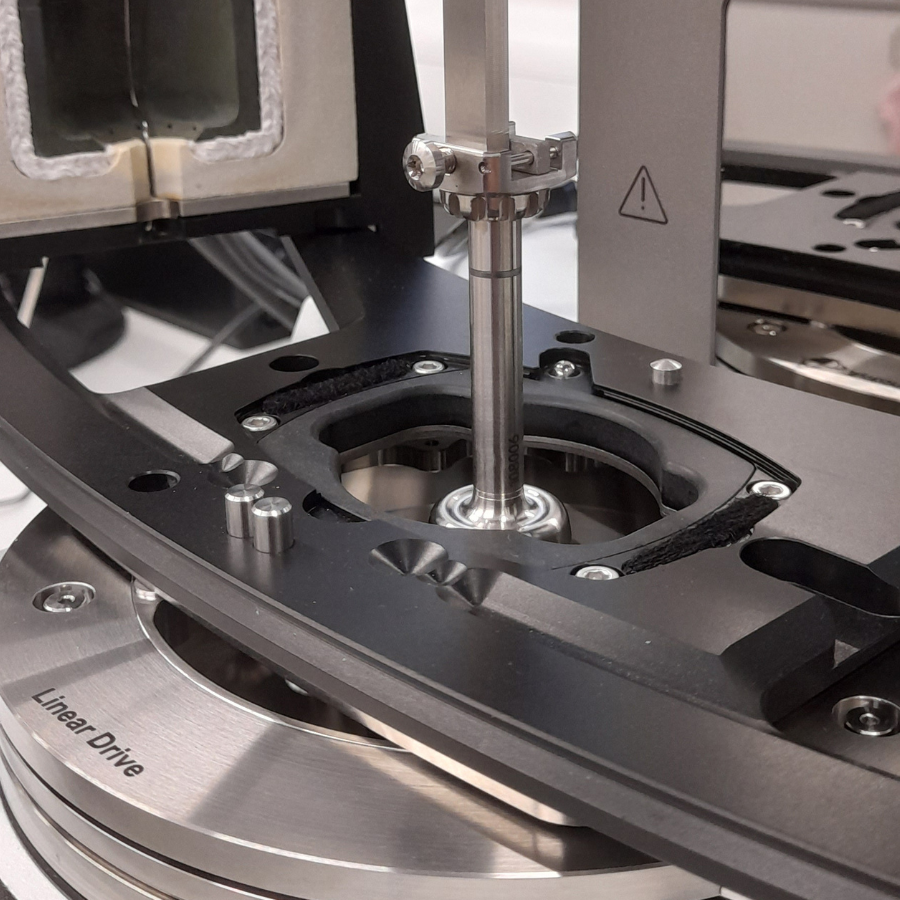
A dual-drive rheometer/DMA system that combines an independent linear (axial) motor with a rotational EC motor, enabling combined axial-torsional dynamic mechanical analysis of solids and soft materials. The lower linear drive covers forces from 0.0005 N up to 40 N over displacements from 0.01 µm to 9,400 µm, while the upper rotational drive covers torques from 1 nNm (0.5 nNm in oscillation) up to 230 mNm and speeds up to 628 rad/s, with oscillation frequencies from around 0.001 Hz to 100 Hz (linear) and down to 10⁻⁷ rad/s (rotational). Depending on the temperature module fitted (see CTD1000 below), it can operate up to 1000 °C. We can determine the complex Young’s (E*) and shear (G*) moduli, allowing a material’s tensile/compressive and torsional viscoelastic behaviour to be measured for the same sample.

Modular furnace (up to 1000 °C) for DMA and rheometry (CTD1000)

Modular furnace (up to 1000 °C) for DMA and rheometry (CTD1000)

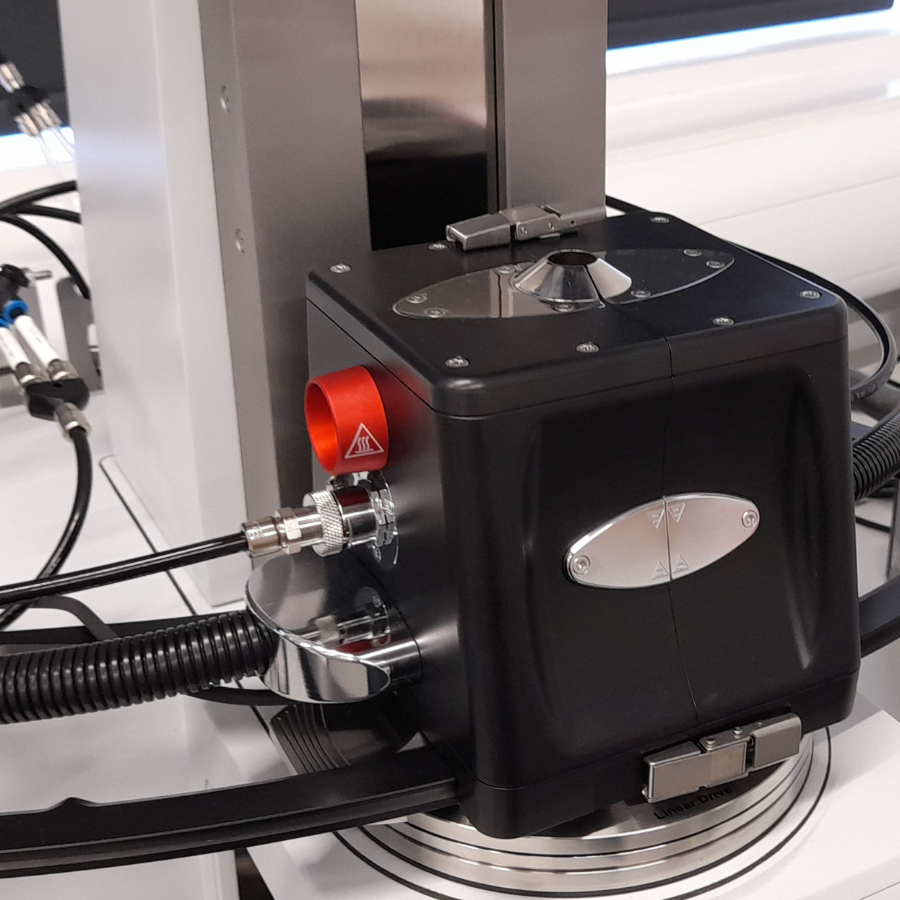
A high-temperature convection furnace for our MCR rheometer/DMA platform, providing temperature control from around 20 °C up to 1000 °C, with heating rates up to 60 °C/min and cooling rates up to 30 °C/min. We have a range of compatible measuring systems spanning both standard rheometry (parallel-plate) and DMA (solid rectangular fixtures).

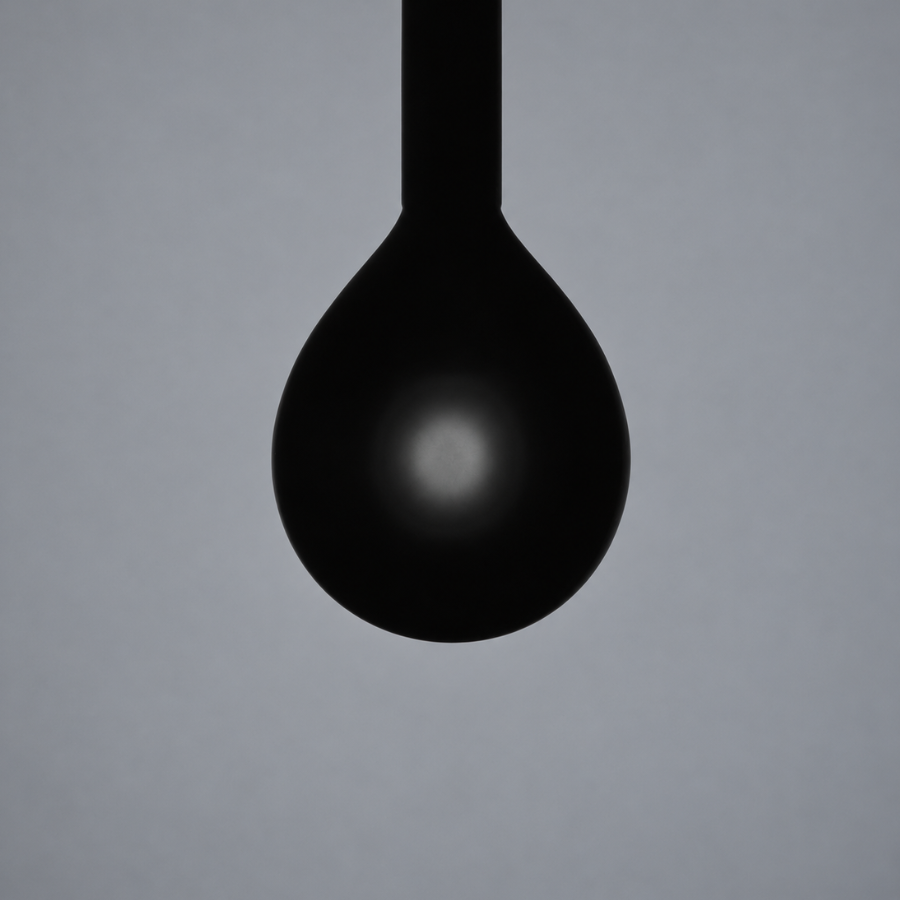
Custom extensional rheometer (Trimaster)

Custom extensional rheometer (Trimaster)

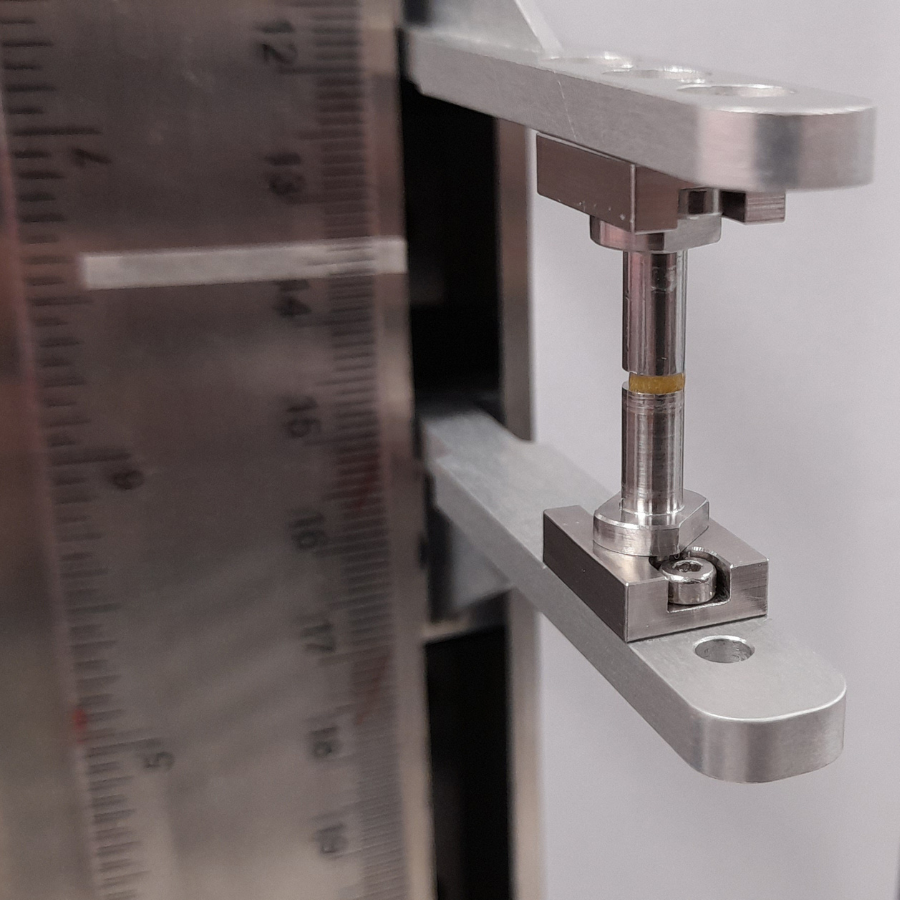
Our custom-built filament-stretching rheometer, based on the Cambridge "Trimaster" design, used to characterise the extensional (elongational) rheology of low-viscosity and viscoelastic liquids. A small liquid bridge is formed between two plates and rapidly stretched apart (individual piston speeds of up to 350 mm/s, up to 700 mm/s combined, over separations from around 10 µm up to 35 cm), after which the resulting fluid filament is left to self-thin and break up under the competing viscous, elastic and capillary forces. A high-speed camera tracks the mid-filament diameter through thinning and breakup, from which apparent extensional viscosity, extensional relaxation time (typically microseconds to milliseconds) and the Hencky strain at break-up are derived. This type of device has also been used to investigate the properties of fluids from plants and also the fragmentation of magma during volcanic eruptions.

Other equipment for broader use

  • Two Chronos high-speed video cameras (recording up to 40,413 frames per second, HD up to 1,000 fps) equipped with a range of lenses
  • A range of DSLR cameras
  • EuroMex Binocular microscope with a camera attachment
  • Retsch stainless-steel test sieves spanning nominal apertures from 32 µm to 63 mm, individually compliance-certified to ASTM E11
  • A range of Ohaus Pioneer (PX-series) analytical laboratory balances (readability ranging from 0.0001 to 0.1 g and capacity 220 to 12,000 g)
  • Trimble DA2 GNSS receiver and a range of handheld Garmin GPS devices

Key contacts

Michael James

Professor Michael James

Professor in Volcanology

Centre of Excellence in Environmental Data Science, DSAIL- Environment, Earth Science, Lancaster Intelligent, Robotic and Autonomous Systems Centre, LIRA - Environmental Modelling, Understanding a changing planet

B522a, B - Floor, LEC 1
Pier Paolo Comida

Dr Pier Paolo Comida

Volcanology Research Technician

Earth Science

A532a, A - Floor, LEC 1