

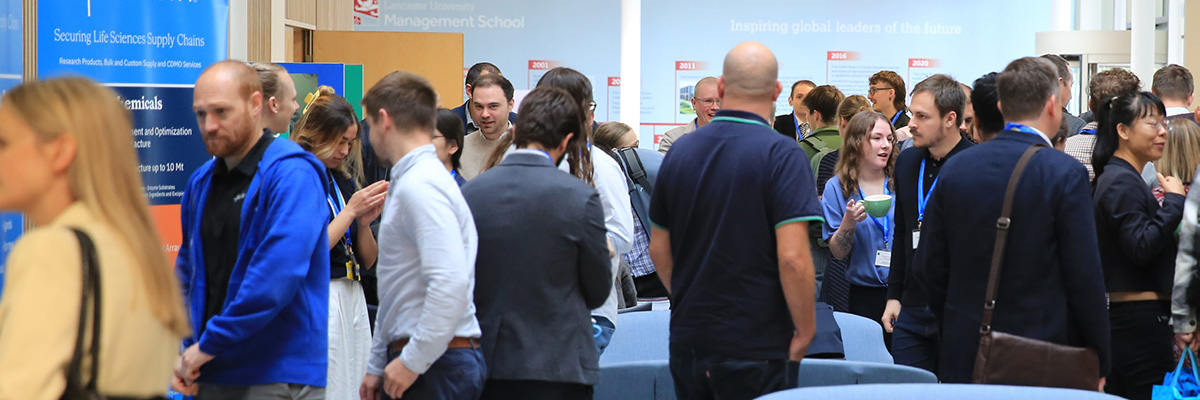
As Lancaster University celebrated its 60th anniversary, over 100 Lancaster University researchers, students, alumni, entrepreneurs, businesses, funding bodies and industry associations came together on Thursday 12 September for the first Lancaster Chemistry Academia-Industry Symposium.
Delegates were welcomed by Professor Pete Atkinson, Executive Dean of the Faculty of Science and Technology, and Dr Nicholas Evans, Head of Department, Chemistry, who introduced the Chemistry Department and the three main research areas: health, materials and energy.
Research themes
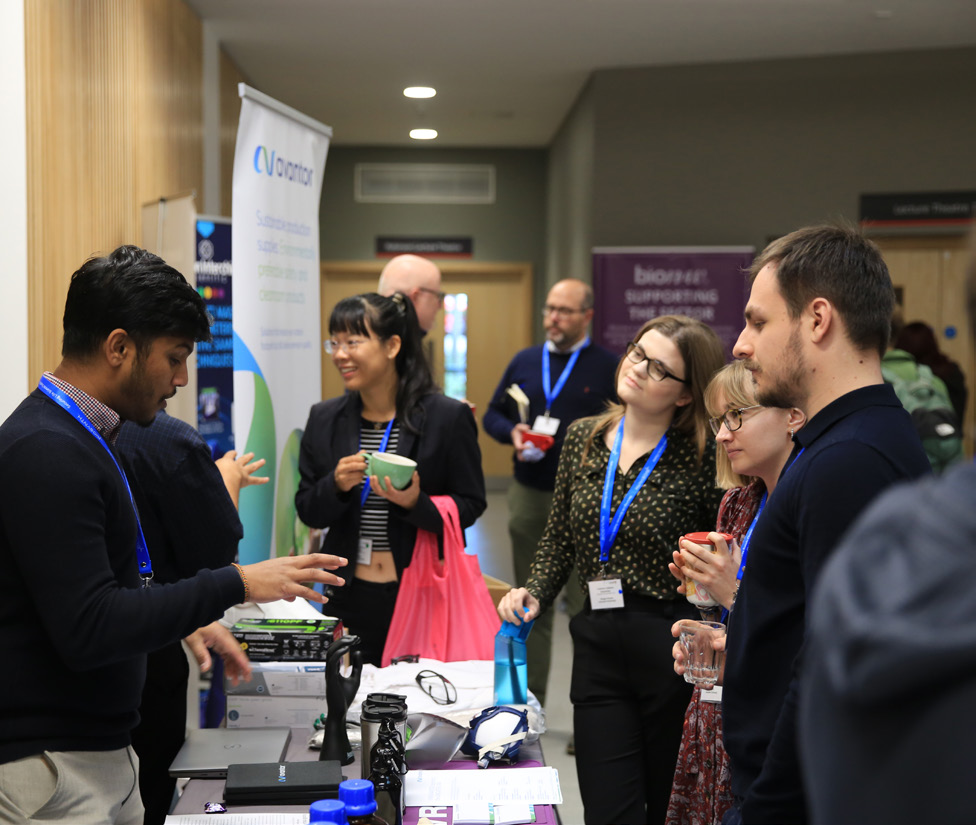
Research Themes Leads then highlighted ongoing cutting-edge research and the wide range of expertise available to industry. This was complemented by a poster exhibition on different projects across the Department, including areas such as new materials for batteries and energy conversion and storage, electrochemical and photochemical processes, molecule-based materials for sensing, catalysis and drug discovery applications, and computational chemistry for the prediction of chemical properties and reactivity.
Opening up new collaborations
Adrian Hery Barranco, Marketing and Business Development Officer, Biosynth Ltd, commented:
“At Biosynth, we are always happy to support scientists and research from universities. This was the first time I visited Lancaster University and I was happily surprised. This type of event where industrial partners, academics and students come together is the perfect occasion for networking, and to open up new collaborations.”
Input from industry
There were also two in-depth parallel sessions with speakers from industry. One focused on health, and included representatives from AstraZeneca, Pharmaron, Concept Life Sciences and Apex Molecular Limited, covering a range of topics regarding sustainability in drug discovery processes. The other session focused on materials & energy, with representatives from LiNa Energy, Cellmine, Sika Limited and Victrex plc, each talking about their needs, and covering topics such as developing new materials and energy storage applications.
Dr Nicholas Evans, Head of Department, Chemistry, commented:
“It was very useful to hear from a range of companies about project placements they are currently advertising, with our first cohort of MChem with Industrial Placement students looking to apply for such opportunities at this time.”
Research facilities
Delegates were also given an overview of chemistry facilities available. As part of a £26 million investment in Chemistry, research is supported by new, custom-designed laboratories and an extensive array of instrumentation and equipment. The facilities contain dedicated synthetic, physical, analytical and biological research laboratories, as well as computer based labs for computational chemistry researchers. Labs are equipped with state-of-the-art spectroscopic and analytical instrumentation, as well as gloveboxes, fume hoods, and a variety of computational equipment.
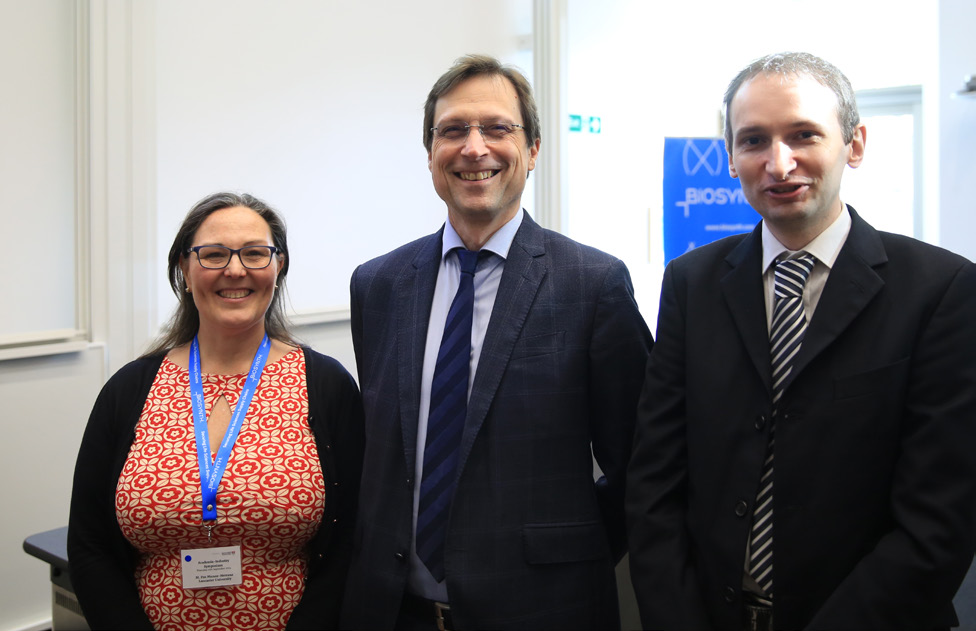 From left to right: Dr M. Paz Muñoz, Chemistry Director of Engagement, Professor Pete Atkinson, Executive Dean of the Faculty of Science and Technology, and Dr Nicholas Evans, Head of Department, Chemistry.
Showcasing collaborative projects
Martin Gilmore, Head of Partnerships and Business Engagement for Physical Sciences (Chemistry, Engineering & Physics), who is part of the specialist team that helps external organisations tap into university expertise and facilities, chaired a Q&A panel open discussion regarding industry/academia collaboration projects.
The panel included a range of industrial partners from the Lancaster University Chemistry Industry Advisory Board (e.g. Victrex plc, Yordas Group), staff from the University’s IP & Commercialisation Team, the Faculty of Science and Technology’s (FST) Director of Partnerships and Business Engagement and the FST Student Engagement Manager, and the Science and Technology Facilities Council, plus other representatives.
“I wanted to say how much I enjoyed attending the Lancaster Chemistry Academia-Industry Symposium last week. The conference was excellent, and I found it particularly valuable to get an overview of the research being conducted at the university,” said Emma Miller, Yordas Group. After the time for discussion session, the symposium concluded with prize giving for research posters, including prizes sponsored by OCCA and Biosynth Limited, and informal networking over drinks.
Dr Nicholas Evans summarised: “The symposium was a great success. Everyone had the opportunity to learn about academic/industrial collaboration, which will serve us well in developing new joint research initiatives going forward.”
Dr M. Paz Muñoz, Chemistry Director of Engagement, who planned and organised the Symposium, added: “Many thanks to everyone who came to Lancaster for an amazing day of discussions and learning from each other at the first Lancaster Chemistry Academia Industry Symposium, and everyone at the University who contributed.”
“Special thanks go to our event sponsors Shimadzu Corporation, The Royal Society of Chemistry, Biosynth Limited, Oxford Instruments Plc, Advion Interchim Scientific, Huber, Radleys Limited, Yordas Group, Buchi Limited, Apex Molecular Limited, and OCCA. We look forward to developing more collaborations and building on the ideas started at the Symposium. If you missed it or didn’t manage to speak to me on the day, please get in touch.”