


The Ghosal Fund: how a student-run initiative is helping Lancaster students land finance jobs

Group photograph of Ghosal Fund members

In May 2025, the historic interuniversity sports competition between Lancaster University and the University of York, Roses, expanded to include a new discipline: stock pitching.

Lancaster’s student-run investment fund, the Ghosal Fund, went head-to-head against York’s Griff Investment Fund. For Jack Poole, Fund Manager of the Ghosal Fund, the match was a homecoming, as he returned to his home city of York to compete.

Jack and team brought home a win for Lancaster, impressing a judging panel of professionals from major firms like Jefferies and BlackRock.

Competing in this event is typical of the Ghosal Fund’s mission: providing students with a platform to gain skills in equity research, asset management and investment banking.

Jack is a strong advocate for the Fund's career impact: ‘if you're ambitious and you do want to progress very quickly, then it's the best place to do that.’

The Ghosal Fund was founded in 2015 and is named after its founder, Prithiv Ghosal, a talented student who laid the groundwork for this long-running initiative.

The Fund manages a portfolio of stocks, aiming to make well-researched decisions to grow the portfolio’s value. Jack says, ‘we’re valuing companies and looking for theses behind companies as to why we think they’re currently mispriced.’

Seven equity sector teams cover sectors like Technology and Telecommunications and Media. These teams are supported by a quant team: quantitative specialists who use data science and maths to inform investment decisions.

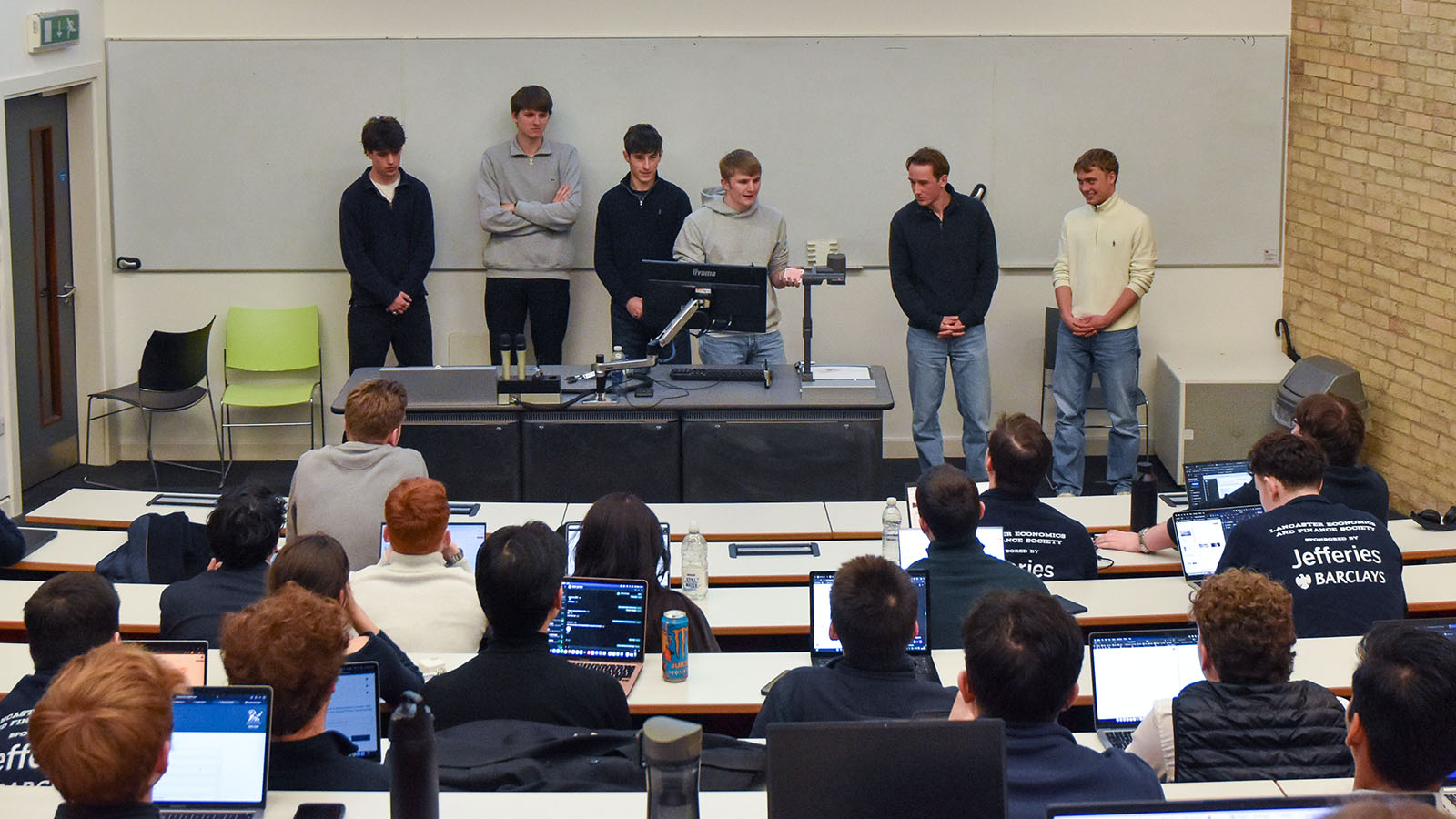
Members of the Ghosal Fund sitting in a lecture theatre

Ghosal Fund members at Fund meeting

Meetings take place on Thursdays during university terms. Each sector team pitches an investment to the rest of the organisation.

The pitches involve detailed work between meetings, with teams analysing data and meeting to discuss how they will present their argument. It's an intensive process which, Jack says, creates close bonds among those involved.

‘Meeting up three times a fortnight, working on different sections, and helping people learn different things, you definitely get to know people well.’

Students in the Ghosal Fund regularly celebrate each other’s success in landing internships and jobs.

The Fund's 2024/25 Annual Report revealed that 66% of graduating members received graduate offers at leading industry firms, including Jefferies, PwC, and Skybound.

Part of the reason for this success is that the Fund supports students to pick up industry skills at an earlier stage of university than their peers. The Fund’s activities involve skills typically only taught in the third year of a finance undergraduate degree.

Jack explains: 'The sort of things that we do from an academic perspective—valuing companies—is stuff that you wouldn't cover in finance modules until third year. You get that industry knowledge very early on.'

Ghosal Fund members giving a presentation to other members

The Ghosal Fund's Industrials team presenting at meeting

The Fund’s active portfolio making a positive return is a mark of success to Jack. From November 2024 to November 2025, the fund saw a +17% return relative to their benchmark.

Equally important to Jack is the growth of Fund members. Seeing people grow in confidence and expertise, he says, is one of the most rewarding aspects of managing the Fund.

He finds that the personal growth of members is tangible in meetings. At the start of the year, each team’s Associate, the most senior person on the team, might answer 80% to 90% of questions posed to the team.

‘But then by the time we get to the end, people will be able to answer questions on their own section much more effectively because they understand a lot more, and you can see that progression.’

Joining the Ghosal Fund is a competitive process. The fund managers receive hundreds of applications, many more than there are available spots. In the recent recruitment round, the fund had 220 applicants for 29 equity spots.

However, Jack urges people not to let those figures discourage them.

‘If you are genuinely interested and you do put the effort in,’ Jack says, ‘then you have a much better chance of being selected than the recruitment figures suggest.’ Showing passion and commitment, he explains, can make an applicant stand out.

Article published Tuesday 31 March 2026

Read more

This article is part of a series celebrating the student communities that make Lancaster University Management School distinctive.