We use necessary cookies to make our site work. We'd also like to set optional cookies to help us measure web traffic and report on campaigns.
We won't set optional cookies unless you enable them.
Cookie settings
Even leaving glass bottles out for collection carries a social stigma, explains Minna Halme.
After Nicola Thorp was sent home from a job as a receptionist for refusing to wear high heels, Valerie Stead discusses gender and dress codes in a piece for HR Magazine.
James Cronin from the Department of Marketing discusses food labelling in his latest blog for the Huffington Post.
Making it into the world championships can depend more on rules than skill, claim Professor Mike Wright, Professor John M Norman from the University of Sheffield and Professor Graham Kendall from the University of Nottingham.
Brands can find innovative ideas by looking to the past, argues Professor Alfredo De Massis.
LUMS's Alfredo De Massis, along with Federico Frattini and Franco Quillico, discuss "unicorns" - venture-backed private companies valued at $1 billion or more.
Chancellor George Osborne has delivered his eighth budget. Here, Economist Geraint Johnes and other panellists give The Conversation their take on what it means for the economy, business, healthcare and education.
Maurizio Zanardi, from the Department of Economics, explains why the latest figures are nothing to worry about.
Scrapping €500 notes would inconvenience money launderers; it would also help the European Central Bank to make interest rates more negative, says John Whittaker.
Geraint Johnes discusses the government's proposals for a new schools funding formula.
Long term tactical sales forecasts are vital for effective steering of global supply chains. Events and changing markets can cause radical changes from business as usual. How can manufacturers update their forecasts?
A blog post co-authored by economist Jean-Francois Maystadt examines the economic impact refugees have had in Africa.
Regulators are using text analytics to identify fraudulent information revealed in annual reports, Steve Young reports on the ACCA website.
Economist Geraint Johnes reflects on other outbreaks to get to grips with the likely impacts of Zika.
James Cronin and Gillian Hopkinson explore if, and how, celebrity chef campaigns effect change in the Journal of Marketing Management.
What are the qualities people look for in a leader? Could charisma be top of the list? Steve Kempster explores the issue.
The picture is more complex than George Osborne lets on, says Stephen Bevan.
Swarnodeep Homroy argues that CEO salaries are high to compensate for the risk of dismissal in the International Business Times.
The business presence at COP21 may be on the sidelines but support for climate change is strong, says Gail Whiteman.
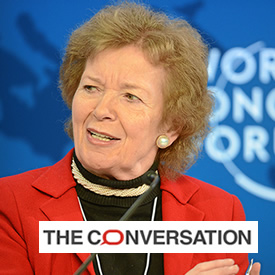
The Pentland Centre's Gail Whiteman is one of a team of experts who put their questions to UN special envoy and former Irish president Mary Robinson about the 2015 Paris climate negotiations.
Can we predict and manage the effect of promotions in supply chains? Are promotions beneficial to retailers? Nikolaos Kourentzes and Oliver Schaer discuss.
"China’s 21st Century Maritime Silk Road could be a game changer for Africa’s development," argue Wei Shen and colleagues in the Business Times.
LUMS's Mark Shackleton discusses a new technique which might change the future of fuel.
Professor Wei Shen and colleagues discuss China's relationship with Africa in the China Daily.
Top


.jpg)


275x275.jpg)





.jpg)