

Year 12 STEM Taster Day

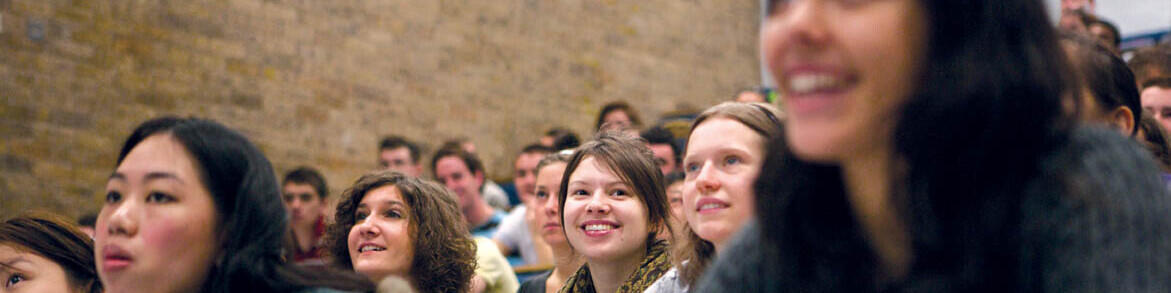
Year 12 students sat in a lecture theatre

STEM Taster Day 2026

The Faculties of Science and Technology (FST) and Health and Medicine (FHM) are pleased to welcome you and your students onto campus for our STEM Taster Day. Students will get to try hands-on practical sessions from our Departments on either the 18 June or 19 June 2026.

The Taster Day is an opportunity for students to discover more about studying STEM subjects at one of the country’s leading universities, what research is being carried out at Lancaster, and what impact it is having. It will also provide an opportunity for networking with academics of your subject speciality to discuss their research as part of a CPD morning.

Departments involved include Mechanical and Nuclear and Chemical Engineering, Mathematics and Statistics, Physics, Environmental and Earth Sciences and Geography, Chemistry, Computer Science, Biological Sciences and Why Lancaster.

For lab-based sessions, including Nuclear Engineering, Environmental Sciences, Biological Sciences and Chemistry, Students must wear long trousers, covered toes, a long sleeve top and have hair tied back.

Students should bring a packed lunch and drinks or money to purchase food from an outlet on campus.

STEM Taster Day Itinerary

  • 10am – Arrival and welcome
  • 10.30am – 11.50pm – Session 1
  • 12.00pm – 12.45pm – Lunch
  • 12.55pm – 2.15pm – Session 2
  • 2.25pm – 2.45pm – Feedback and departure

Dates:

Three dates for schools to choose from:

16th, 17th or 18th of June.

Why Lancaster

Hear about life on campus and experiences of our undergraduate students. There will be opportunity to network with current students and staff members and a more in-depth look at the campus.

Faculty of Science and Technology Sessions

The Faculty of Science and Technology (FST) has a whole host of sessions available for you to take part in!

Chemistry

Take part in a team challenge set to music in our undergraduate teaching lab. Can you match the beat? Students, in two teams will set up and conduct their own demonstration of the Iodine Clock Reaction showcasing their attempts in time to music. The Iodine Clock Reaction is a historic and classic chemistry experiment demonstrating the basic principles of kinetics.

Mathematics and Statistics

Discover how mathematical sciences solve real-world problems! In this workshop, we will explore how mathematics can be applied across a range of contexts, highlighting the power of mathematics as a practical problem-solving tool. This workshop also features a reflective talk on the lecturer’s personal journey into mathematics, offering an honest look at the challenges, inspirations, and turning points that shaped their path. Together, these sessions aim to demystify mathematics and inspire curiosity, providing both practical understanding and personal perspective on what it means to pursue mathematics.

Physics

Discover the experiments that changed our understanding of the universe. In this session, you’ll explore five landmark experiments that shaped modern physics, getting hands-on with concepts such as wave–particle duality, the e/m ratio, microwave interferometers, the charge of the electron, and Planck’s constant. Whether you’re currently studying Turning Points in Physics at A level or are simply curious about the fundamental laws of nature, this session offers a fantastic opportunity to deepen your understanding and gain practical experience using real experimental equipment.

Computing

We will explore how code and physical computer systems work together by making projects that use micro:bits, motion sensor & random number generator to create an interactive game through a machine learning activity! The session will start with a brief overview on how machine learning works and how this can be applied in various areas. We will then divide into groups to work on a practical and creative activity. The groups will be of 3-4 in number and will work collaboratively to explore & programme instructions for the device. The activity will end with a newly created ‘BOBIT’ style game and challenge!

Chemical and Nuclear Engineering

Step into the exciting world of chemical and nuclear engineering. Take part in a group activity exploring the process of nuclear liquid separation and have a tour of our scanning electron microscope.

Mechanical Engineering

Discover how Mechanical Engineers contribute to solving everyday problems. Work as a team to explore the fundamentals of load bearing as you take on the tower build challenge. Will you be able to apply what you learn to meeting a brief whilst sticking to budget?

Lancaster Environment Centre

We will be hosting three taster sessions within the Lancaster Environment Centre (LEC), home to Geography, Environmental and Earth Sciences, Ecology and Conservation, and Zoology.

Energy Bike Demo

Lancaster University's wind turbine and new solar farm illustrate the rapid rise of renewable energy generation. But how much energy do we need to reach net zero and eliminate emissions from energy production? This session works out the work you would need to put in to produce the energy needed for different electrical household items to frame our debate about the green transition.

Coral Reef Ecology

Coral reefs are one of the most iconic, yet also the most threatened, ecosystems on our planet. Lancaster hosts the largest group of coral reef researchers in Europe, working to understand threats and solutions to coral reef conservation worldwide. Here, we will give you a taste for some of our ecology-focused research and explore how to figure out the health of a reef.

Natural Hazards

Learning about natural hazards is as much about understanding the impact on people as it is about understanding the physical nature of the hazard itself. But, would your students know what to do in the face of a natural disaster? In our fast-paced natural hazards simulation game, students will work in teams to unearth the causes of a natural disaster and make life- affirming decisions affecting the populations involved. Students will take on the role of a first response team and put theory into practice – will they be able to keep their cool as the pressure heats up after a natural disaster strikes? The session focuses on building upon students’ existing knowledge of natural hazards. They will look at the causes of a disaster, be able to measure the environmental and human impact, and understand how to conduct hazard assessments.

Psychology

Understanding the Mind Through State-of-the-Art Psychological Science

This session will introduce you to some of the state-of-the-art research being conducted by Lancaster University’s Psychology Department. You will experience demonstrations of high-tech methods that we use to investigate and understand different aspects of the mind and behaviour. We will also explain how our research findings can benefit society by advancing understanding of important real-world issues.

Faculty of Health & Medicine Session

Biological Sciences

DNA is a fundamental biomolecule that encodes a vast amount of information contained within genetic code. Genetic code differences are what make individuals unique, and can also be responsible for genetic conditions, disease susceptibilities, or response to drugs. Join us in our state-of-the-art teaching lab for a hands-on opportunity to use an agarose gel and find out more about molecular biology techniques. Learn how measuring genetic differences between individuals can be used to understand patients and inform their treatments.