

Summary
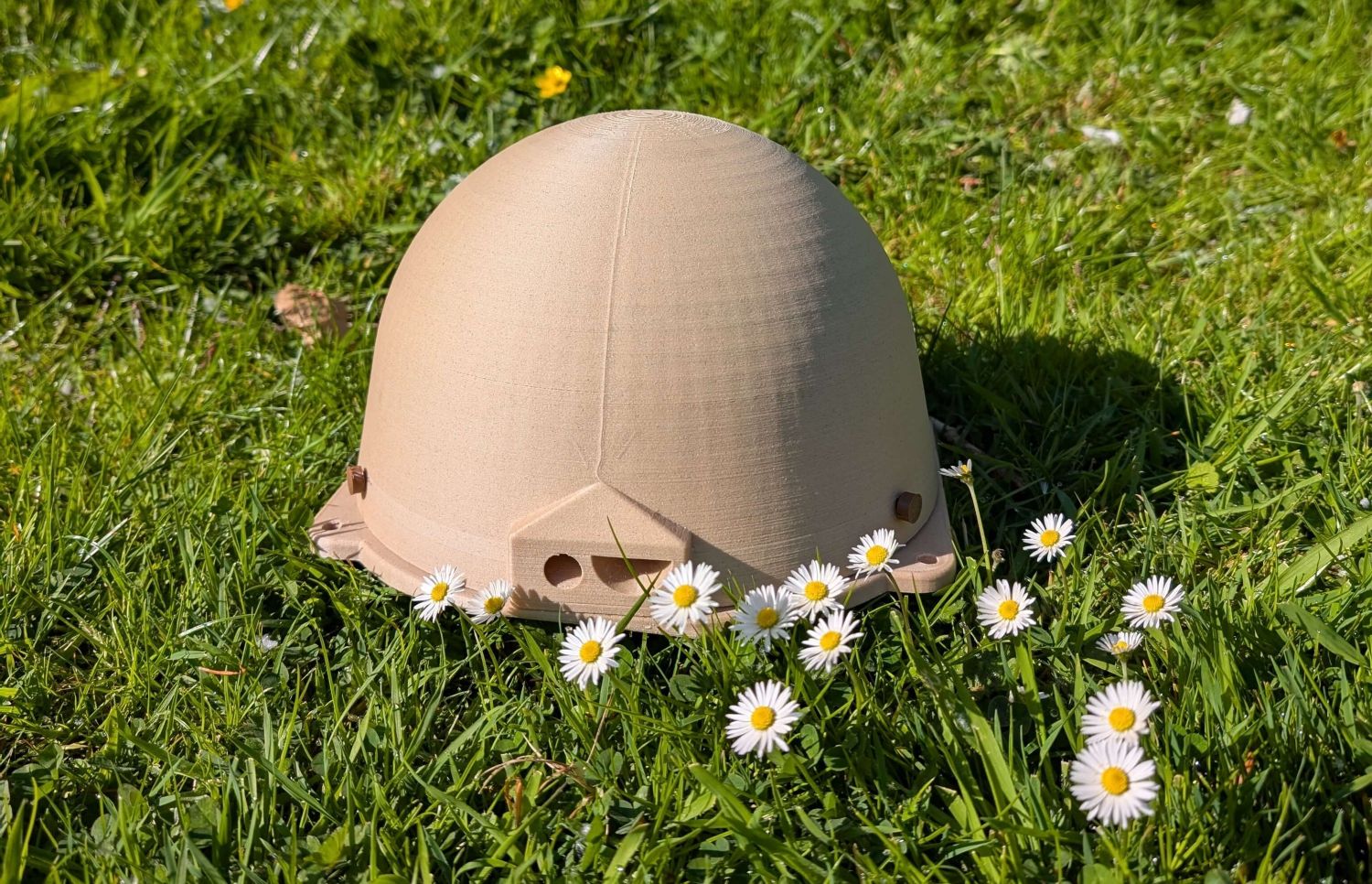
BeeBox is an innovative solution to the habitat degradation experienced by the UK’s bumblebee populations. Work by the Lancaster Bio-Inspired Engineering Solutions (LBIES) research group has designed and deployed BeeBox, the world’s first artificial nestbox for bumblebees using 3D printing. This system allows BeeBox owners to broadcast live video from inside a bumblebee nest both locally and onto internet livestreaming services like YouTube and TwitchTV.
The main researchers on the project were Dr Phillip Donkersley (Lancaster Environment Centre) and Jenny Roberts (Engineering). The former provided expertise on pollinators and their habitats, while the latter contributed an understanding of engineering that helped the pair design the BeeBox itself.
Challenge
Globally, we depend on social insect pollinators for food production, yet ongoing insect declines are putting it at severe risk. Aside from their intrinsic beauty, bumblebees are among the most ecologically and economically important of the many insects that pollinate our crops and wildflowers.
Bumblebees are experiencing the most rapid decline of all pollinators due to factors such as land-use intensification, chemical exposure, and habitat destruction. The public have limited knowledge of bumblebees, often mistaking them for the non-endangered honeybees. Experiences around bumblebees are most commonly seeing them visiting garden flowers or rarely noticing them nesting in and around their homes.
Through commercialisation – the team are currently trading through the university website - BeeBox will enable the public to gain a greater awareness of the importance of bumblebees to the ecosystem through an interactive means.
Actions
The project was undertaken through three work packages, with the aim of developing BeeBox for commercialisation.
Building on previous design and manufacturing work that focused on vacuum forming with ABS plastics, the team explored the use of alternative additive manufacturing techniques. Using artificial bumblebee colonies, the team utilised environmental data loggers and internal video equipment (previously demonstrated in early prototypes of BeeBox) to record bee behavioural and environmental responses to revised nestbox designs. Comparing with nest design currently available, they housed three colonies in glasshouse conditions at AgriSound for two months, paired with three colonies maintained inside the colonies that they come supplied in. Initial data was collected and compared between nest types. Nestbox materials were tested to identify any environmental degradation using established methods - this data provided key information on the longevity and sustainability of an alternative nestbox, which is central to making a functionality proposal to the horticultural agribusiness sector.
The team explored the addition of smart-monitoring tools to add onto the BeeBox design. This collaboration will explore which technologies and information are most useful to growers, as well as facilitating open design dialogue with the horticultural sector around their current use of commercial pollination services. The sensors proposed by AgriSound determined the physical redesign of BeeBox to internally house these devices. Sensor-enabled BeeBoxes were deployed at first in the same controlled glasshouse conditions as the first tests, paired with a further three colonies housed in contemporary nestboxes. The same data was collected to determine if the addition of sensors places any additional stress on the colonies. At this stage, data collected by the multisensor BeeBoxes has a machine-learning algorithm designed for processing and translating the data into a functional metric for horticultural growers to employ in collaboration with researchers in CEEDS at Lancaster.
Upon finalising a working prototype for real-time bee data collection under controlled conditions, we consulted with AgriSound on final adaptations and revisions to the BeeBox design in preparation for production of a BeeBox demonstration unit. The team then began looking at design planning around manufacturing technologies, materials and transportability to improve the technology readiness of BeeBox v2.
Results
The IAA funded research and development of the BeeBox nest system through new iterations (now protected by design rights in the UK, with European rights pending), with the first few BeeBoxes being manufactured through 3D printing on campus. A new BeeBox design featuring Agrisound sensors, capable of collecting valuable data on bumblebee behaviour, arose from the latest round of IAA funding.
The design of BeeBox, allowing for a camera to record footage within, encourages users to share footage of their own nest, raising awareness of the product and of the issue of pollinator decline and bumblebee conservation through social media and word of mouth. Sales of the product will have an economic impact on the local area, particularly when manufacturing is able to scale up in the future beyond the 3D printing of individual BeeBoxes.
Data collected from BeeBoxes on nesting behaviours through Agrisound sensors and integrated cameras will inform future research in and beyond Lancaster University, contributing to innovations around conservation efforts.