

Summary
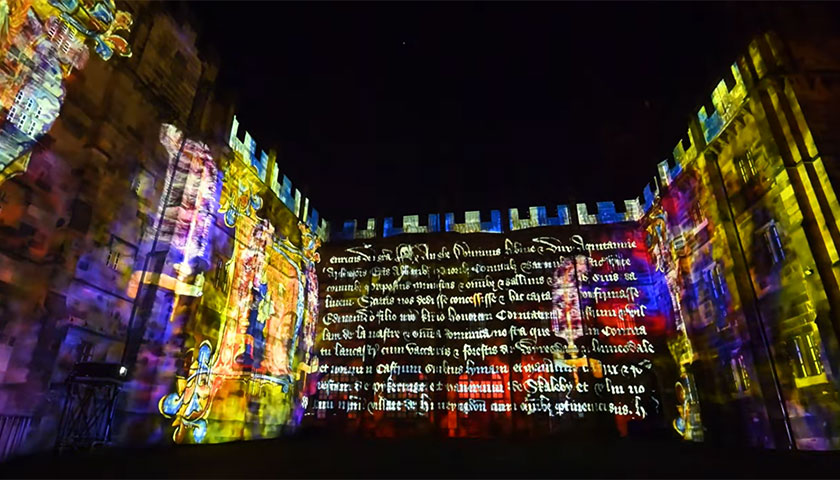
Illuminating Medieval Lancaster for All brought an exquisite medieval manuscript, the Great Cowcher Book, to life through a stunning light and sound display at Lancaster Castle. This was the centrepiece of Light Up Lancaster 2023, which attracted an unprecedented attendance of over 70,000. The project enriched Lancaster’s cultural scene and contributed to the festival’s record economic impact, estimated at £2.3million. By showcasing intricate manuscript imagery and historical narratives through modern technology, the display changed perceptions of medieval history, enhanced research visibility, and strengthened Lancaster’s reputation as a vibrant cultural hub.
Challenge
Despite the historical significance of the Great Cowcher Book (a 15th-century manuscript documenting the Duchy of Lancaster's lands and their communities), public knowledge of Lancashire’s medieval (as opposed to modern) heritage was limited. Additionally, families and individuals (particularly in underrepresented groups) face barriers to accessing high-quality cultural and historical experiences. The project sought to make this material accessible, widely appealing, and inclusive.
Lancaster Castle, central to the Duchy’s history, is a focal point for community and tourist engagement. The city continually seeks to enhance its cultural offering, draw in visitors, boost the local economy, and promote Lancaster as a heritage and cultural destination. Therefore, the project sought to use the castle as a dynamic venue to connect modern audiences with the city and county’s rich history.
Historical research on the Great Cowcher Book is ongoing at Lancaster University and in partner institutions. The display sought to translate pilot research projects at Lancaster into a public-facing output that would demonstrate the value of academic work while contributing to Lancaster University’s broader impact agenda.
Actions
Drawing from funded pilot projects, Lancaster academics worked with acclaimed projection artists Illuminos to arrange Lancashire-based extracts from the Great Cowcher into a compelling narrative. This entailed new translations of Latin texts, voice recordings in Latin and English and obtaining high-resolution images of the manuscript from The National Archives.
Partnerships with the Light Up Lancaster organisers, the Duchy of Lancaster and artists Illuminos ensured an innovative design and effective delivery. A Study Day and a video provided additional ways to engage with the project and its wider historical context. The festival involved robust survey and data collection, demonstrating success in fostering local pride and cultural participation, with insights for future initiatives.
Results
By leveraging IAA funding, Illuminating Medieval Lancaster for All translated research into a transformative public experience, enriching the city's cultural profile and supporting ongoing community and academic collaborations.
The display delivered key outputs, including a large-scale projection at Lancaster Castle during the Light Up Lancaster 2023 festival. This was the first of its kind in Lancaster, laying new paths for collaborations between historians and artists. The project also generated a video, a Study Day for adult learners and publicity shared widely through a QR code at the site, through social media, radio and print (including several features on Beyond Radio and in the Lancaster Guardian).
The project increased public engagement with Lancaster’s medieval history. 12,395 visitors experienced the full display in the castle courtyard, and the wider festival (of which this was the centrepiece) attracted attendance of over 72,000. The film and accompanying website continue to extend access. The project also strengthened interdisciplinary collaboration between academic researchers, cultural organisations, and heritage partners.
The installation attracted 75% of festival attendees, with 78% reporting enhanced appreciation of Lancaster’s history and 68% expressing increased curiosity about medieval history. The display also contributed to the festival’s ability to attract visitors, supporting tourism in the city and achieving a record-breaking economic impact of £2.3m, with a £10.10 return for every pound invested. Importantly, the project left a legacy of reusable digital resources and methodologies, providing a foundation for future heritage interpretation and engagement initiatives.