
Summary
Counterfeiting is a $2.8 trillion global problem. Research at Lancaster University, commercialised by spin-out Quantum Base Ltd, has created an unclonable, quantum-based security solution to tackle it. EPSRC IAA funding from 2015-2022 was the crucial catalyst that translated this novel technology into a market-ready product. The funding enabled critical developments in miniaturisation, material safety, and software that directly unlocked major commercial success.
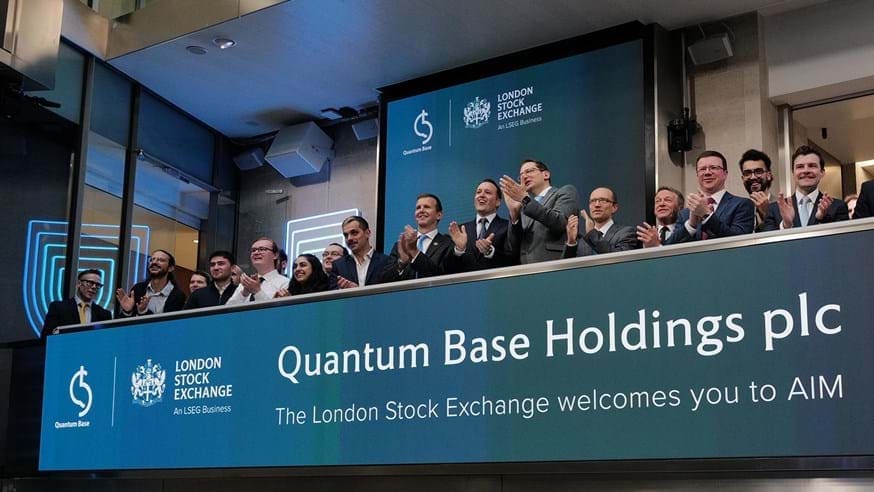
The impact has been transformative: in April 2025, Quantum Base became the first Lancaster University spin-out to float on the London Stock Exchange (AIM), achieving a £14.8 million market capitalisation. Its Q-ID® technology has been deployed on over 500 million products globally, and the company has secured a framework agreement with a major security printer worth a potential £2.5 million per year.
Challenge
Counterfeiting is one of the world's largest illicit industries, costing the global economy $2.8 trillion, funding criminal enterprises, and posing a direct threat to consumer safety, particularly through fake pharmaceuticals.
Existing security features like holograms and QR codes are fundamentally flawed as they can be copied. The challenge was to commercialise a truly secure alternative that was also low-cost and scalable enough for mass production.
While the foundational science was proven at Lancaster, the technology faced three critical barriers to commercial adoption that this IAA project was designed to solve: miniaturisation, material viability, and usability.
Actions
The Quantum Technology Centre (QTC) at Lancaster University, working closely with Quantum Base, used the IAA funding to systematically overcome the barriers to commercialisation. The funding enabled a dedicated team to:
- Create a compact 'micro' version of the tag with a target area of 12x30mm, allowing it to be integrated onto a vast range of products without redesigning packaging.
- Optimise the fluorescent nanomaterials for performance and cost; while critically reformulating them to eliminate hazardous material codes and ensure they were safe for use on consumer goods.
- Develop and beta-test a new Android smartphone application, improving the quantum algorithms to ensure fast, reliable readings and demonstrating a market-ready product to potential customers
- Engage with new printing partners and end-users, using the IAA-developed prototypes to secure initial interest and build the commercial relationships that led to major contracts.
Results
With deployment on over 500 million products, the technology is now actively protecting a huge number of organisations and consumers from monetary loss and the dangers of counterfeit goods.
In April 2025, Quantum Base Ltd became the first Lancaster University spin-out to float on the London Stock Exchange (AIM market) under the ticker "QUBE", with an initial price of 23.1 pence per share. The flotation created a £14.8 million UK-based quantum technology company, generating significant value for the UK economy and Lancaster University as a shareholder. The growth is creating high-value jobs and, as stated by Director of Research Dion Williams, "reinforcing the UK's position as a leader in the global quantum technology sector".