
Inclusion

Highlights from the Reimagining Research Practices Project

RRP Inclusion Focus Group

Principles for Inclusive and community-based research

In a series of interviews and focus groups, we asked the university’s four faculties to explore how researchers engage with communities in their work. In both interviews and focus groups, participants were invited to reflect on their experiences of working with communities facing marginalisation and disadvantage within societal and institutional systems. We asked our participants to tell us more about:

  • Where and how does marginalisation occur in society?
  • What challenges do communities face in engaging with research?
  • Why and how are communities involved?
  • How do researchers and communities navigate the research journey together?
  • What challenges and opportunities arise?
  • What values do communities bring to research?
  • How can researchers leave communities ‘well’?
  • What motivates researchers to work with communities?

These conversations have helped form the foundation for an evolving set of principles for inclusive and community-based research. These are summarised briefly below.

Acknowledgements

accordion

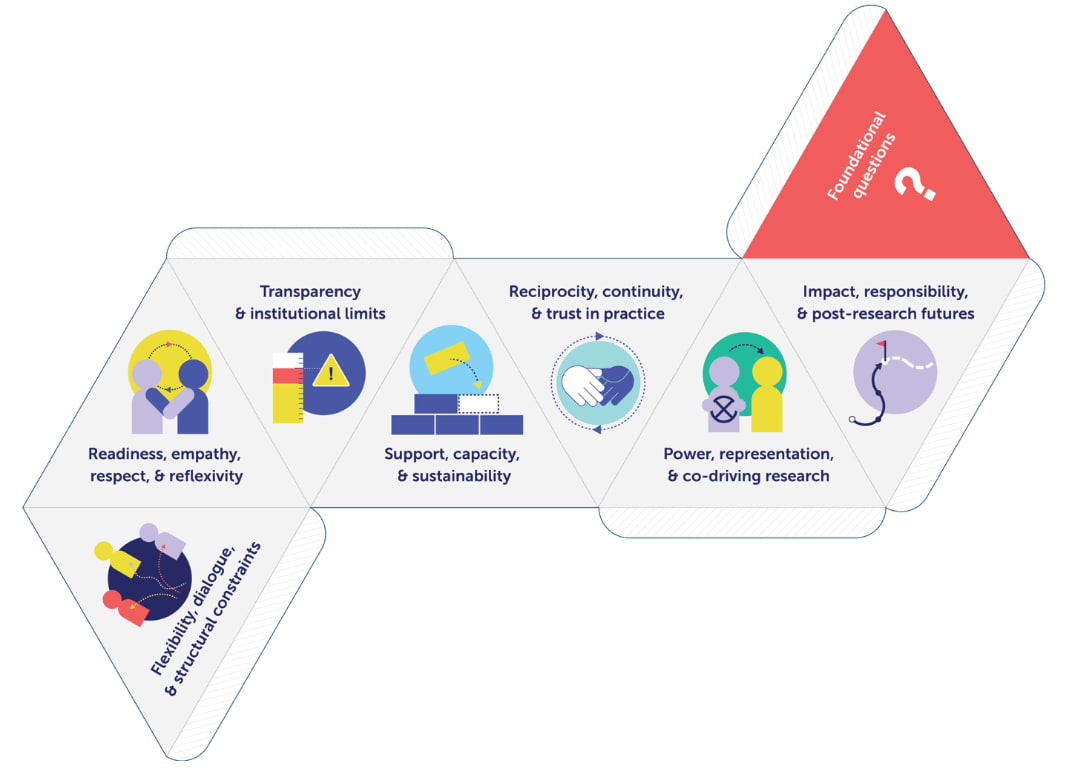
Octahedral Die

The working principles are not intended as rigid rules, but prompts for reflection and adaptation across diverse contexts. We use the metaphor of an octahedral die: one face is intentionally left open to invite evolving practices from researchers and communities. You can download the template:

Octadehral Die

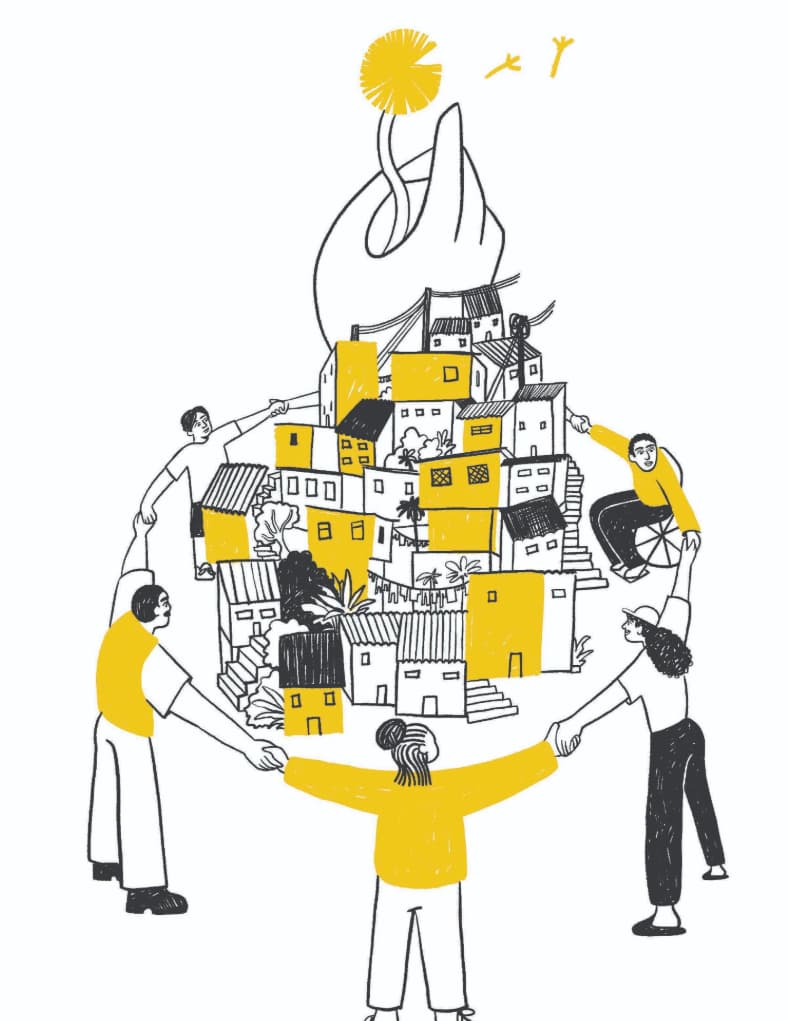
Draft Illustration of GREAT Project for RRP Graphic Novel

Graphic Novel

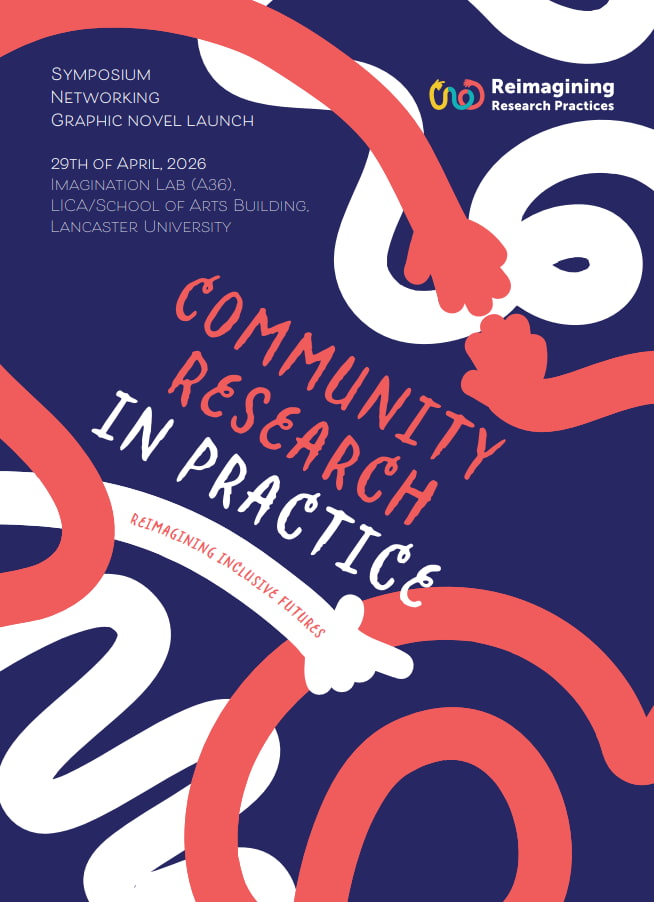
As part of the ongoing work on the RRP project and its principles, we are creating a graphic novel that captures stories from our journey and from researchers working with communities. We are collaborating with Angie and Phoebe from Arc Studio to bring findings to life and share the human stories behind research culture. They use illustration and animation to turn complex ideas into stories that engage, connect, and inspire change. Visual storytelling makes research accessible, memorable, and impactful – extending its reach beyond academic papers. By listening to researchers across faculties, we are illustrating not only their work but also their lived experiences and the communities they connect with.

Characters from the CREDIT Community Research Toolkit

CREDIT

We have created CREDIT (Community REsearch Digital Toolkit) to provide a structured means of exploring the implementation of community research (including citizen science, participatory research, etc). This includes signposting and downloadable resources to support your planning. After a general introduction, the first step is to consider if this is the right approach to take and to start thinking about the ethics involved. The toolkit then provides the opportunity to reflect on different aspects of planning. The pathway ends with thinking about legacy and data management.

We talked to a number of researchers at Lancaster to gather information and inspiration. These are presented as a set of community research case studies.

We are currently working with colleagues in the library to move the toolkit out of beta and house it permanently as a Lancaster-hosted resource.

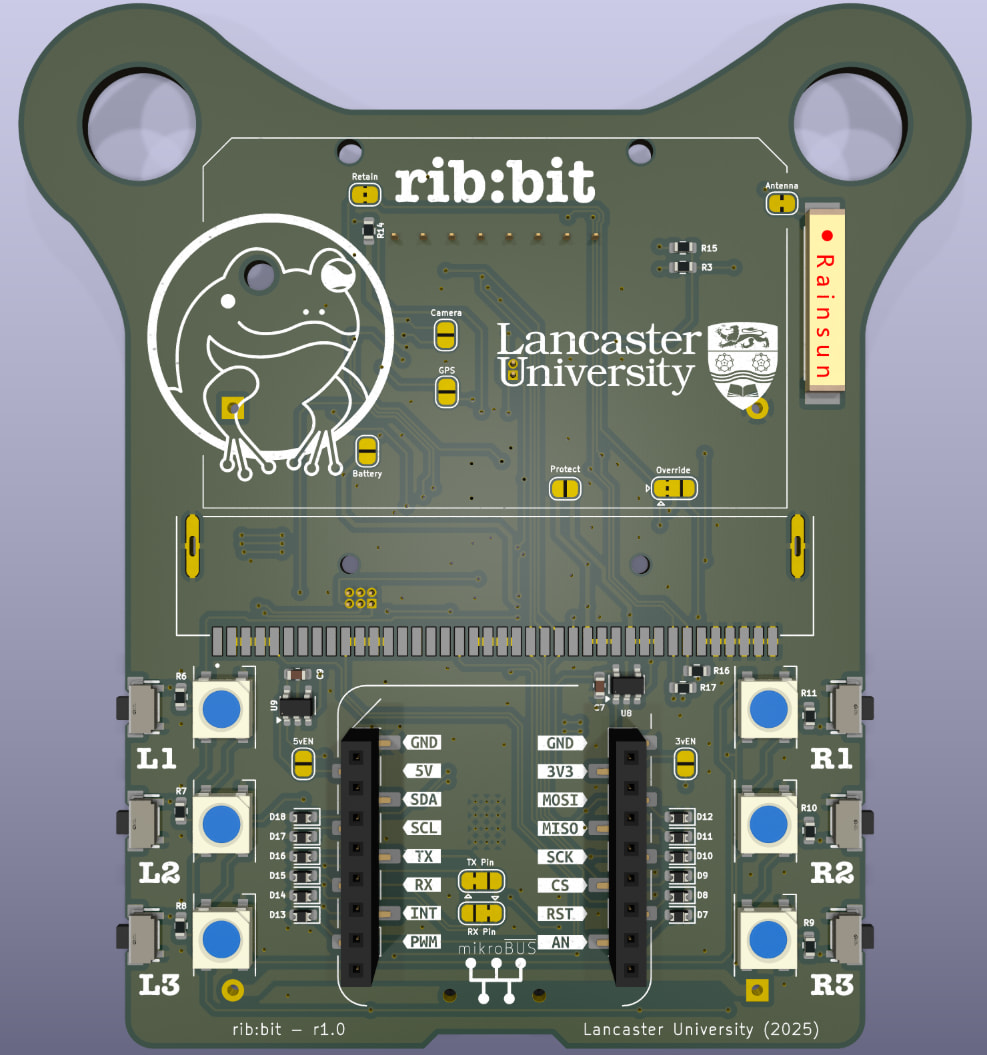
Rib:bit board in development

Micro:bit as a Tool for Research

The micro:bit is a pocket-sized, user-friendly, reprogrammable computer, which has been adopted globally in classrooms by over 38 million children. Using a block programming platform called Microsoft MakeCode, users can customise what data to collect and when, by dragging and dropping blocks together, like jigsaw pieces.

Its open platform, low cost, ease-of-use and extensive library of supporting materials also make it a great tool for use in community research. As part of the Reimagining Research Practices project, Dr. John Vidler is extending the micro:bit by making it work with additional sensors. This is to empower anyone to use it as a research tool via user-friendly interfaces and low-code tools. Reusable devices for research are also an important contribution to sustainable research practices.