Sustainability

Highlights from the Reimagining Research Practices Project

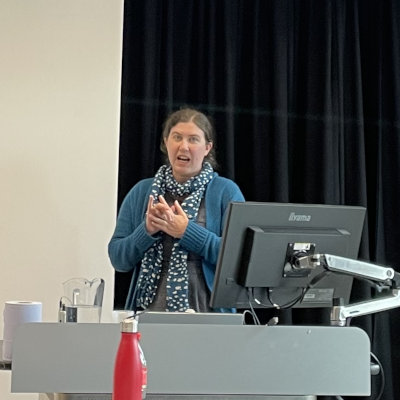
Dr. Valerie Seymour Presenting on Sustainability

Sustainable Research Practice Training

Researchers widely acknowledge that sustainability is a key issue to be considered in the way research is undertaken. But sometimes researchers feel that they lack information on the subject. With institutional, funder, and stakeholder requirements as well as personal situations to be considered there can be a lot of factors to balance.

We have developed a sustainability training resource for researchers. This was developed by members of the Reimagining Research Practice project in collaboration with the Lancaster University Sustainability Team. Additionally, conversations with members of the university provided useful insights into sustainability within teaching, operations and research across the university.

You can access the online training in Lancaster University's open learning site. If you are a member of Lancaster University click the "Moodle VLE" button. If you are external then you can create an account to login.

For any queries about the training please contact v.seymour@lancaster.ac.uk

Yingnian Tao Presenting at Queensland University

Sustainability Annual Reports – Parenting or partnership?

To learn more about how institutions construct their image with regards to sustainability, Dr. Yingnian Tao analysed sustainability reports published by UK universities using corpus analysis techniques. A dataset was compiled of 1,610,037 tokens across 207 documents from 64 universities identified as top- and bottom-performing in sustainability efforts (according to 2024 QS Sustainability Rankings). Collocation and concordance analyses were performed to compare representations of "we/university" (institution) versus "staff/students/community" (people).

Findings revealed an imbalanced image construction. Universities consistently presented themselves as active agents driving sustainability changes in campus operations, curriculum, research activities, and community engagement. These actions construct a caring, prestigious institutional persona, characterised by high awareness and proactive but top-down approach to climate action.

In contrast, staff, students, and community members are often depicted as passive recipients of the university’s facilities and services who have little agency over these initiatives and programmes. Sometimes, they are used to justify shortcomings in university climate performances. This "parenting" narrative positions universities as providers and decision-makers, while downplaying the critical contributions of their people. This framing diminishes collective agency between institution and its stakeholders and may discourage stakeholders from undertaking further environmental actions.

We advocate for participatory narratives, and challenge institutions to move beyond hierarchical parenting narratives in sustainability reporting towards acknowledging the existing efforts of staff, students, and community members and empowering these stakeholders to achieve more collaborative and inclusive sustainability practices.

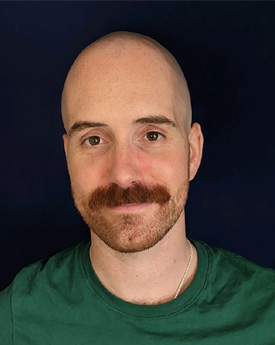
Dr. Sam Finnerty

Sustainability in Research Seminar - February 4th 2026

On February 4th 2026 members of our project are giving four short talks that look at sustainability in research from different angles across the sector. Dr Sam Finnerty opens with insights from interviews with senior university leaders, focusing on how they understand their responsibilities and manage the competing pressures that shape institutional sustainability work. Dr Yingnian Tao then turns to sustainability reports from 66 UK universities, examining how institutions present their efforts and how they describe the roles of staff and students. Dr Seth Robinson follows with a discussion of the cultural factors that influence whether sustainability goals actually take root in day-to-day research practice, drawing on findings from workshops, interviews, and comparisons with other institutions. Dr Valerie Seymour concludes by introducing a new reflective tool designed to help researchers assess their own practices and plan concrete next steps. Together, these talks offer a clear view of how sustainability is interpreted, communicated, and enacted within universities, and point to practical areas where change is possible.

The seminar runs from 15:00-16:00 4th February in FUR- Furness LT3 and on Teams.

Open to LU staff - registration required. 

See more details and register for the event