

Tab Content: Study details
What can I study?
A full list of Lancaster's degrees can be found on our Undergraduate courses webpage. Information about the classes that are offered can be found under the 'Course Structure' heading for each degree.
Not all classes will be available for visiting study abroad students, so please get in touch with studyabroad@lancaster.ac.uk if you need further information about a particular class.
How many credits can I enrol on?
- Full Year: 120 LU credits / 32 US credits / 60 ECTS
- Semester 1 only: 60 LU credits / 15 US credits / 30 ECTS
- Semester 2 only: 60 LU credits / 15 US credits / 30 ECTS
Module Levels
Undergraduate degrees in England take three years to complete, and modules are numbered to correspond with a Framework for Higher Education Qualifications (FHEQ) level:
- Level 4 - 1st year undergraduate
- Level 5 - 2nd year undergraduate
- Level 6 - 3rd/final year undergraduate
- Level 7 - Postgraduate Taught (standalone masters or 4th year integrated masters)
You must have completed a year of undergraduate study at your home university before coming to Lancaster.
Tab Content: Term dates
You can study at Lancaster for:
- Michaelmas/Semester 1 (September - January)
- Lent and Summer / Semester 2 (January - June)
- Full academic year (September to June)
- You can also study for a calendar year (January - December) if that fits best at your home university.
We also offer Lancaster Global Summer Schools in the early summer.
NB: Postgraduate Erasmus+ students may have different terms. Please check the Erasmus+ postgraduate module handbook.
Key dates for 2025/26
October starters:
- Students are expected to arrive on Saturday, 27 September, or Sunday, 28 September 2025 depending on their College allocation.
- Welcome Week: 29 September 2025 - 3 October 2025
- Michaelmas Term: 6 October 2025 - 12 December 2025
- If you are here for Michaelmas term only, you will likely have assignments to complete after the term has ended. You will be able to complete these remotely, so you can plan to depart from Lancaster on 13 December 2025.
January Starters:
- Students are expected to arrive on Tuesday, 6 January 2026.
- Welcome Week: 7 - 9 January 2026
- Lent Term: 12 January 2026 - 20 March 2026
- Summer term: 20 April 2026 – 26 June 2026
Key dates for 2026/27
From September 2026 Lancaster University will move to two semesters a year.
September starters:
- Students are expected to arrive on Saturday, 19 September, or Sunday, 20 September 2026 depending on their College allocation.
- Welcome Week: 21 - 27 September 2026
- Semester 1: 28 September 2026 - 31 January 2027
- If you are here for Semester 1 only, the last date that you will be required to be on campus is 18 December 2026. Should you choose to leave early, you will be given options to complete your January assessments remotely.
February Starters:
- Students are expected to arrive on Monday, 1 February 2027.
- Welcome Week: 1 February - 7 February
- Semester 2: 1 February - 13 June 2027
- Spring vacation: 22 March - 11 April 2027
For more information about our term dates please visit Lancaster's Term dates webpage.
Term Dates
Tab Content: Tuition fees and other costs
Tuition fees for visiting undergraduate students
2025/26
- Full Academic Year (October to June) - £27,260 - 32 US semester credits/60 ECTS credits
- Michaelmas term (October to December) - £10,904 - 12 US semester credits/22.5 ECTS credits
- Lent and Summer terms (January to June) - £16,356 - 16-20 US semester credits/30-37.5 ECTS credits
If you are an exchange or Erasmus+ student, you pay tuition fees to your home university and none to Lancaster University.
Living Costs and Budgeting
- On-campus accommodation costs vary depending on the kind of room you choose. Rents on campus usually include bills. For off-campus budget £20-25 per week for bills.
- All students pay a small college membership fee, which supports the running of college events and activities. The fee for visiting study abroad students is £15.
- Insurance costs vary depending on the cover required. Rent on campus includes limited cover.
- Entertainment costs are excluded. Please budget for these according to your own needs
You will also need to budget for:
- health insurance if you are attending Lancaster for less than 6 months
- visa
- travel costs to and from Lancaster
- textbooks
- vacation and weekend travel
- entertainment
- telephone; laundry; cooking and eating utensils; and other personal expenses. These will obviously vary widely according to your budget, tastes and requirements.
You can find budgeting advice and tips on how to get the most for your money whilst at Lancaster on our Managing your money ASK page.
Tab Content: Life at Lancaster
Explore the campus
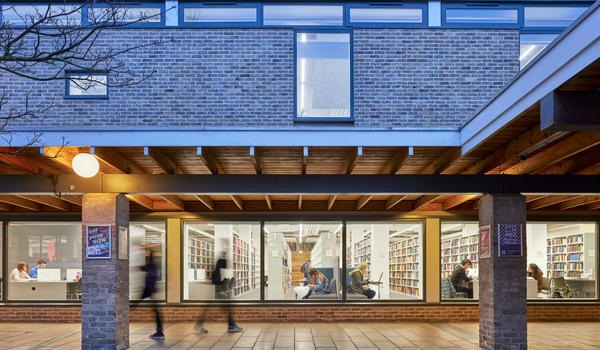
Our campus is often likened to a small town. This is because we provide everything you need to live comfortably and safely: accommodation, facilities, social areas, green spaces, and so much more. Study and research takes place in a range of modern and state-of-the-art spaces. Take a virtual tour of our beautiful campus and discover what we can offer you.
Wellbeing and support
The University offers a range of support across campus, with experts providing confidential support and guidance through our specialist services. Support areas include:
- Wellbeing, counselling and mental health
- Disability
- Diverse communities
- Academic support, including adjusting to UK teaching and learning styles
- Visa and immigration
- Careers and employability
Visit our Wellbeing and support page to find out more.
Societies and sports
Student-run clubs and societies are a great way to meet new people and follow your interests. With over 200 societies, you can discover new hobbies, sports and interests or increase your academic networking. Lancaster provides multiple ways of joining in with sport, either on your own, as a member of your college or as a member of one of our many sport societies.
Accommodation
Make your home on campus in our award-winning accommodation. We have 6,700 bed spaces available on campus in a range of different accommodation types. Explore the options to find out more: Accommodation at Lancaster University
Visiting students will be sent a link to apply for accommodation after their application as been accepted by Lancaster University.
The city and beyond
Lancaster city is a relatively small but bustling city with a rich history. The city centre can easily be reached from campus, so you can explore its cobbled streets, museums, quirky outdoor spaces and landmarks, including a well preserved 12th century castle.
Our central location in the UK means we're well-connected to many places of interest - within a short journey you'll find coastal resorts, buzzing cities or the beautiful Lake District. For trips further afield, Manchester airport is easily accessible by train. Explore our in-depth guide to the city and beyond to find out more.