French Studies and Geography

BA Hons

  • UCAS code LR71
  • Entry year 2027
  • A level requirements ABB
  • Duration Full time 4 years

We welcome applications from the United States of America

We've put together information and resources to guide your application journey as a student from the United States of America.

Overview

Top reasons to study with us

  • 3

    3rd for French

    The Times and Sunday Times Good University Guide (2026)

  • 5

    5th for German

    The Complete University Guide (2026)

  • 7

    7th for Iberian Languages

    The Times and Sunday Times Good University Guide (2026)

Given the pace at which our planet is changing, there has never been a more important time to study geography. Learn to make sense of the complex interactions between humanity and our planetary environment and discover how you can make a positive difference. The theme of sustainability is woven throughout the degree and life on campus.

This interdisciplinary programme in French Studies and Geography caters to versatile interests, fosters adaptability and opens doors to a wide range of rewarding careers. You’ll graduate with a deep understanding of the complex interactions between humanity and our planetary environment. You'll also gain expertise in the French language alongside in-depth cultural knowledge. The degree will equip with the knowledge and skills to take your place in an increasingly interconnected world.

What to expect

At the beginning of the degree, you will be introduced to human, physical and environmental geography. You will develop the skills geographers use to analyse major issues and global concerns. You'll also begin to follow a progressional ladder on an internationally recognised language scale, entering either from beginner or intermediate level and progressing to being proficient in French.

In Year 2, you will deepen your knowledge of cultural and political geography, with the opportunity to tailor your interests around a range of human-centric optional modules. As you specialise, you will undertake practical work that aims to enhance your understanding of key topics while developing your analytic and research skills. You'll also develop a range of oral, aural, written and reading skills in an integrated way that embraces techniques of linguistic mediation and the plurilingual contexts of French.

You'll spend Year 3 abroad, engaging with French communities. This can be at a partner university, working in industry, with an NGO or other charitable projects, in an entrepreneurial activity or teaching English as a foreign language. A combination of activities is also possible.

As you progress into Year 4, you will tailor your studies even further with a dissertation. Here, you will be guided by an academic advisor to deliver an independent research topic of your choice. This can be completed in collaboration with a regional organisation such as Lancaster City Council, where you will gain valuable work experience in a real-world environment. Alongside your research project, you will complete further optional modules, including residential field trips. You'll build on the language competencies and expertise you have gained during the Global Engagement Year, to express yourself spontaneously, flexibly and effectively for social, academic and professional purposes.

Getting out in the field

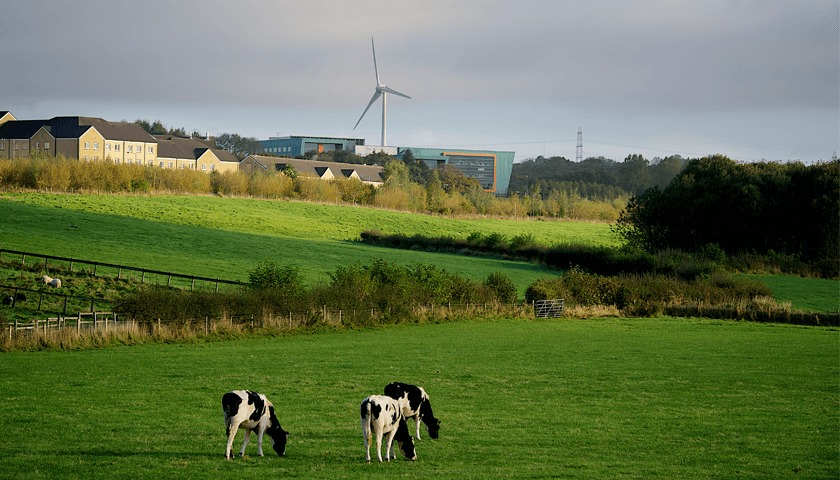
With our location near major urban centres, rivers, coasts, and the Lake District World Heritage Site, you will be able to explore beyond the campus and gain hands-on experience through fieldwork. This may include studying the use of salt marshes and sand dunes for coastal flood defence around Morecambe Bay; studying rural communities built around renewable energy projects; exploring inter-connections along Lancaster’s River Lune, from source to sea; and examining glacially carved landscapes and cave systems. Other opportunities include optional overseas trips, such as to Bali.

Personal development

In addition to subject knowledge and field experience, you will gain essential communication and geographic information systems skills. You will become familiar with data generation through qualitative techniques, as well as data handling, environmental sampling, and analysis.

How is French Studies taught at Lancaster?

Your journey to language proficiency and exploring the French-speaking world starts here. You will acquire high-level language skills and gain an internationally recognised qualification modelled on the Common European Framework of Reference for languages.

You’ll enter the course either as a complete beginner in French or with some initial competency. Whatever level you begin with, you will progress to becoming proficient in the language.

Your language learning will be further enriched by cultural studies, covering visual media, literature, art, and history, providing a comprehensive understanding of the societal contexts of the French-speaking world.

Spending your third year abroad in a French-speaking country makes a major contribution to your command of the language, while deepening your intercultural sensitivity. You can study at a partner university or conduct a work placement.

3 things our Geography students want you to know:

  • Lancaster Environment Centre’s large atrium offers a refreshing place to work, where you will be surrounded by active researchers shaping current thinking. We have an open-door policy and assign you an academic tutor at the beginning of your degree, meaning there’s plenty of ways to receive support. Plus, you will have access to outstanding practical facilities, including our own weather monitoring station
  • The theme of sustainability is woven throughout the degree and life on campus. Many students are part of LUSU Green, a group run by the Students’ Union that is driving change across the campus and beyond to create a thriving natural environment, reduce carbon emissions, and train the sustainability leaders of the future
  • Our degree programme focuses on helping you prepare for your future career, with modules that prioritise the development of essential skills and opportunities to undertake enriching hands-on experience in real-world environments. You will graduate ready to enter a number of thriving industries in an increasingly environmentally conscious market

Careers

What careers can I pursue with a degree in French Studies and Geography?

As a graduate of French Studies and Geography you will have acquired wide-ranging skills and experiences that will enable you to advance professionally in a range of sectors.

Your studies in Geography focus on preparing you for your future career. In addition to subject knowledge and field experience, you will have a host of technical and analytical skills.

Language graduates are in high demand in roles which require collaboration, communication, leadership skills, and critical thinking, as well as intercultural competencies and creativity.

Graduates of this programme might choose to pursue careers in roles such as:

    • Intelligence Analyst Linguist
    • Global Supply Chain Manager
    • Management Consultant
    • Translator or Interpreter
    • Language Teacher
    • Civil Servant or Diplomatic Service Officer
    • Book Editor
    • Travel and Tourism
    • Marketing professional
    • Climate Change Consultant
    • Planning Officer
    • Sustainability Executive
    • Landscape Architect

Many of our students take their skills to the next level by continuing with postgraduate studies.

What careers and employability support does Lancaster offer?

Our degrees open up an extremely wide array of career pathways in businesses and organisations, large and small, in the UK and overseas.

We run a paid internship scheme specifically for our arts, humanities and social sciences students, supported by a specialist Employability Team. The team offer individual consultations and tailored application guidance, as well as careers events, development opportunities, and resources.

Whether you have a clear idea of your potential career path or need some help considering the options, our friendly team is on hand.

Lancaster is unique in that every student is eligible to participate in The Lancaster Award which recognises activities such as work experience, community engagement or volunteering and social development. A valuable addition to your CV!

Find out more about Lancaster’s careers events, extensive resources and personal support for Careers and Employability.

Entry requirements

These are the typical grades that you will need to study this course. This section will tell you whether you need qualifications in specific subjects, what our English language requirements are, and if there are any extra requirements such as attending an interview or submitting a portfolio.

Qualifications and typical requirements accordion

Important information

You will not be able to study a language if you are an L1 speaker of that language, or if you are fluent above CEFR B2. You will typically not be able to study a language from beginners' level if you have studied it to A level or equivalent. If you have studied a language to A level, we would expect you to have achieved at least grade B. If you have not studied a language to A level or equivalent, we would typically accept a GCSE 7/A in any foreign language as meeting the language requirement.

Help from our Admissions team

If you are thinking of applying to Lancaster and you would like to ask us a question, complete our enquiry form and one of the team will get back to you.

We also have more details on our website about:

International foundation programmes

Delivered in partnership with Lancaster University International Study Centre, our one-year tailored foundation pathways are designed to improve your subject knowledge and English language skills to the level required by a range of Lancaster University degrees. Visit the Lancaster University International Study Centre for more details and a list of eligible degrees you can progress onto.

Contextual admissions

Contextual admissions could help you gain a place at university if you have faced additional challenges during your education which might have impacted your results. Visit our contextual admissions page to find out about how this works and whether you could be eligible.

Course structure

We continually review and enhance our curriculum to ensure we are delivering the best possible learning experience, and to make sure that the subject knowledge and transferable skills you develop will prepare you for your future. The University will make every reasonable effort to offer programmes and modules as advertised. In some cases, changes may be necessary and may result in new modules or some modules and combinations being unavailable, for example as a result of student feedback, timetabling, Professional Statutory and Regulatory Bodies' (PSRB) requirements, staff changes and new research. Not all optional modules are available every year.

Core

core modules accordion

Core

core modules accordion

Optional

optional modules accordion

Core

core modules accordion

Core

core modules accordion

Optional

optional modules accordion

Fees and funding

Our annual tuition fee is set for a 12-month session, starting at the beginning of each academic year.

Our Undergraduate Tuition Fees for 2027/28 are:

Home International
£10,050 TBC

Fees and funding information

Additional fees and funding information accordion

Scholarships and bursaries

Details of our scholarships and bursaries for students starting in 2027 are not yet available.

You can use our scholarships for 2026-entry applicants as guidance.

Important information

The information on this site relates primarily to the stated entry year and every effort has been taken to ensure the information is correct at the time of publication.

The University will use all reasonable effort to deliver the courses as described, but the University reserves the right to make changes to advertised courses. In exceptional circumstances that are beyond the University’s reasonable control (Force Majeure Events), we may need to amend the programmes and provision advertised. In this event, the University will take reasonable steps to minimise the disruption to your studies. If a course is withdrawn or if there are any fundamental changes to your course, we will give you reasonable notice and you will be entitled to request that you are considered for an alternative course or withdraw your application. You are advised to revisit our website for up-to-date course information before you submit your application.

More information on limits to the University’s liability can be found in our legal information.

Our Students’ Charter

We believe in the importance of a strong and productive partnership between our students and staff. In order to ensure your time at Lancaster is a positive experience we have worked with the Students’ Union to articulate this relationship and the standards to which the University and its students aspire. Find out more about our  Charter and student policies.

Open days and campus tours

Visit campus and put yourself in the picture at an open day or campus tour.

Undergraduate Open Days
two students sitting and reading on some outdoor steps
  • Virtual tour

    Take five minutes and we'll show you what our Top 10 UK university has to offer, from beautiful green campus to colleges, teaching and sports facilities.

  • Accommodation guide

    Most first-year undergraduate students choose to live on campus, where you’ll find award-winning accommodation to suit different preferences and budgets.

  • The city and beyond

    Our historic city is student-friendly and home to a diverse and welcoming community. Beyond the city you'll find a stunning coastline and the world-famous English Lake District.