We welcome applications from the United States of America
We've put together information and resources to guide your application journey as a student from the United States of America.
Overview
Top reasons to study with us
3
3rd for French
The Times and Sunday Times Good University Guide (2026)
5
5th for German
The Complete University Guide (2026)
7
7th for Iberian Languages
The Times and Sunday Times Good University Guide (2026)
Deep dive into the fascinating world of language, where words become bridges to understanding and cultures come alive through communication. For those that excel in language learning, this degree will enable you to fast-track your learning and take up to three languages. You’ll graduate with a postgraduate language degree and advanced skills that will get you noticed by future employers.
Choose to major in up to two languages from French, German and Spanish, or study one major language and pick up to two ‘discovery’ languages – including any of the above languages as well as Italian and Chinese.
Why Lancaster?
Accelerate your learning experience as you go from undergraduate to master’s level in just four years, with three years at Lancaster and one year abroad
Challenge yourself as a linguist whilst engaging with the cultures of the countries where they are spoken
Discover the value of transcultural approaches to resolving complex societal challenges
Embrace the opportunity to study abroad, giving you the chance to immerse yourself fully in your chosen country or countries
Gain an internationally recognised qualification and the skills and confidence to work as a language and cultures specialist, either in the UK or abroad
Tailor your own pathway
The MLang Hons in Languages and Global Cultures requires you to have previously studied at least one language up to A-Level or equivalent. In your first year, you will develop your core language skills at advanced level whilst also exploring the cultural, social and historical contexts of language/languages you are studying through film, visual media, literature, art and history.
Additionally, you will examine major global issues such as the climate emergency, global health crisis, human rights, and community engagement, and learn how these topics intersect with issues of race, gender, sexuality, disability, and belief across diverse language communities around the world.
If you join with one language, you will also be able to pick one “discovery” language – for which you can choose to study Chinese, French, German, Italian or Spanish from beginners' level.
Your first year will also help you prepare to study abroad in your second year at one of our partner universities in France, Germany or Spain.
Fast-track to higher levels
On returning to Lancaster after your year abroad, you will study on our ‘Becoming Proficient’ level for your core language(s); students with one major language will be able to choose to continue with their “discovery” language or pick up a new one.
Modelled on the Common European Framework of Reference for languages, this course allows you to follow the progressional ladder on an internationally recognised scale, ensuring you become a multi-lingual graduate.
During your studies, you will work collaboratively with students from all languages, working together to answer questions such as: What is the impact and opportunities of AI for language professionals? What will future language communities look like across the globe? What is the role of languages and cultures in co-designing responses to some of the major challenges facing the world today?
Progress and specialise
Alongside your language skills and cultural knowledge, you will develop a strong set of professional skills and expertise, preparing you to specialise in your chosen field in your final year. You will acquire enhanced skills in analysis and decision-making, the ability to exchange and articulate ideas, teamwork, and problem-solving, all of which will aid you in your final year and beyond.
You will also join the postgraduate community in the School of Global affairs, with opportunities to explore areas such as sustainability and the environment and health humanities, as well as translation and cultural studies. Your choice of final project can be drawn from your academic, personal or professional experience and interests, and a range of innovative assessment types will give you the freedom to represent your chosen topic creatively and persuasively.
You’ll find detailed information about the structure of this degree and module options on our further information page.
Explore the languages you can study and the levels available – from complete beginners to advanced, as well as cultural studies and global exploration.
Spending up to a year abroad is an integral and assessed part of our language degrees.
Through studying overseas, engaging globally gives you the opportunity to improve your language proficiency, broaden your cultural knowledge and gain transferable skills that are much valued by employers.
On the MLang, the Global Engagement Year takes place in the second year.
We take your health and safety seriously and make sure that you feel fully prepared for any issues that may arise during your placement.
Careers
This integrated master’s programme is a fantastic opportunity to achieve a postgraduate language qualification in just four years. This will mark you out in job applications as a high achiever. By the time you graduate, you will have a brilliant combination of interpersonal, intercultural, and transferable skills that can be applied to a range of rewarding career paths, often international in scope or location.
Graduates of this course may go on to multilingual roles such as:
Sales manager
Business consultant
Translator or interpreter
Language teacher
Travel and tourism specialist
Beyond language-related career paths, graduates of this course could also embrace careers that have a strong element of global solutions such as:
Print, digital and broadcast media
Journalism
Publishing
Marketing
Government and NGO policy roles
Public administration and civil service
Intelligence and security
The arts, including GLAM (Galleries, libraries, archives, and museums)
This course is also a great stepping stone to further study, preparing you to progress directly into a PhD.
Careers and employability support
Our degrees open up an extremely wide array of career pathways in businesses and organisations, large and small, in the UK and overseas.
We run a paid internship scheme specifically for our arts, humanities and social sciences students, supported by a specialist Employability Team. The team offer individual consultations and tailored application guidance, as well as careers events, development opportunities, and resources.
Whether you have a clear idea of your potential career path or need some help considering the options, our friendly team is on hand.
Lancaster is unique in that every student is eligible to participate in The Lancaster Award which recognises activities such as work experience, community engagement or volunteering and social development. A valuable addition to your CV!
Find out more about Lancaster’s careers events, extensive resources and personal support for Careers and Employability.
Careers
Find out about some of the careers our alumni have entered into after graduation.
Entry requirements
These are the typical grades that you will need to study this course. This section will tell you whether you need qualifications in specific subjects, what our English language requirements are, and if there are any extra requirements such as attending an interview or submitting a portfolio.
Qualifications and typical requirements accordion
AAB. This should include grade B in either French, German or Spanish.
Our typical entry requirement would be 36 Level 3 Credits at Distinction plus 9 Level 3 credits at Merit, but you would need to have appropriate evidence of language ability in French, German or Spanish.
We accept the Advanced Skills Baccalaureate Wales in place of one A level, or equivalent qualification, as long as any subject requirements are met.
DDD accepted alongside appropriate evidence of language ability in French, German or Spanish.
Our typical requirement would be A level grade B plus BTEC(s) at DD, or A levels at grade AB plus BTEC at D. This should include grade B in either French, German, or Spanish.
35 points overall with 16 points from the best 3 HL subjects. This should include 6 in HL French, German or Spanish.
We are happy to admit applicants on the basis of five Highers, but where we require a specific subject at A level, we will typically require an Advanced Higher in that subject. If you do not meet the grade requirement through Highers alone, we will consider a combination of Highers and Advanced Highers in separate subjects. Please contact the Admissions team for more information.
Distinction overall accepted alongside appropriate evidence of language ability in French, German or Spanish.
Important information
You will not be able to study a language if you are an L1 speaker of that language, or if you are fluent above CEFR B2. You will typically not be able to study a language from beginners' level if you have studied it to A level or equivalent. If you have studied a language to A level, we would expect you to have achieved at least grade B.
Help from our Admissions team
If you are thinking of applying to Lancaster and you would like to ask us a question, complete our enquiry form and one of the team will get back to you.
Delivered in partnership with INTO Lancaster University, our one-year tailored foundation pathways are designed to improve your subject knowledge and English language skills to the level required by a range of Lancaster University degrees. Visit the INTO Lancaster University website for more details and a list of eligible degrees you can progress onto.
Contextual admissions
Contextual admissions could help you gain a place at university if you have faced additional challenges during your education which might have impacted your results. Visit our contextual admissions page to find out about how this works and whether you could be eligible.
Course structure
We continually review and enhance our curriculum to ensure we are delivering the best possible learning experience, and to make sure that the subject knowledge and transferable skills you develop will prepare you for your future. The University will make every reasonable effort to offer programmes and modules as advertised. In some cases, changes may be necessary and may result in new modules or some modules and combinations being unavailable, for example as a result of student feedback, timetabling, Professional Statutory and Regulatory Bodies' (PSRB) requirements, staff changes and new research. Not all optional modules are available every year.
Deepen your knowledge of the interplay between languages, cultures, and power through exploring topics such as colonisation, endangered languages, artificial intelligence, nationhood, multilingualism, translation and migrations. You’ll now take one or more of these themes and carry out an applied investigative project which relates your chosen topics to global and local cultural developments.
You will immerse yourself in interactive, scenario-based discussions, in a way that is problem-solving, inclusive, creative, and aware of the urgency of twenty-first century challenges. Through class discussion and independent learning, you will encounter broader critical areas, such as queer studies, border studies, translation memoirs and government language policy.
Chinese, French, German, Italian, Spanish
In this year-long module you will progress to B1/B2 on the CEFR scale and HSK 4/5 for Chinese.
By the end of the year, you’ll be able to understand the main ideas of complex texts on both concrete and abstract topics, including technical discussions in fields of specialisation. You will be able to interact with a degree of fluency and spontaneity with native speakers, including facilitating intercultural encounters.
You will be exposed to a wide range of authentic materials in the target language, varying in terms of content, format and register aimed at broadening and deepening your understanding of different aspects of modern society, politics and culture, global issues and institutions.
The study of the cultural, social and historical context is embedded in the language learning within overarching themes. You will begin by focusing on issues relating to people, power and places and move on to exploring centres, peripheries and mobilities.
Please note: Italian is not available for students taking a joint degree with a language and a non-language subject.
French, German, Italian and Spanish
Progress to B2 level on the CEFR scale by the end of the year. You will develop a range of oral, aural, written and reading skills in an integrated way that embraces techniques of linguistic mediation and the plurilingual contexts of each language. By the end of the year, you’ll be able to understand the main ideas of complex texts on both concrete and abstract topics and interact with native speakers in a range of situations. You will be able to produce clear, detailed texts on a wide range of subjects including explaining viewpoints on topical issues.
The study of cultural, social, and historical context is embedded in the language learning within overarching themes. You will begin by exploring social justice and move on to studying cultural translation.
Please note: Italian is not available for students taking a joint degree with a language and a non-language subject.
Take your chosen language from beginners' level and, over the academic year, reach a high A2 level on the CEFR scale for the European Languages, and HSK 2/3 for Chinese.
By the end of the year, you’ll be able to engage with everyday life situations such as describing your environment, express preferences and discuss past events or future plans in simple terms.
In seminars you will cover a range of oral, aural, written, and reading skills in an integrated way that embraces techniques of linguistic mediation and the plurilingual contexts of each language. The study of the cultural, social and historical context is embedded in the language learning, under the umbrella themes: Discovering Languages and Cultures and Locating the Global.
You will begin by focusing on linguistic discovery, invention and growth and move on to locating language-specific places, landscapes, and communities. You will also be introduced to key translation techniques.
Please note: Italian is not available for students taking a joint degree with a language and a non-language subject.
In order to ask questions about the way language works in society, how it connects with the mind/brain or how it is acquired by computers, you first need to know something about the foundational elements of language. This module will introduce you to the building blocks of human language.
You will learn about sounds in language, how they are pronounced and how they can be combined to form words. We will teach you about the way words themselves are structured. You’ll also explore how language puts words together to build sentences of different types and how sentences express meaning, in isolation and in context.
By the end of the module, you will be familiar with the essentials of phonetics, phonology, morphology, syntax, semantics and pragmatics. This knowledge will enable you to study those areas in more detail, as well as other areas of linguistics or English language studies which build on them.
Gain a nuanced understanding of the forces driving change in the international system and their implications for global order and human security. You will acquire the tools to navigate and contribute to a complex and interconnected world. The module moves beyond traditional state-centric perspectives to explore the complex interplay of actors, structures and processes shaping our world.
You will delve into global governance and address the emergence of new security threats, while tackling shifting power-dynamics at both the national and international level. Throughout the module, you will engage with a variety of case studies that illustrate the complexities of these global issues.
Through debates and discussions, you will engage in critical thinking, develop your communication skills, and grapple with the ethical and political dimensions of global challenges.
History of Western Philosophy: Ideas that Shaped the West
From questions about truth, justice, and knowledge to debates over freedom, power, and human purpose - how has philosophical inquiry shaped cultural, political, and scientific life across centuries?
In this module you will explore the major ideas and traditions that have guided the development of Western thought. Specific thinkers examined will vary from year to year, but they will include philosophers whose ideas have helped shape philosophical viewpoints, categories and boundaries in the western philosophical tradition. You will be encouraged to think about the problems and limitations of different thinkers’ approaches, and their impact on the way we practice and understand the boundaries and scope of philosophy today, asking questions of them such as:
How did these thinkers conceive of philosophy and its task?
How did they conceive of being and reality?
How did they understand truth and how did they think it could be discovered?
How did they set the agenda for philosophical debates in the West from the past to the present?
By the end of this module, you will have learnt to think with, rather than about some of these influential thinkers, while reflecting on how the concepts that forged the past continue to frame the challenges of our present and the possibilities of our future.
Learn how to analyse highly contemporary political events and trends, and develop the vital critical skills required to be able to put them into context. You will also discover how to relate these issues to core empirical questions and debates within academic research on politics. Taking a problem-based learning approach, you’ll use evidence to evaluate competing explanations for recent political developments.
These may include:
Democracy and elections
Political leadership
The state and globalisation
Structural inequalities
Political institutions
Public opinion and protest.
Lancaster’s politics experts have extensive expertise across different regions of the globe and we are quick to respond to contemporary global political trends. This means you will be able to directly connect current political events and your own political interests. You will learn to critically reflect on the different types of empirical evidence political experts use to study politics, including polling, rhetoric, discourse and case studies.
Core
core modules accordion
Spend an academic year abroad engaging with the communities of the language(s) you are learning whilst studying at a partner university. If you have two core languages you will split your time accordingly.
You will prepare for your Global Engagement Year during your first year, supported by a series of workshops and one-to-one sessions with a pre-departure supervisor. Once abroad, you will remain in contact with the supervisor.
Core
core modules accordion
Chinese, French, German and Spanish
Build on the language competencies and expertise you have gained during the Global Engagement Year and progress to C1/C2 on the CEFR level for the European languages or HSK 6/7 for Chinese.
By the end of the year, you will be able to understand and produce a wide range of complex, longer texts, recognise implicit meaning and show controlled use of organisational patterns, connectors and cohesive devices.
You will be able to express yourself spontaneously, flexibly and effectively for social, academic and professional purposes. You will cover areas such as future threats to specified language communities, opportunities to advocate and promote languages, and adaptation to changes to living languages, such as shifts in formal and informal communication and preservation or borrowing from other languages.
The study of the cultural, social and historical context is embedded in the study of the language under umbrella themes. You will begin by exploring routes, origins and tongues and then move on to studying bodies.
Undertake an extended, in-depth individual project that will typically taking one of the following formats: a discursive dissertation; a translation dissertation; or dissertation by practice.
Indicative topics for discursive dissertations:
The role of languages and cultures in tackling global challenges
Language and technology, or future language pedagogies
Futures of translation and interpreting
Indicative topics for translation dissertations:
Conventional or creative translation project with critical translator’s commentary. Theories and practices may include eco-translation, AI and machine translation, or creative-critical translation
Examples for the “by practice” route:
A policy report based on working with minority language communities in the local area
Creative work: creative writing in the target language or multilingually; a short film; an installation, etc.
A portfolio of teaching materials
You will be given feedback and supported through work-in-progress workshops.
Take your chosen language from beginners' level and, over the academic year, reach a high A2 level on the CEFR scale for the European Languages, and HSK 2/3 for Chinese.
By the end of the year, you’ll be able to engage with everyday life situations such as describing your environment, express preferences and discuss past events or future plans in simple terms.
In seminars you will cover a range of oral, aural, written, and reading skills in an integrated way that embraces techniques of linguistic mediation and the plurilingual contexts of each language. The study of the cultural, social and historical context is embedded in the language learning, under the umbrella themes: Discovering Languages and Cultures and Locating the Global.
You will begin by focusing on linguistic discovery, invention and growth and move on to locating language-specific places, landscapes, and communities. You will also be introduced to key translation techniques.
Please note: Italian is not available for students taking a joint degree with a language and a non-language subject.
Chinese, French, German, Italian, Spanish
In this year-long module you will progress to B1/B2 on the CEFR scale and HSK 4/5 for Chinese.
By the end of the year, you’ll be able to understand the main ideas of complex texts on both concrete and abstract topics, including technical discussions in fields of specialisation. You will be able to interact with a degree of fluency and spontaneity with native speakers, including facilitating intercultural encounters.
You will be exposed to a wide range of authentic materials in the target language, varying in terms of content, format and register aimed at broadening and deepening your understanding of different aspects of modern society, politics and culture, global issues and institutions.
The study of the cultural, social and historical context is embedded in the language learning within overarching themes. You will begin with a focus on issues relating to people, power and places, and move on to exploring centres, peripheries and mobilities.
Please note: Italian is not available for students taking a joint degree with a language and a non-language subject.
Chinese, French, German, Italian, Spanish
Progress to B2 level on the CEFR scale and HSK 5 for Chinese in this year-long module. You will develop a range of oral, aural, written and reading skills in an integrated way that embraces techniques of linguistic mediation and the plurilingual contexts of each language. By the end of the year, you’ll be able to understand the main ideas of complex texts on both concrete and abstract topics and interact with native speakers in a range of situations. You will be able to produce clear, detailed texts on a wide range of subjects including explaining viewpoints on topical issues.
The umbrella theme of these modules is ‘self, body and other’. You will begin by exploring linguistic roots and variations and then move on to focus on the body. In terms of translation, you will pay particular attention to texts that embrace feminist, queer and disabled identities.
Please note: Italian is not available for students taking a joint degree with a language and a non-language subject.
Combine a placement with learning important personal, social and work-based skills. You’ll spend part of your time at your placement organisation and part in workshops. Here you will participate in and reflect on models of learning; self-assessment of learning styles; your own skills and your own attributes and preferences, including an exploration of linguistic and cross-cultural skills. You’ll also explore business and professional skills in practice such as self-management, communication skills in practice, problem solving and team working. If you are undertaking a school placement, you will be trained in safeguarding and protection.
Your placement may be arranged so that you complete this over the period of the course or you can arrange a block placement over a two-week period during the vacation. You will receive some preparation for the placement before the module begins. Examples of placements may include:
Local school
School abroad
Translation company
Research project
Charity/NGO
Small or medium enterprise needing internationalization support
Examining the evolution of film genres in a global context, this module focuses on the ways contemporary filmmakers innovate within established and classic genre traditions. You will analyse key genres (which may include Science Fiction, Horror and Comic Book films), considering their artistic, industrial and technological developments across different cinematic traditions.
Through case studies, you will explore how genre conventions adapt to national and transnational influences, addressing topics such as digital effects and world-building, genre hybridity and the role of franchises in global media. The module also considers how streaming platforms, audience reception and fan cultures shape contemporary genre filmmaking.
By the end of the module, you will have gained an advanced understanding of modern genre as a dynamic cinematic form. You will be equipped with critical and analytical skills essential for further research or careers in film criticism, curation and media industries.
Examining a wide range of texts and authors from early periods to the age of the climate crisis, this module will explore the many and various ways in which the non-human world is celebrated, championed and exploited by the literary imagination.
You will explore questions such as:
What do we mean by the ‘the environment’?
What experiences, meanings and values do we take from, or discover in our surroundings?
How have writers characterised the environment and in what ways might the literary imagination be significant for contemporary environmental concerns?
Why do we see gaps between what politicians say on immigration and what they do?
In the United Kingdom and in most of the Global North the movement of people across international borders is a key political issue of our time. The public, researchers and politicians across the political spectrum participate in passionate debates about immigration. Political parties make strong claims about how they would “manage” or “cut” migration, recognising that it is a key voting issue.
Meanwhile, the systematic study of human movement supplies us with robust evidence concerning such questions as:
Is migration desirable or not?
How should we understand its effects on origin and destination countries?
How to address it in policy terms?
Is migration a matter of human rights?
Can border control be reconciled with respect for the rights of people on the move?
The module draws on cutting edge research in political science, international relations and similar fields. It equips you with fact-based evidence so that you can confidently participate in the ongoing societal debate on what it means to inhabit a world on the move.
What do we understand by queerness? Looking back at earlier interpretations, we imagine how queerness might evolve—how it might be lived, felt and understood in the future.
You will explore queer futures from a range of perspectives and viewpoints, while examining both feminist and queer theory, as well as queer media and cultural texts and material relating to areas such as activism, politics and healthcare.
What are the possibilities and pitfalls of community and citizen action, voice and agency? This module uses interdisciplinary case-studies to critically examine collaboration with communities.
You will participate in activities such as a mock citizens' assembly, visit local community groups and hear different points of view from a range of guest speakers on concepts like power, race, gender, class, affect and justice.
How might we engage with the implications of environmental transformation locally, nationally and globally? Where do we have agency and capacity to intervene?
This module brings together a range of perspectives—historical, political, philosophical and cultural—to explore the nature and severity of the effects of the climate crisis on our world.
What happens when radically different forms of art meet? How do these fused forms change our understanding of the world? We will draw on material from different periods and continents, to explore works of art where, for example, film meets history, poetry meets philosophy, fine art meets sociology, religion meets fiction, and theatre meets politics.
Core
core modules accordion
In this module you’ll gain a range of practical skills that are required to lead the development and implementation of innovative solutions to global challenges within education, academia, business and society. You will participate in workshops and work in self-directed Action Learning Sets which meet independently on a regular basis outside of the classroom.
Applying a critical, decolonial lens, you will reflect on your own position, prior learning and experience and connect these with ideas of leadership (and leadership ethics) in a range of contexts.
Our focus is a humanities-led approach to leadership, grounded in critical, creative and collaborative skills. You’ll be encouraged to take a holistic approach to the role of leadership in society, and humanistic thinking.
As well as theories of leadership and followership, you will learn skills for leadership and collaboration, which may include:
Project and self-management
Entrepreneurship
Research and information literacy
Communication
Partnership building
The teaching and learning are designed to be flexible and prioritise self-directed study, enabling you to develop your own unique set of leadership skills and traits which will prepare you for a wide range of leadership roles, further study or a range of careers.
Optional
optional modules accordion
In this second studio format module, you will build on your first applied learning experience. You will move from contemporary place-based challenges to a focus on how interdisciplinary humanities approaches can be applied to global challenges that encompass multiple locales and contexts.
You’ll continue to develop project management and practice at an advanced level working on a live brief. Through further hands-on learning, you will work with others in a group project to meet this brief.
These multi-dimensional challenges will be addressed through a range of approaches as you apply learning from your specific topic of expertise such as:
Artificial intelligence
Society and global challenges
Sustainability and environmental futures
Global Medical and Health Humanities
Projects may be based on academically significant topics that will expose you to areas of contemporary research. Alternatively, they may be on issues put forward by external clients, enabling you to develop your abilities in professional practice.
This project-based module will incorporate studio sessions with lectures from a range of disciplinary experts and external stakeholders, workshops to support practical skills, and student-led group working in the studio space.
This module reviews the principles, thinking and history underlying contemporary second language teaching practices.
You will explore what we know about the processes involved in language production and reception in a second language and uncovers implications for teaching of the language skills. It also reviews the developments in the teaching of the grammar and vocabulary of a foreign / second language and outlines the methods of language learning monitoring and provision of feedback in second language classrooms.
The lecture sessions will equip you with the necessary input on the principles and ideas associated with contemporary language teaching methods. The seminar sessions will give you space to discuss in small groups issues and concepts introduced in the lecture sessions, opportunities to critically engage with scholarly literature and opportunities to participate in experiential learning tasks.
As part of this module you will also learn about core techniques used in qualitative research, namely: interviews, focus-groups and classroom observation. You will have an opportunity to practise designing data collection instruments, collecting and analysing small samples of data.
The results from digital methods will often be very different from the evidence humanities researchers collected and synthesised before digital interventions began to change our working practices. How do we work with big data? What is the relationship between quantitative and qualitative results? How do we combine more traditional forms of close with the types of distant reading often produced by digital methods?
This module prepares you to select appropriate methods for your sources, frame research questions that are answerable with digital methods, and distil results into significant claims. You will explore claim-making across different disciplines and how scholars make successful arguments at the intersection of traditional humanities disciplines and DH. You will thus develop skills essential to conducting larger studies, including developing a dissertation proposal.
Fees and funding
Our annual tuition fee is set for a 12-month session, starting at the beginning of each academic year.
The International Placement Year is mandatory for language programmes and typically costs include: travel to placement country or countries; travel documents – passport, VISA or work permit (if required); proof of funds (if required); accommodation while working overseas; travel to place of work while overseas unless this is paid by the employer. It is possible that there may be further costs e.g. for required documentation, however these are not typical. There may be opportunities to apply for funding and/or a bursary that would help to cover these costs.
There may be extra costs related to your course for items such as books, stationery, printing, photocopying, binding and general subsistence on trips and visits. Following graduation, you may need to pay a subscription to a professional body for some chosen careers.
Specific additional costs for studying at Lancaster are listed below.
College fees
Lancaster is proud to be one of only a handful of UK universities to have a collegiate system. Every student belongs to a college, and all students pay a small college membership fee which supports the running of college events and activities. Students on some distance-learning courses are not liable to pay a college fee.
For students starting in 2026, the one-time fee for undergraduates and postgraduate research students is £40. For postgraduate taught students, the one-time fee is £15.
Computer equipment and internet access
To support your studies, you will also require access to a computer, along with reliable internet access. You will be able to access a range of software and services from a Windows, Mac, Chromebook or Linux device. For certain degree programmes, you may need a specific device, or we may provide you with a laptop and appropriate software - details of which will be available on relevant programme pages. A dedicated IT support helpdesk is available in the event of any problems.
The University provides limited financial support to assist students who do not have the required IT equipment or broadband support in place.
Study abroad courses
In addition to travel and accommodation costs, while you are studying abroad, you will need to have a passport and, depending on the country, there may be other costs such as travel documents (e.g. visa or work permit) and any tests and vaccines that are required at the time of travel. Some countries may require proof of funds.
Placement and industry year courses
In addition to possible commuting costs during your placement, you may need to buy clothing that is suitable for your workplace and you may have accommodation costs. Depending on the employer and your job, you may have other costs such as copies of personal documents required by your employer for example.
The fee that you pay will depend on whether you are considered to be a home or international student. Read more about how we assign your fee status.
Home fees are subject to annual review, and are liable to rise each year in line with UK government policy. International fees (including EU) are reviewed annually and are not fixed for the duration of your studies. Read more about fees in subsequent years.
We will charge tuition fees to Home undergraduate students on full-year study abroad/work placements in line with the maximum amounts permitted by the Department for Education. The current maximum levels are:
Students studying abroad for a year: 15% of the standard tuition fee
Students taking a work placement for a year: 20% of the standard tuition fee
International students on full-year study abroad/work placements will also be charged in line with the maximum amounts permitted by the Department for Education. The current maximum levels are:
Students studying abroad for a year: 15% of the standard international tuition fee during the Study Abroad year
Students taking a work placement for a year: 20% of the standard international tuition fee during the Placement year
Please note that the maximum levels chargeable in future years may be subject to changes in Government policy.
Scholarships and bursaries
You will be automatically considered for our main scholarships and bursaries when you apply, so there's nothing extra that you need to do.
You may be eligible for the following funding opportunities, depending on your fee status:
Unfortunately no scholarships and bursaries match your selection, but there are more listed on scholarships and bursaries page.
Scheme
Based on
Amount
Based on {{item.eligibility_basis}}
Amount {{item.amount}}
We also have other, more specialised scholarships and bursaries - such as those for students from specific countries.
The information on this site relates primarily to the stated entry year and every effort has been taken to ensure the information is correct at the time of publication.
The University will use all reasonable effort to deliver the courses as described, but the University reserves the right to make changes to advertised courses. In exceptional circumstances that are beyond the University’s reasonable control (Force Majeure Events), we may need to amend the programmes and provision advertised. In this event, the University will take reasonable steps to minimise the disruption to your studies. If a course is withdrawn or if there are any fundamental changes to your course, we will give you reasonable notice and you will be entitled to request that you are considered for an alternative course or withdraw your application. You are advised to revisit our website for up-to-date course information before you submit your application.
More information on limits to the University’s liability can be found in our legal information.
Our Students’ Charter
We believe in the importance of a strong and productive partnership between our students and staff. In order to ensure your time at Lancaster is a positive experience we have worked with the Students’ Union to articulate this relationship and the standards to which the University and its students aspire. Find out more about our Charter and student policies.
Open days and campus tours
Visit campus and put yourself in the picture at an open day or campus tour.
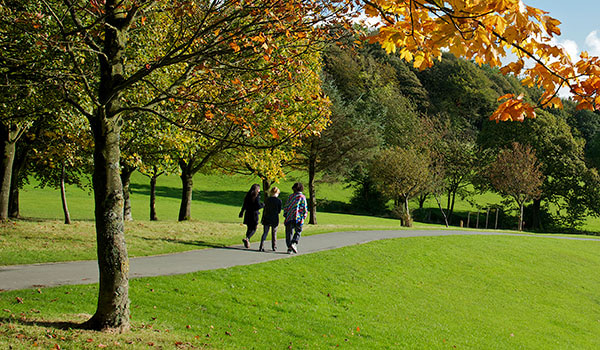
Take five minutes and we'll show you what our Top 10 UK university has to offer, from beautiful green campus to colleges, teaching and sports facilities.
Most first-year undergraduate students choose to live on campus, where you’ll find award-winning accommodation to suit different preferences and budgets.
Our historic city is student-friendly and home to a diverse and welcoming community. Beyond the city you'll find a stunning coastline and the world-famous English Lake District.