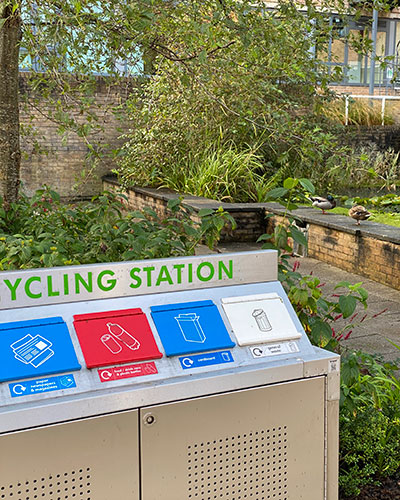

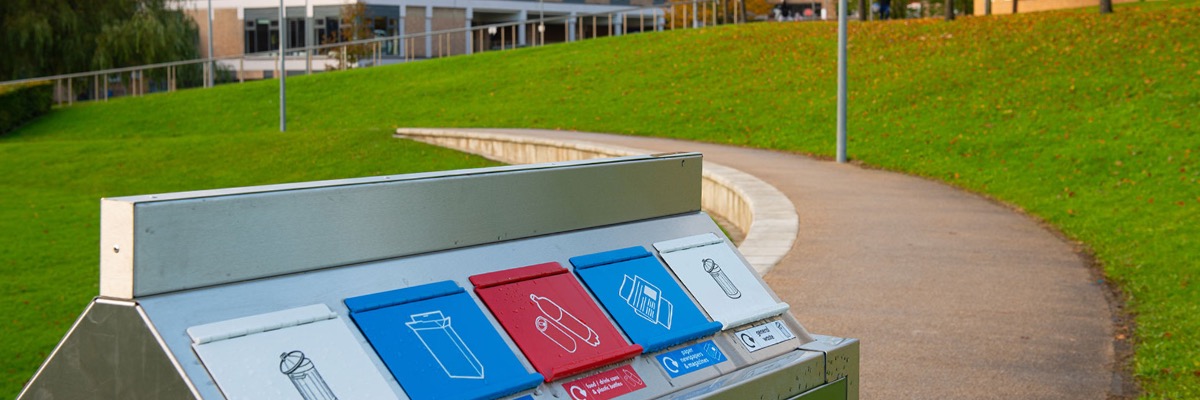
Waste management at Lancaster has evolved significantly since the University adopted its first Waste & Recycling Strategy in 2011. Over time, the University has expanded opportunities for reuse and recycling across campus and continued to reduce the environmental impact associated with waste disposal.
Waste Strategy
Lancaster University’s Waste Strategy sets the long-term direction for managing waste and resources across the institution, with a clear focus on reducing environmental impact, improving operational efficiency and achieving the University’s Scope 3 carbon reduction goals.
The strategy takes a broader, institution-wide approach to waste management, reflecting evolving operational needs and sustainability expectations. By 2030, Lancaster aims to achieve zero direct waste to landfill through enhanced contracts, government-level policy and legislation changes, advanced material recovery, and behaviour change initiatives.
Waste & Recycling Environmental Targets
For 2025-26, the University’s waste objectives include reducing residual waste sent to landfill to 10kg per head, achieving 90% waste diversion from landfill, and delivering continuous improvement in waste reuse, recycling and recovery.
The University works with Lancaster City Council to minimise waste sent to landfill and maximise reuse and recycling. Waste collections on campus are carried out using electric vehicles to help reduce associated carbon emissions. Specialist waste streams are also managed separately to support safe and appropriate disposal and minimise potential harm to people and the environment.
Waste & Recycling Performance
In 2025–26, the University generated approximately 2,195 tonnes of waste. Of this:
- 513.73 tonnes were recycled
- 41.8 tonnes were reused
- 149.7 tonnes were recovered through composting
- 868.8 tonnes were managed through energy recovery
- 621.5 tonnes were sent to landfill
Overall, 71.6% of waste was managed through reuse, recycling and recovery processes.