IAA Funding and Research Commercialisation

Ultraram logo

A Science Backed Box for Bumblebees

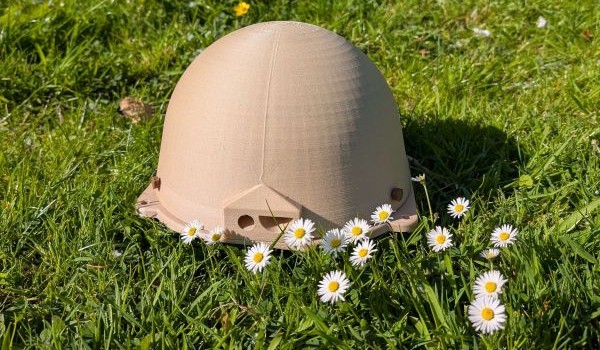
BeeBox, developed by Philip Donkersley and Jenny Roberts, is the world’s first science-based nestbox for bumblebees, designed to tackle their decline and encourage users to value the importance of pollinators.


The 3D printed customisable boxes address the need for more bee-friendly habitats – the other side of the coin to planting bee friendly flowers, which has been increasingly popular in recent years amongst amateur conservationists.

Speaking on this new step in bee conservation, Donkersley, an invertebrate expert at Lancaster Environment Centre, says “the BeeBoxes provide the missing half of bee ‘Bed and Breakfast’. One of my biggest bugbears about bee conservation is that we are always planting more food for them, which is great, but rarely doing any work on providing nesting sites for wild bees.

“Finding suitable habitat and in particular nesting sites can be an issue for bumblebee queens in the spring. These bee boxes can help to address that for both rural and urban areas.”

IAA funding allowed Donkersley and Roberts, a lecturer in engineering, to further develop BeeBox into the SmartBox, a data-driven version with purpose-built housing for sensors, a visual display, and an onboard computer. The SmartBox was designed and protoyped with AgriSound Ltd, and the project will allow for precise insights into pollination efficiency and bumblebee colony health.

The team have also partnered with Leighton Moss to provide BeeBoxes for the RSPB reserve and to hold ‘Paint a BeeBox’ sessions for adults and children visiting the site. Data gathered from BeeBoxes deployed at Leighton Moss will also feed back into research on bumblebee habitats undertaken by Donkersley.

BeeBoxes are available to purchase through a dedicated page on the university website, and are suitable for city and country gardens of any size.

HOPE Box

Keeping Mothers and Babies Connected After Separation

The Giving HOPE Project (Hold On, Pain Eases), a non-profit social enterprise established by Lancaster research fellow Claire Mason, aims to reduce the trauma experienced by mothers who are separated from their babies close to birth as a result of safeguarding concerns. 
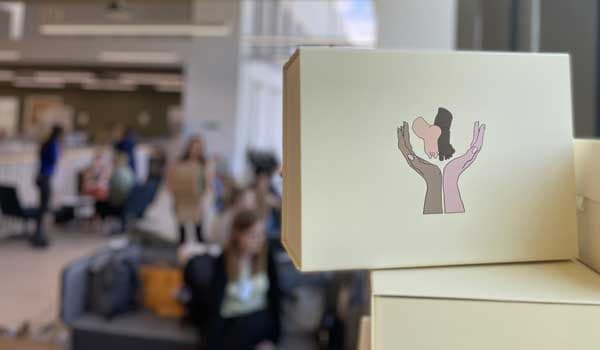
Informed by Lancaster’s Born into Care research series, which aims to ensure mothers remain with their babies whenever it is safe to do so, the organisation uses HOPE Boxes to maintain a connection between Mother and child. These boxes are given to both mother and baby and contain objects like baby books, blankets swapped between the two, and other specially chosen items to ease the pain and grief of separation. The contents and offer of boxes are codesigned with the HOPE mothers – a group of mothers who have also experienced separation at birth, and who are central to the project. 

Funding from the AHRC IAA supported the co-design work with the HOPE mothers, production of Giving HOPE’s original set of films, and piloting the boxes in 6 health trusts in the UK. The team have also developed a comprehensive online training course for practitioners to most effectively implement HOPE Boxes, with new modules being developed. 

Speaking on the success of the enterprise, Operations Manager Jane Huddleston has said “As a dynamic organisation we are codesigning the HOPE box and training offer for a broader range of situations. We are proud to already be working with lived experience groups and staff in the women's prison estate to support women and babies separated at birth there. 

Work with Adoption England is looking at the Giving HOPE pathway if the longer term outcome is Adoption.

We are developing updated baby boxes which reflect this work to be available to purchase later in 2026. We are also aiming for additional training modules for adopting families and foster carers to be developed in Summer 2026 available to purchase from Autumn 2026.” 

The project has grown significantly since launching, with Giving Hope now working with 54 partners across all regions of England to deliver over a thousand pairs of boxes. Sales in boxes and training totaled over £170,000 in 2025, with a further £123,000 from grants and projects also to be put back into the organisation. 

HOPE Boxes are now being distributed throughout the country, creating a meaningful change in ensuring that mothers and babies are treated with care, dignity, and humanity during this potentially traumatic period. More information can be found on the Giving HOPE website. 

Modern slavery discussion

Reimagining Modern Slavery Reporting with AI

Mahmoud Gad and Steve Young, both academics based in Lancaster's Accounting and Finance department, are building a new AI platform – Anti-Slavery Intelligence (ASI) – to improve corporate modern slavery reporting and compliance with the UK Modern Slavery Act.

This work emerged from existing research into modern slavery reporting at Lancaster University Management School, which has built a reputation for expertise in this area.

Funded by the EPSRC Impact Accelerator Account (IAA), the ASI prototype scores modern slavery statement quality against best practice, benchmarks companies against sector peers, and produces prioritised remediation recommendations.

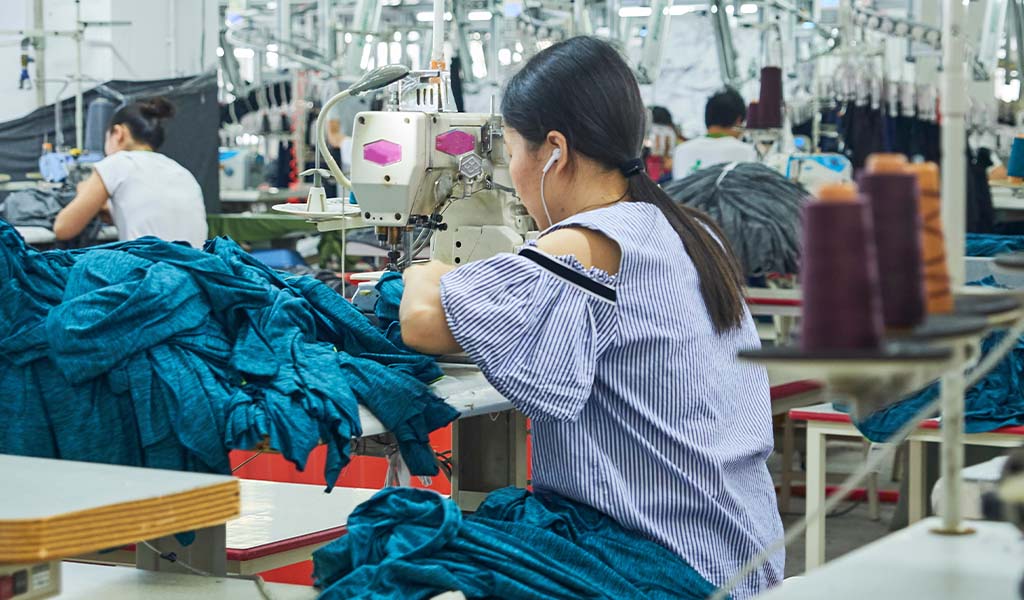
Speaking on the global issue at the centre of the project, Gad says that "There are more than 50 million people globally trapped in modern slavery, with 28 million in forced labour. According to Walk Free, the UK imports US$26.1 billion of products annually which are at risk of being made using forced labour. Yet UK corporate disclosure has not kept pace with the scale of the problem.

"Our research finds a clear say-do gap: UK companies score well on disclosing policies but far weaker on evidencing the due diligence and remediation needed to demonstrate compliance with the spirit of the Act. This AI-powered platform benchmarks statements against the UK Home Office statutory guidance and investor-grade criteria, and provides actionable recommendations to strengthen their modern slavery reporting.”

The IAA funded development of the prototype AI scoring engine for corporate modern slavery statements, cutting analysis from hours to under 10 minutes; this prototype was the technical foundation that allowed ASI to progress onto ARC Accelerate.

To learn more about research commercialisation and intellectual property policy at Lancaster, please visit the IP and Commercialisation page.

A head and shoulders photograph of Jamie Hodge

Connect with us

Not sure if your idea will qualify for collaboration? Contact Jamie Hodge, Impact Acceleration Account (IAA) Partnership Development Manager for an initial chat.

Email Jamie