English Literature and Philosophy

BA Hons

  • UCAS code QV35
  • Entry year 2027
  • A level requirements ABB
  • Duration Full time 3 years

We welcome applications from the United States of America

We've put together information and resources to guide your application journey as a student from the United States of America.

Overview

Top reasons to study with us

  • 3

    3rd for Creative Writing

    The Guardian University Guide (2026)

  • 6

    6th for Creative Writing

    The Complete University Guide (2026)

  • 7

    7th for English

    The Guardian University Guide (2026)

At Lancaster University, when you study English Literature and Philosophy you have an exciting opportunity to engage with a wide range of literary texts while considering the fundamental philosophical questions about human existence - truth and knowledge, right and wrong, politics and justice, art, faith and reason.

In English Literature, you’ll read the greats as well as the voices that history has overlooked. From ancient myth to the contemporary graphic novel, you’ll read widely, closely, and deeply, experiencing literature in a host of new and immersive ways. Alongside this, you’ll apply philosophy in real-world scenarios examining philosophy’s role in addressing global, social and political challenges.

Why study English Literature and Philosophy at Lancaster?

  • Study a wide range of genres from both ancient and modern literatures
  • Develop your own critical (and even creative-critical) voice
  • Take the opportunity to engage in philosophy as an active practice, learning from philosophers who are involved in developing the research, ideas, and theory you will study
  • Study a distinctive course that draws upon multiple philosophical traditions including, Western, Chinese, Continental and Feminist thought
  • As you progress though the course, you can choose modules from either subject, depending on your own interests.

What will I study In English Literature?

Literary study at Lancaster offers a rich engagement with the very best of literature from classical and medieval to the modern and contemporary. You will have the chance to study all the great names, as well as voices that have been forgotten or overlooked.

We are pioneers in experimental or creative forms of literary criticism, as well as encouraging established forms of literary scholarship, such as archival work, historicism, close reading, and literary theory. We believe that reading is not passive but active. It is something that acts upon both the texts that we read and the world in which we live; and neither those texts nor the world are left the same.

At Lancaster, studying English Literature is not just an academic pursuit—it is also an opportunity to connect with history, culture, and the many ways literature shapes our world.

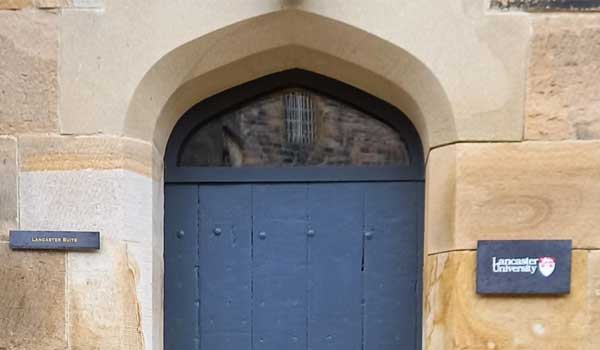
To enhance your experience, we run many special literary events, often in spectacular locations such as Lancaster’s medieval Castle, the awe-inspiring Priory, or the archive-rich Wordsworth Grasmere in the nearby Lake District. These events develop a sense of community and help you to establish friendships through your studies.

What will I study in Philosophy?

In your Philosophy studies at Lancaster, you will gain strong foundational knowledge, building confidence in key areas of the discipline, before going on to examine specialist topics of particular relevance to your degree in English Literature and Philosophy.

From ethics, epistemology, metaphysics and critical thinking in your first year, to the opportunity to undertake an independent project and study research-led cutting edge questions at the frontiers of philosophy in your final year, you will leave your degree with a deeper understanding of multiple philosophical traditions, themes and topics. And you will have developed the critical thinking, reasoning and communication skills essential to engaging in, understanding and influencing our complex and globally-connected world.

As an English Literature and Philosophy student, you will study philosophy that will particularly enrich and draw on your literary studies. Examining philosophical debates in Language and Communication in your second year, and questions in Philosophy and Popular Culture in your final year, you will gain a deeper appreciation of the connections between the two subjects of your degree and of how philosophical questions can inform our interpretation of literature and media. Meanwhile, your skills in interpretative analysis, honed in your study of literature, will help inform your approach to Applied Philosophy in your second year, and be invaluable in undertaking close Textual Explorations in Philosophy in your final year.

As a final year student, you will also have the opportunity to carry out independent research to produce a portfolio of work in an area of philosophy that interests you, or to write a short dissertation, working with expert philosophers at Lancaster on a topic of your choosing from amongst the wide range of specialisms available.

Through this, and through participation in a broad range of assessments, including podcasts, policy briefings, public philosophy and more traditional essay-based coursework and exams, you will develop and showcase your reasoning and critical thinking skills, your communicative abilities and your experience of deploying all of these skills and abilities – invaluable attributes that will open up a wide range of career prospects.

How can I enhance my career prospects on this course?

There are many opportunities to develop experience and enhance your employability on our BA English Literature and Philosophy.

If you are interested in writing, publishing, and editing you could choose to get involved in one of our four student-run literary journals: Cake, Flash, Lux and Errant. You might get involved in organising, marketing and hosting some of our literary events. You could also volunteer to help at Litfest, Lancaster’s annual literature festival which attracts well-known authors from around the world (including some of our own author-tutors).

In Philosophy you may further enhance your employability skills through a live research project. You are also invited to apply for one of our paid research internships, where you will work alongside an academic member of staff on an active research project. You’ll join a thriving community and take part in events organised by our Philosophical Society, including debates, essay competitions, and visits by guest speakers.


Careers

What careers can I pursue with a degree in English Literature and Philosophy?

You will graduate with a set of skills that will help open doors to a wide range of career destinations.Throughout your study you will be developing skills that are vital to employers, such as mental agility, clarity of writing, persuasive argumentation, and critical thinking. This course will equip you with the ability to tackle and solve complex and novel challenges.

With your English Literature and Philosophy background your skills will be valued by a range of sectors from the public to the private: in the creative and cultural industries such as museums, heritage and the arts; in literary tourism, podcasting, game-writing, blogging, film, television, and social media and in large multinationals and small local enterprises.

Our graduates go on to a variety of roles such as:

  • Author
  • Journalist
  • Project manager
  • Publishing specialist
  • Public relations specialist
  • Librarian
  • Arts Managers
  • Teachers
  • Game writers
  • Copywriters
  • Marketing executive
  • Social researcher
  • Local government officer
  • Policy analyst
  • Civil servant
  • Entrepreneur

This course also provides a strong foundation for further study, with some students going on to take a Master’s degree.

What careers and employability support does Lancaster offer?

Our degrees open up an extremely wide array of career pathways in businesses and organisations, large and small, in the UK and overseas.

We run a paid internship scheme specifically for our arts, humanities and social sciences students, supported by a specialist Employability Team. The team offer individual consultations and tailored application guidance, as well as careers events, development opportunities, and resources.

Whether you have a clear idea of your potential career path or need some help considering the options, our friendly team is on hand.

Lancaster is unique in that every student is eligible to participate in The Lancaster Award which recognises activities such as work experience, community engagement or volunteering and social development. A valuable addition to your CV!

Find out more about Lancaster’s careers events, extensive resources and personal support for Careers and Employability.

Entry requirements

These are the typical grades that you will need to study this course. This section will tell you whether you need qualifications in specific subjects, what our English language requirements are, and if there are any extra requirements such as attending an interview or submitting a portfolio.

Qualifications and typical requirements accordion

Help from our Admissions team

If you are thinking of applying to Lancaster and you would like to ask us a question, complete our enquiry form and one of the team will get back to you.

We also have more details on our website about:

International foundation programmes

Delivered in partnership with INTO Lancaster University, our one-year tailored foundation pathways are designed to improve your subject knowledge and English language skills to the level required by a range of Lancaster University degrees. Visit the INTO Lancaster University website for more details and a list of eligible degrees you can progress onto.

Contextual admissions

Contextual admissions could help you gain a place at university if you have faced additional challenges during your education which might have impacted your results. Visit our contextual admissions page to find out about how this works and whether you could be eligible.

Course structure

We continually review and enhance our curriculum to ensure we are delivering the best possible learning experience, and to make sure that the subject knowledge and transferable skills you develop will prepare you for your future. The University will make every reasonable effort to offer programmes and modules as advertised. In some cases, changes may be necessary and may result in new modules or some modules and combinations being unavailable, for example as a result of student feedback, timetabling, Professional Statutory and Regulatory Bodies' (PSRB) requirements, staff changes and new research. Not all optional modules are available every year.

Core

core modules accordion

Optional

optional modules accordion

Core

core modules accordion

Optional

optional modules accordion

Core

core modules accordion

Optional

optional modules accordion

Fees and funding

Our annual tuition fee is set for a 12-month session, starting at the beginning of each academic year.

Our Undergraduate Tuition Fees for 2027/28 are:

Home International
£10,050 TBC

Fees and funding information

Additional fees and funding information accordion

Scholarships and bursaries

You will be automatically considered for our main scholarships and bursaries when you apply, so there's nothing extra that you need to do.

You may be eligible for the following funding opportunities, depending on your fee status:

Unfortunately no scholarships and bursaries match your selection, but there are more listed on scholarships and bursaries page.

Scheme Based on Amount
Based on {{item.eligibility_basis}} Amount {{item.amount}}

We also have other, more specialised scholarships and bursaries - such as those for students from specific countries.

Browse Lancaster University's scholarships and bursaries.

Important information

The information on this site relates primarily to the stated entry year and every effort has been taken to ensure the information is correct at the time of publication.

The University will use all reasonable effort to deliver the courses as described, but the University reserves the right to make changes to advertised courses. In exceptional circumstances that are beyond the University’s reasonable control (Force Majeure Events), we may need to amend the programmes and provision advertised. In this event, the University will take reasonable steps to minimise the disruption to your studies. If a course is withdrawn or if there are any fundamental changes to your course, we will give you reasonable notice and you will be entitled to request that you are considered for an alternative course or withdraw your application. You are advised to revisit our website for up-to-date course information before you submit your application.

More information on limits to the University’s liability can be found in our legal information.

Our Students’ Charter

We believe in the importance of a strong and productive partnership between our students and staff. In order to ensure your time at Lancaster is a positive experience we have worked with the Students’ Union to articulate this relationship and the standards to which the University and its students aspire. Find out more about our  Charter and student policies.

Open days and campus tours

Visit campus and put yourself in the picture at an open day or campus tour.

Undergraduate Open Days
two students sitting and reading on some outdoor steps
  • Virtual tour

    Take five minutes and we'll show you what our Top 10 UK university has to offer, from beautiful green campus to colleges, teaching and sports facilities.

  • Accommodation guide

    Most first-year undergraduate students choose to live on campus, where you’ll find award-winning accommodation to suit different preferences and budgets.

  • The city and beyond

    Our historic city is student-friendly and home to a diverse and welcoming community. Beyond the city you'll find a stunning coastline and the world-famous English Lake District.