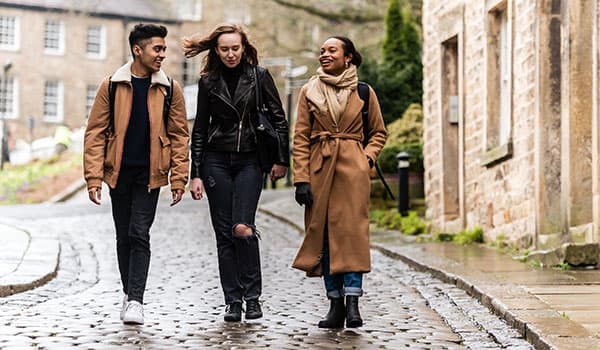
We welcome applications from the United States of America
We've put together information and resources to guide your application journey as a student from the United States of America.
Overview
Top reasons to study with us
9
9th for Art and Design
The Complete University Guide (2027)
12
12th for Art and Design
The Times and Sunday Times Good University Guide (2026)
Your own studio space, available 24/7
Unleash your ideas and develop your artistic expression through Fine Art at Lancaster. You will develop a unique contemporary art practice that engages with current ideas and issues to make valuable contributions to environment, culture and community. Through hands-on workshops and technical demonstrations, you’ll deepen your understanding of materials and techniques, ready to turn your ideas into impactful contemporary art. Join our thriving creative community, working with experienced artists, and build connections to shape your future in the art world and beyond.
Why Lancaster?
Take a highly distinctive programme that combines fine art practice with the study of contemporary ideas and art movements
Take advantage of your own dedicated studio space available 24/7 from day one, with expert technical support on hand
Work with tutors who are practicing artists and scholars, exhibiting and publishing their work across a range of fine art ideas and mediums
Join a supportive community of staff and students committed to making art relevant today, helping you build connections that will shape your future in the art industry
Study in Lancaster, a vibrant and inspiring hub of award-winning arts festivals, events and places of cultural significance
Bring your vision to life
Fine Art at Lancaster is about finding your voice and deciding what matters to you in today’s art landscape. With engaging seminars in art history and theory, we’ll support you in shaping your values and understanding the evolving role of art. As you develop these ideas in your own studio practice, discover how contemporary art can be bold, disruptive, and meaningful.
You will be challenged to broaden your understanding of contemporary Fine Art, via a wide range of hands-on projects and skills-based workshops. Previously, students have worked on live briefs in partnership with arts organisations such as Deco Publique, Good Things Collective, Maritime Museum, FACT Liverpool and Lancaster Arts.
Discover how experimenting with painting, drawing, sculpture, installation, video, digital art, and their many hybrids, can drive your creative impulse. Work with diverse mediums in our purpose-built studios that include high tech seminar facilities, a digital art lab, installation spaces, and fully equipped workshops. Tailor your learning experience by picking how you want to specialise, focusing on one or two art mediums or continuing to explore different mediums. Study cutting-edge techniques along the way and preparing to make an impact in your own way.
A thriving creative community
Your tutors are professional artists who are exhibiting, curating and writing across a range of art and ideas, including high profile residencies and commissions in museums, galleries and cultural industries worldwide.
Your tutors have exhibited at the likes of the Henry Moore Institute, the Foreman Art Gallery Canada and Hong Kong Art Fair. Some have won awards such as The Royal Scottish Academy William Littlejohn Award 2024 and the John Muir Trust Creative Freedom Award for 3d work 2024, as well as commissioned work for organisations such as The National Trust, FutureEverything and the Dumfries House Royal Drawing School.
You’ll join these experienced academics in a community of creative thinkers and makers, that is both highly creative and intellectually vibrant.
Lancaster is a hub of art and cultural activity, home to award-winning festivals such as, Lancaster Words and Litfest literary festivals and the stunning Light Up Lancaster festival of art and light. Many art events take place on Lancaster’s inspiring campus, and the University regularly partners with independent theatre The Dukes and The Storey arts centre to host exhibitions.
Whilst building lifelong connections with artists, external partners, tutors and other students in the School of Art, you’ll also develop your own distinct and independent style.
Creative futures
Exhibition opportunities throughout the course will help you develop the professional skills needed for a career in the arts whilst building your confidence in your work. As well as refining your practical studio skills, you’ll also become a critical reader, able to examine how contemporary art is constantly evolving to create new and exciting ways of looking at the world.
With sustainability and accessibility at the core of this course, you’ll be equipped to make valuable and creative contributions in your future career. Recent graduates have gone on to pursue rewarding careers at companies such as International Conservation Services, Science Museum National Collections Centre, Holocaust Centre North, ITV, United Colours of Benetton India and The National Festival of Making.
Interested in study at Lancaster University? Fill in our form to hear more about course information, events and open days.
Tell me more about undergraduate study at Lancaster accordion
Fine Art at Lancaster University
Fine Art at Lancaster offers a distinctive blend of theory and practice, with teaching by practicing artists and your own studio space. Hear from students on what Fine Art at Lancaster University has to offer to you.
Every year our final year students showcase their designs in a major degree show exhibition, which is open to the public.
Your Placement Year
Sometimes known as a year in industry, your placement year will take place between your second and final year of study and this will extend your degree to four years.
Placements and Internships
Hear from students and employers on how Lancaster University could support you to gain real-world experience and bolster your CV with a placement or internship as part of your degree.
A placement year is an excellent way to...
try out a role that you may be interested in as a career path
start to build your professional network (some placement students are offered permanent roles to return to after they graduate)
develop skills, knowledge and experience to put you ahead of the field when you graduate
You'll spend your third year...
in a graduate-level position, where you’ll work for between nine and twelve months in the type of role that you might be considering for after you graduate. A very wide range of companies and organisations offer placements across all sectors.
As a full-time employee, you’ll have a job description with specific responsibilities and opportunities to access training and development, the same as other employees.
Our Careers and Placements Team...
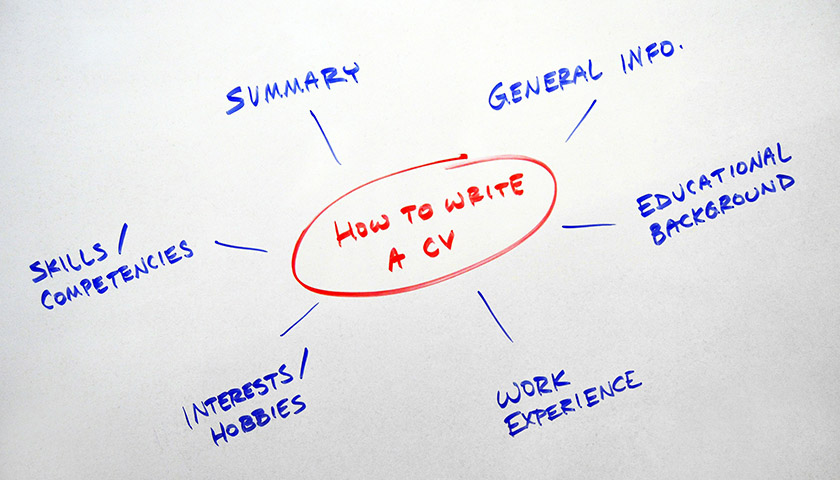
will help you to search and compete for a suitable placement with expert advice and resources, such as creating an effective CV, and tips for applications and interviews.
You will still be a Lancaster University student during your placement and we’ll keep in touch to check how you are getting on.
The university will...
use all reasonable effort to support you to find a suitable placement for your studies. While a placement role may not be available in a field or organisation that is directly related to your academic studies or career aspirations, all offer valuable experience of working at a graduate level and gaining a range of professional skills.
If you are unsuccessful in securing a suitable placement for your third year, you will be able to transfer to the equivalent non-placement degree scheme and continue with your studies at Lancaster, finishing your degree after your third year.
Careers
This degree supports you in developing the ambition, confidence, and skills to produce fine art at a professional level. You will understand the key entry points into the diverse pathways that artists' careers can take, from your first experiences of installing and documenting your work, to the construction of portfolios, presentations and high-quality applications.
Graduates of Fine Art go on to pursue careers in the following:
Professional Artist
Curating
Gallery Education Programmes
Exhibition Management
Digital Communications Manager
Museum and Gallery Management
Teaching
Artefact Conservation
Video and Media Production
TV and Film Scenography
Arts Event Management
With a deep understanding of fine art and a diverse skill set, you’ll also be well-prepared to pursue a broad range of postgraduate study, with some graduates branching into fields such as material engineering, design, advertising and marketing.
Careers and employability support
Our degrees open up an extremely wide array of career pathways in businesses and organisations, large and small, in the UK and overseas.
We run a paid internship scheme specifically for our arts, humanities and social sciences students, supported by a specialist Employability Team. The team offer individual consultations and tailored application guidance, as well as careers events, development opportunities, and resources.
Whether you have a clear idea of your potential career path or need some help considering the options, our friendly team is on hand.
Lancaster is unique in that every student is eligible to participate in The Lancaster Award which recognises activities such as work experience, community engagement or volunteering and social development. A valuable addition to your CV!
Find out more about Lancaster’s careers events, extensive resources and personal support for Careers and Employability.
Careers
Find out about some of the careers our alumni have entered into after graduation.
Entry requirements
These are the typical grades that you will need to study this course. This section will tell you whether you need qualifications in specific subjects, what our English language requirements are, and if there are any extra requirements such as attending an interview or submitting a portfolio.
Qualifications and typical requirements accordion
ABB. Art and Design or a humanities subject would be considered desirable but not essential.
30 Level 3 credits at Distinction plus 15 Level 3 credits at Merit. Art and Design or a humanities subject would be considered desirable but not essential.
We accept the Advanced Skills Baccalaureate Wales in place of one A level, or equivalent qualification, as long as any subject requirements are met.
DDM. Ideally this would be in a relevant subject, although this is not essential.
A level at grade B plus BTEC(s) at DD, or A levels at grade BB plus BTEC at D. Art and Design or a humanities subject would be considered desirable but not essential.
32 points overall with 16 points from the best 3 HL subjects
We are happy to admit applicants on the basis of five Highers, but where we require a specific subject at A level, we will typically require an Advanced Higher in that subject. If you do not meet the grade requirement through Highers alone, we will consider a combination of Highers and Advanced Highers in separate subjects. Please contact the Admissions team for more information.
Distinction overall. Ideally this would be in a relevant subject, although this is not essential.
Help from our Admissions team
If you are thinking of applying to Lancaster and you would like to ask us a question, complete our enquiry form and one of the team will get back to you.
Delivered in partnership with Lancaster University International Study Centre, our one-year tailored foundation pathways are designed to improve your subject knowledge and English language skills to the level required by a range of Lancaster University degrees. Visit the Lancaster University International Study Centre for more details and a list of eligible degrees you can progress onto.
Contextual admissions
Contextual admissions could help you gain a place at university if you have faced additional challenges during your education which might have impacted your results. Visit our contextual admissions page to find out about how this works and whether you could be eligible.
Course structure
We continually review and enhance our curriculum to ensure we are delivering the best possible learning experience, and to make sure that the subject knowledge and transferable skills you develop will prepare you for your future. The University will make every reasonable effort to offer programmes and modules as advertised. In some cases, changes may be necessary and may result in new modules or some modules and combinations being unavailable, for example as a result of student feedback, timetabling, Professional Statutory and Regulatory Bodies' (PSRB) requirements, staff changes and new research. Not all optional modules are available every year.
Develop your self-directed art practice and be part of an active creative community in this studio-based module. Supported by lectures, skills workshops, tutorials, and group feedback, this module empowers you to build on your art practice by understanding the relationship between making and thinking across a broad range of materials, media, techniques and methods.
Beginning by responding to a series of short project briefs, you will build on your foundational knowledge and skills. You will then choose ‘intensives’ offering core approaches to developing your art practice such as painting, drawing, sculpture and digital art. These practical learning methods will encourage you to engage in a developing enquiry that involves experimentation, artist research, peer review, and problem-solving.
While continuing to develop your creative, conceptual and material skills in your individual art practice, you will build on your technical knowledge, helping you gain a deeper understanding of safe working and sustainability within art practices.
A transformational module that introduces you to Fine Art studies at undergraduate level. Focussing on how artists investigate the world through looking, listening, touch, gesture and mark-making, you will explore a range of diverse media such as drawing, painting, video and sound.
Through innovative practical workshops, you will develop curiosity, sustained attentiveness and creative enquiry, whilst discovering new materials, techniques and processes. You will learn key photographic and digital skills, essential for documenting and presenting your work.
These skills will help you develop new ways of thinking that will broaden your understanding of contemporary fine art and prepare you for the Contemporary Art Practices module with growing confidence.
Providing you with a solid grounding in art history, this module will take you on a journey, from the modernist period to the present day.
Beginning with the emergence of Modernism in Europe, you will follow its impact in the United States, China, India, South America and beyond. You will learn about alternative and under-represented histories that challenge mainstream thought, whilst exploring how artists have responded to pressing societal issues such as:
Post-colonialism
Equal rights
Gender identity
Digital revolution
Environmental crisis
These movements will be explored through a range of themes that relate to creative practices such as time, space, light, text and juxtaposition, helping you develop your ability to write for a range of art contexts.
Optional
optional modules accordion
Every piece of performance, big or small, uses the same foundational ‘raw materials’. Explore these and more as you develop your critical, aesthetic and theatrical vocabulary by examining the formal building blocks of performance, such as the body, space, time, text and media.
Through a combination of practical workshops and seminars, you will learn how these building blocks are used to construct a variety of performance forms including:
Traditional stage plays
Live art
Performance art
Physical theatre
Site-specific or immersive theatre
By analysing specific examples of these performance forms, your studies in this module will complement the projects undertaken in Making Theatre I, helping you progress in your learning.
What does it mean to study media today? In this module, you’ll be introduced to major debates, theories and thinkers in studying media and culture.
You will encounter a diverse range of material from different media, including: television, film, news, advertisements, social media, video games and more.
You will explore the intersections between our cultural environment and our identities, aspirations, beliefs and value systems, to develop essential skills in critical thinking and analysis.
Digital media both displaces and complements ‘traditional’ media, in ways that complicate the current media landscape and challenge some of our most fundamental media concepts.?This module explores how this happens through the integration of “old” and “new” media and ongoing transformations in the media industries.
We examine how relations between consumers and producers are changing as the boundaries of media cultures are shifting, producing intercultural exchange but also fragmentation and radicalisation.?This module invites students to investigate their everyday digital media use and reflect on the expansion of digital media, its potentials and its pitfalls.
This module explores the role of the arts in building community, identity and confidence. You will engage with a variety of different art forms (such as painting, theatre, fiction, designed artefacts and film) and develop your own voice via collaborative projects such as a podcasts, video essay or presentation. You will also engage in individual critical reflection for example via a blog, journal or research project.
This module fosters co-operation, intellectual experimentation and self-assurance.
Core
core modules accordion
Develop your self-directed practice and consolidate your confidence in this studio module.
With access to a wide range of elective intensives, you will expand your knowledge and skills in a specific area of contemporary art practice as you start to specialise in your chosen area(s). You may choose to specialise in media such as:
Painting
Drawing
Sculpture
Sound and video
Digital
Text
Installation
To develop your ability to critically reflect on your work, you will have regular tutorials and work with other students to develop the skills and vocabulary to become a strong studio community where peer feedback is supportive and inspiring. All assessments will be in response to your practice.
Building on the relationship between theoretical understanding and artistic practice, this module will introduce you to a broad range of theories and ideas relevant to contemporary art practice and thinking. You will explore ideas such as:
New materialism
Fourth and fifth-wave feminisms
Object-oriented philosophy
Posthumanism
The Anthropocene
Hauntology
The relations that exist between art and science
Join us as we combine intellectual rigour and curiosity with the freedom to confidently explore your creativity from an increasingly informed position. You will be encouraged to explore different forms of writing that enable you to develop ideas and express yourself in a range of appropriate formats.
Imagination, experimentation, creative risk-taking, and transformation are at the heart of this module and fundamental to your development as a practicing artist.
You will engage creatively with workshops that encourage experimentation and risk-taking, exploring ideas and processes that extend beyond traditional studio practice including collaborative, site-specific, socially engaged, and curatorial projects.
Exploring diverse themes such as the environment and sustainability, global connections and local place, you will dive into the transformative role of art in the wider world. Developing digital skills relevant to these contexts will equip you to create innovative and forward-thinking approaches to contemporary art.
Optional
optional modules accordion
Develop key techniques for writing fiction and hone the skills you need to write short stories and/or novels.
Through workshops, discussions, set reading from a range of contemporary writers and generative writing prompts, you’ll develop confidence in creating character, worldbuilding, establishing narrative voice, experimenting with point of view and constructing engaging structures and plot.
You will draw on a range of techniques according to your own interests. In your reflective essay you will consider the various ways short fiction and the novel uniquely deploy these techniques.
Move beyond introductory concepts to explore film theory in depth, examining how films construct meaning through form, representation, and audience engagement.
You will critically assess cinema’s relationship with artistic expression and spectatorship, engaging with complex debates that have shaped film scholarship since the medium’s inception. Focusing on advanced theoretical analysis, this module equips you with the conceptual knowledge and critical vocabulary to interpret films using semiotic, psychoanalytic, formalist, philosophical and cognitivist approaches.
You will explore key concepts such as cinematic modernism, subjectivity in film perception and cinema’s evolving relationship with philosophy. The module fosters independent critical engagement with the works of influential theorists, deepening your understanding of theoretical frameworks.
By applying these perspectives to a range of case studies, you will refine your ability to conduct detailed textual analysis. By the end of the module, you will have developed sophisticated theoretical and analytical skills essential for higher-level film study.
Our everyday lives are saturated by images of all kinds. This module will introduce you to some key ‘ways of seeing’ our world of images. We will explore questions such as:
How are images made, who gets to produce them and, importantly, from whose point of view?
How do pictures circulate?
How do viewers read and interpret images?
Who gets to look and through whose eyes?
How do these processes and practices relate to power?
We’ll consider these questions in relation to a range of media texts, from photographs and advertisements to television and film.
This module explores how digital technologies, in their multiple forms, figure in our everyday lives and the global societies we live in. This includes social media platforms, search engines, publicly available artificial intelligence chatbots as well as the multitude of apps that mediate every aspect of our lives, from access to news and information to dating, food and consumption, education, and professional life.
We will analyse the affordances of digital technologies in connection to questions of power, context, and embodiment. This module will stimulate you to start seeing how media and technology do more than transmitting messages and information. Instead, they have an ontological role in shaping social relations, subjectivities, practices and cultures.
Attuning you to this role, this module allows you to understand media as much more than simply channels of representation or communication. The assessments in this module give you plenty of space to articulate your own experiences in everyday life to the theoretical literature and conceptual frameworks that you are introduced to in this module.
What we call ‘American Literature’ and how we define America and ‘the American experience’ depends on who is writing and to whom. In this module you will encounter many different voices, many conflicting and contrasting views, a diversity of complex experience and a great range of writing in form and style.
You will explore such questions as: What role do different literary forms play in narrating the self? How does American writing seek to establish a new way of looking at the world? And how and why does literature help shape forms of protest and new critiques of modernity?
Explore how ideas can be developed into real-world projects with lasting value. Through hands-on collaboration and problem-solving, you will develop innovative projects, learn how to bring ideas to life and explore ways to sustain them.
Whether you are working in a team or individually, you will be encouraged to experiment with different approaches to making a difference in artistic, cultural, social and community spaces.
Hone a strong sense of purpose and gain the satisfaction of applying your skills and knowledge to a community, charity or student-led initiative.
Your challenge will be to take responsibility for arranging and completing a voluntary or fundraising activity—locally, virtually or during vacation periods at home. You will need to show that you have made a positive difference through this activity.
In class, you will be asked to reflect on this experience and explore the wider social impact of the work. In doing so you will build your confidence in your ability to contribute meaningfully to society through your future personal and professional path.
Core
core modules accordion
This module will allow you to spend the year working in a graduate-level placement role in the industry or sector that interests you most. Throughout the year, you will build an awareness of what is required in the professional workplace whilst developing a range of transferable skills.
During the module you will reflect on and critically analyse: your own career readiness, the ongoing development of your self-awareness in terms of skills and professional knowledge, and your understanding of current workplace practices and professional etiquette.
Our Careers and Placements Team will support you during your placement with online contact and learning resources.
Core
core modules accordion
Explore the role of writing in contemporary art, from journals and magazines to online platforms, exhibition catalogues and independent publishing.
You will examine the types of writing that thrive in these contexts and learn how to move beyond the traditional academic essay. Approached as both a research tool and a creative practice, this module will enable you to shape your ideas in ways that connect with contemporary art discourse.
Engaging with methods such as auto-fiction, figural writing, fiction as method, and allegory, you will gain a deeper understanding of these formats through workshops and tutorials before selecting one to further develop your skills in.
The final submission will be chosen from a range of writing forms for contemporary art contexts. It may take the form of a written journal article, a combination of text and visual elements, a website, zine, or other formats, allowing you to integrate writing into your broader artistic practice.
You can also choose to take additional credits in either Advanced Art Practice or Writing for Artists, enabling you to build on your strengths, interests, and career aspirations.
This year-long module provides extended space and support for your growth as an artist.
Refine your practical skills as you develop and present a professional body of practical work appropriate for a Fine Art degree show.
You will be supported through lectures, workshops, tutorials, and peer reviews, all guided by tutors who are practicing artists and writers. You will also build a strong foundation in professional practices and transferable skills essential for a successful career in the arts.
Through deepening your understanding of your own practice, the art world, curation, and the transformative power of creativity, you will be prepared to contribute meaningfully to local, national, and global artistic discourses and practices.
Optional
optional modules accordion
Examining the evolution of film genres in a global context, this module focuses on the ways contemporary filmmakers innovate within established and classic genre traditions. You will analyse key genres (which may include Science Fiction, Horror and Comic Book films), considering their artistic, industrial and technological developments across different cinematic traditions.
Through case studies, you will explore how genre conventions adapt to national and transnational influences, addressing topics such as digital effects and world-building, genre hybridity and the role of franchises in global media. The module also considers how streaming platforms, audience reception and fan cultures shape contemporary genre filmmaking.
By the end of the module, you will have gained an advanced understanding of modern genre as a dynamic cinematic form. You will be equipped with critical and analytical skills essential for further research or careers in film criticism, curation and media industries.
How has the experience of being part of a media audience transformed in recent years? How do we make sense of being a fan nowadays? In what ways do fan culture and audience community manifest social transformations on both local and global scales? This module aims to provide you with a critical understanding of fandom and audiences in a global and transnational context. The module will focus on issues such as participation, pleasure, performance, and power by investigating fan culture and audience communities of a wide range of transmedia texts in a global perspective. You are encouraged to analyse the multi-layered dynamics between individual fan, fan community, audience participation, media texts, and industries through interdisciplinary lenses, for example, feminist studies, queer studies, and postcolonial studies.
Examining a wide range of texts and authors from early periods to the age of the climate crisis, this module will explore the many and various ways in which the non-human world is celebrated, championed and exploited by the literary imagination.
You will explore questions such as:
What do we mean by the ‘the environment’?
What experiences, meanings and values do we take from, or discover in our surroundings?
How have writers characterised the environment and in what ways might the literary imagination be significant for contemporary environmental concerns?
This module provides extended time and support for you to explore the role of writing in contemporary art, from journals and magazines to online platforms, exhibition catalogues and independent publishing.
You will examine the types of writing that thrive in these contexts and learn how to move beyond the traditional academic essay. Approached as both a research tool and a creative practice, this module will enable you to shape your ideas in ways that connect with contemporary art discourse.
Engaging with methods such as auto-fiction, figural writing, fiction as method, and allegory, you will gain a deeper understanding of these formats through workshops and tutorials before selecting one to further develop your skills in.
The final submission will be chosen from a range of writing forms for contemporary art contexts. It may take the form of a written journal article, a combination of text and visual elements, a website, zine, or other formats, allowing you to integrate writing into your broader artistic practice.
This hands-on module uses engaging workshops to explore Experimental Film Production and discover how it challenges mainstream narratives and disrupts traditional modes of spectatorship.
Through a combination of critical discussions on selected films and hands-on creative experimentation, this module challenges you to rethink film form beyond conventional storytelling while encouraging you to bring your visions to life through practice.
You will study key movements and approaches, starting from the historical avant-gardes – the influence of artistic movements like Dada, Surrealism and Structuralism- to contemporary artists’ moving image.
By the end of the module, you will have developed a critical and practical understanding of experimental cinema, gaining experience in challenging the boundaries of film aesthetics and spectatorship. Emphasising creative risk-taking and critical inquiry, this module encourages an expanded approach to filmmaking that transcends conventional modes of production and exhibition.
What will our digital future look like?
How could AI transform global societies?
What media will we watch, listen to, wear, be tracked by, or collaborate with – whether in smart cities, virtual workplaces, or even in outer space?
These are the big questions that this module will explore, addressing how past visions of technological futures inform the speculative digital landscapes we imagine today. This module examines the social, cultural, and political implications of these technologies, addressing issues such as personalisation, surveillance, platform governance, and digital inequalities. You will explore critical debates on issues such as automation, data governance, digital labour, and ethics while reflecting on the future of digital media in everyday life.
In this practical module you will conceptualise, design, and prototype innovative festival experiences that respond to emerging cultural, societal, technological, and environmental trends. Working in a team, you will develop festival concepts that explore innovations in audience engagement, sustainability, accessibility and digital innovation. In collaboration, you will undertake phases of concept development that may include:
Researching and ideating a future-facing festival concept
Design and branding
Creation of visual identities and marketing materials
Audience development strategies
Understanding market audiences through use of data
Technological integration
Experimenting with innovative digital technologies
Interactive installations
Sustainability and accessibility
Developing sustainable festive models with a focus on inclusivity
You will produce a festival proposal that will be pitched to industry professionals, who will provide feedback. The final project will be presented at the School of Arts Festival/Degree show, and your work will also make a contribution to the design and delivery of the event.
What do we understand by queerness? Looking back at earlier interpretations, we imagine how queerness might evolve—how it might be lived, felt and understood in the future.
You will explore queer futures from a range of perspectives and viewpoints, while examining both feminist and queer theory, as well as queer media and cultural texts and material relating to areas such as activism, politics and healthcare.
What are the possibilities and pitfalls of community and citizen action, voice and agency? This module uses interdisciplinary case-studies to critically examine collaboration with communities.
You will participate in activities such as a mock citizens' assembly, visit local community groups and hear different points of view from a range of guest speakers on concepts like power, race, gender, class, affect and justice.
How might we engage with the implications of environmental transformation locally, nationally and globally? Where do we have agency and capacity to intervene?
This module brings together a range of perspectives—historical, political, philosophical and cultural—to explore the nature and severity of the effects of the climate crisis on our world.
What happens when radically different forms of art meet? How do these fused forms change our understanding of the world? We will draw on material from different periods and continents, to explore works of art where, for example, film meets history, poetry meets philosophy, fine art meets sociology, religion meets fiction, and theatre meets politics.
Fees and funding
Our annual tuition fee is set for a 12-month session, starting at the beginning of each academic year.
You will need to buy some art materials during your course. Materials and equipment are available to use during some classes, and the departmental art shop sells materials to students at cost price. We will send you information about materials and equipment before you arrive so that you know what to bring with you and what you might need to buy during your course.
There may be extra costs related to your course for items such as books, stationery, printing, photocopying, binding and general subsistence on trips and visits. Following graduation, you may need to pay a subscription to a professional body for some chosen careers.
Specific additional costs for studying at Lancaster are listed below.
College fees
Lancaster is proud to be one of only a handful of UK universities to have a collegiate system. Every student belongs to a college, and all students pay a small college membership fee which supports the running of college events and activities. Students on some distance-learning courses are not liable to pay a college fee.
For undergraduate students starting in 2026 or 2027, the one-time fee is £40.
Computer equipment and internet access
To support your studies, you will also require access to a computer, along with reliable internet access. You will be able to access a range of software and services from a Windows, Mac, Chromebook or Linux device. For certain degree programmes, you may need a specific device, or we may provide you with a laptop and appropriate software - details of which will be available on relevant programme pages. A dedicated IT support helpdesk is available in the event of any problems.
The University provides limited financial support to assist students who do not have the required IT equipment or broadband support in place.
Study abroad courses
In addition to travel and accommodation costs, while you are studying abroad, you will need to have a passport and, depending on the country, there may be other costs such as travel documents (e.g. visa or work permit) and any tests and vaccines that are required at the time of travel. Some countries may require proof of funds.
Placement and industry year courses
In addition to possible commuting costs during your placement, you may need to buy clothing that is suitable for your workplace and you may have accommodation costs. Depending on the employer and your job, you may have other costs such as copies of personal documents required by your employer for example.
The fee that you pay will depend on whether you are considered to be a home or international student. Read more about how we assign your fee status.
Home fees are subject to annual review, and are liable to rise each year in line with UK government policy. International fees (including EU) are reviewed annually and are not fixed for the duration of your studies. Read more about fees in subsequent years.
We will charge tuition fees to Home undergraduate students on full-year study abroad/work placements in line with the maximum amounts permitted by the Department for Education. The current maximum levels are:
Students studying abroad for a year: 15% of the standard tuition fee
Students taking a work placement for a year: 20% of the standard tuition fee
International students on full-year study abroad/work placements will also be charged in line with the maximum amounts permitted by the Department for Education. The current maximum levels are:
Students studying abroad for a year: 15% of the standard international tuition fee during the Study Abroad year
Students taking a work placement for a year: 20% of the standard international tuition fee during the Placement year
Please note that the maximum levels chargeable in future years may be subject to changes in Government policy.
Scholarships and bursaries
Details of our scholarships and bursaries for students starting in 2027 are not yet available.
The information on this site relates primarily to the stated entry year and every effort has been taken to ensure the information is correct at the time of publication.
The University will use all reasonable effort to deliver the courses as described, but the University reserves the right to make changes to advertised courses. In exceptional circumstances that are beyond the University’s reasonable control (Force Majeure Events), we may need to amend the programmes and provision advertised. In this event, the University will take reasonable steps to minimise the disruption to your studies. If a course is withdrawn or if there are any fundamental changes to your course, we will give you reasonable notice and you will be entitled to request that you are considered for an alternative course or withdraw your application. You are advised to revisit our website for up-to-date course information before you submit your application.
More information on limits to the University’s liability can be found in our legal information.
Our Students’ Charter
We believe in the importance of a strong and productive partnership between our students and staff. In order to ensure your time at Lancaster is a positive experience we have worked with the Students’ Union to articulate this relationship and the standards to which the University and its students aspire. Find out more about our Charter and student policies.
Open days and campus tours
Visit campus and put yourself in the picture at an open day or campus tour.
Take five minutes and we'll show you what our Top 10 UK university has to offer, from beautiful green campus to colleges, teaching and sports facilities.
Most first-year undergraduate students choose to live on campus, where you’ll find award-winning accommodation to suit different preferences and budgets.
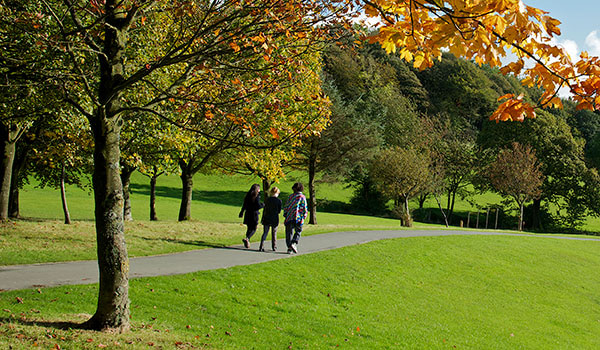
Our historic city is student-friendly and home to a diverse and welcoming community. Beyond the city you'll find a stunning coastline and the world-famous English Lake District.



.jpg)