Fine Art and Film (Study Abroad)

BA Hons

  • UCAS code WP15
  • Entry year 2027
  • A level requirements ABB
  • Duration Full time 4 years

We welcome applications from the United States of America

We've put together information and resources to guide your application journey as a student from the United States of America.

Overview

Top reasons to study with us

  • 7

    7th for Art and Design

    The Complete University Guide (2026)

  • 12

    12th for Art and Design

    The Times and Sunday Times Good University Guide (2026)

  • Engage with community screenings and events at The Dukes Cinema

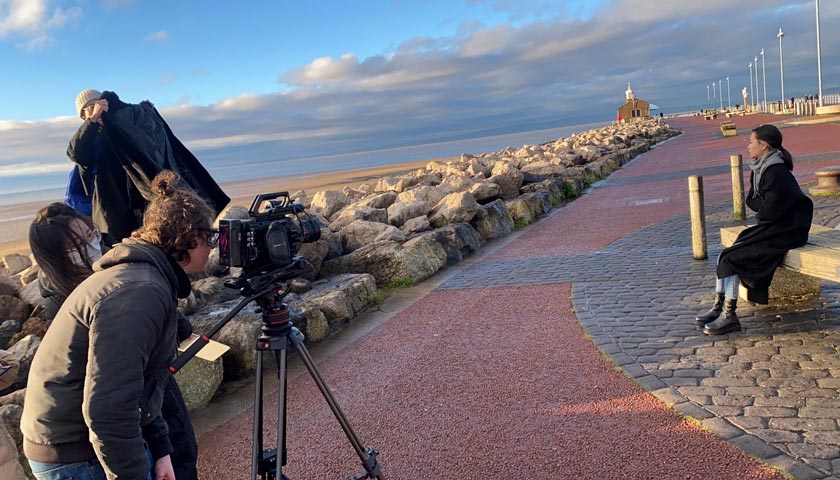
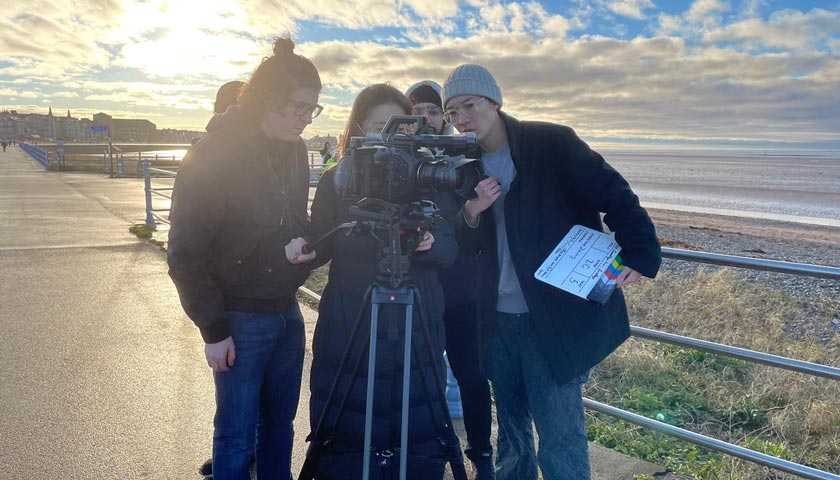
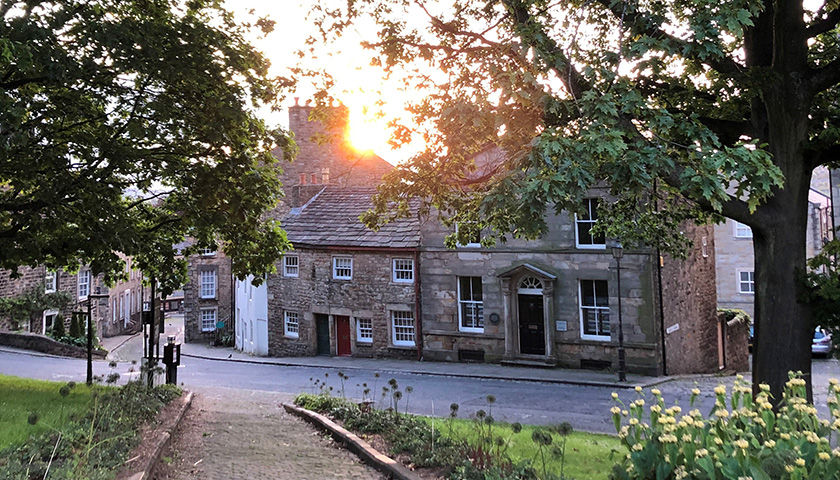
The Fine Art and Film course at Lancaster invites you to explore bold and imaginative connections between moving image and fine art practices. You will develop your ideas in an environment where the histories and theories of cinema and fine art intersect, generating dynamic and experimental outcomes. From its cityscape and rural backdrops to its coastal scenery, Lancaster’s surroundings provide ample inspiration and filming locations.

Through an in-depth engagement with materials, processes, and techniques, you’ll create a body of work that examines how film and fine art inform, challenge, and reimagine one another. The course encourages critical thinking, experimentation, and risk-taking, supporting you in developing work that is conceptually strong and visually compelling.

Working with academics from film and fine art with a history of national and international excellence, you will graduate with a combination of intellectual and practical skills indispensable for future critical and creative pursuits.

From its cityscape and rural backdrops to its coastal scenery, Lancaster’s surroundings provide ample inspiration and filming locations.

Why study Fine Art and Film at Lancaster?

  • Combine fine art practice with the study of contemporary ideas and art movements
  • Work with tutors who are practicing artists and scholars, working with video, 3D, machine learning, environment, temporality, new materialism, participation and socially engaged practices.
  • Take advantage of your own dedicated art studio spaces with expert technical support on hand
  • Benefit from access to our editing suites and specialist equipment, including cinema-ready digital cameras and workshop spaces
  • Work with tutors who are practicing artists, filmmakers and theorists, exhibiting and publishing their work across a range of media
  • Deepen your knowledge of global film history while also gaining practical film-making experience

How will I develop my skills in Fine Art at Lancaster?

Fine Art at Lancaster is about finding your voice and deciding what matters to you in today’s art landscape. With engaging seminars in art history and theory, we’ll support you in shaping your values, and understanding the evolving role of art. As you develop these ideas in your own studio practice, discover how contemporary art can be bold, critical, and meaningful. You will work with tutors who are practicing artists and scholars, working with video, 3D, machine learning, environment, temporality, new materialism, participation and socially engaged practices.

You will broaden your understanding of contemporary Fine Art via hands-on projects, technical demonstrations and skills-based workshops. Experiment with painting, drawing, sculpture, installation, video, digital art, and their many hybrids. Our purpose-built studios include a digital art lab, installation spaces, and fully equipped workshops.

Gaining professional experience is important. Recent Fine Art graduates have secured commissions with digital arts organisations such as FACT Liverpool and Future Everything, and rewarding roles at galleries such as Middlesbrough Institute of Modern Art, Art Gene, and Home, and companies such as International Conservation Services, Science Museum National Collections Centre, Holocaust Centre North, ITV, United Colours of Benetton India, and The National Festival of Making.


What can I expect from studying Film at Lancaster University?

Dive into the fascinating world of film, studying cinema and its history from international perspectives. You will gain an in-depth understanding of the development of cinema, from Victorian novelty films to the thriving global industries of the 21st century. As well as deepening your knowledge of international film history, you will develop skills of close film analysis, examining how formal elements work in concert to produce meanings and generate effects.

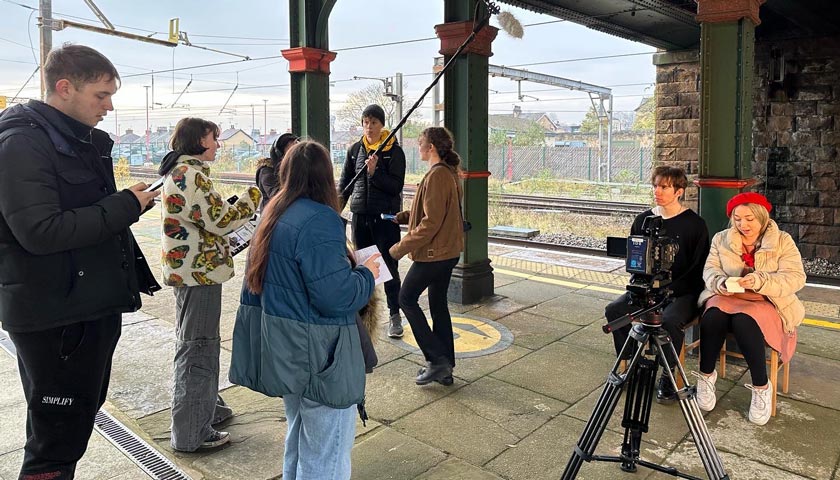
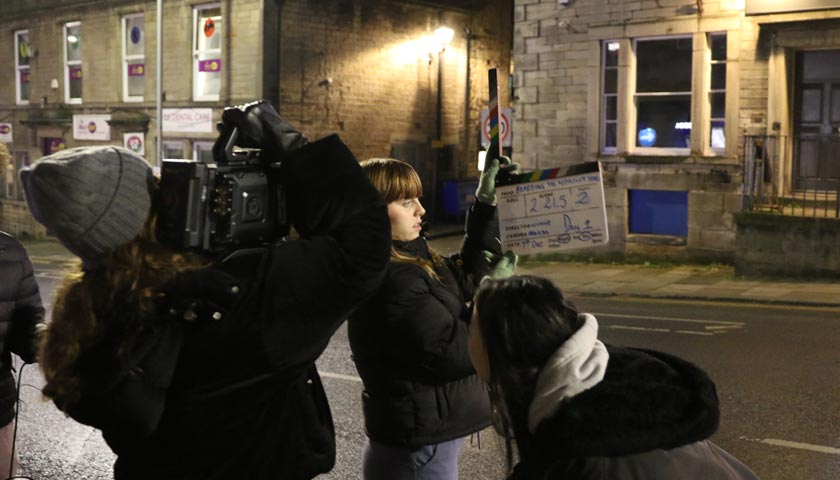
You will also build your practical skills in cinematography, editing and sound, and explore film-making styles such as narrative, documentary and experimental. Together with global film practices, storytelling and scriptwriting, and gender and politics in film, you will be introduced to a wide range of themes that could influence the work you produce during your degree and your future career. One past student tackled the superhero genre through a powerful microfilm, while another produced an award-winning film exploring the fear women have of walking home alone at night.

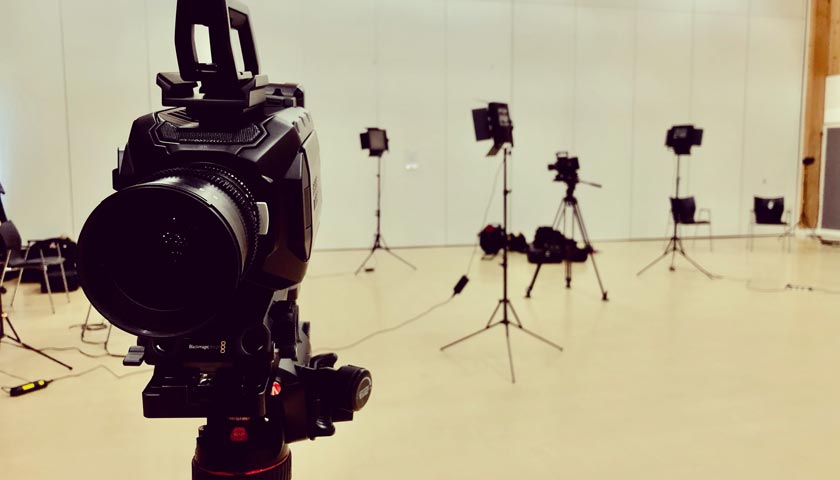
You will have access to top-of-the-line production equipment including cinema-ready digital cameras with prime lenses, DSLR cameras, versatile set lighting, grip equipment and full access to Adobe Creative Cloud in our acoustic editing suites. Our specialist facilities ensure you can put your ideas into practice, with support when needed from our friendly technicians.

What opportunities are there outside the course?

Studying at Lancaster offers a lively, creative community that extends from our campus to the city’s Castle Quarter and beyond. You will have opportunities to attend workshops with professional artists and industry experts as well as field trips. You can also engage in community-based film productions and local film festivals.

Exhibition opportunities throughout the course will help you develop professional skills, and you might also participate in our student-run cinema Take2, where you can show your films, or LA1TV - our own TV studio. In previous years, final year students have shown their own films at The Dukes, Lancaster’s city centre arts venue. We also have strong industry connections with The British Film Institute, The Bay International Film Festival, LA1 Shorts Festival and Lancaster International Film Festival.

Recent Fine Art graduates have secured commissions with digital arts organisations such as FACT Liverpool and Future Everything, and rewarding roles at galleries such as Middlesbrough Institute of Modern Art, Art Gene, and Home, and companies such as International Conservation Services, Science Museum National Collections Centre, Holocaust Centre North, ITV, United Colours of Benetton India, and The National Festival of Making.

Careers

What are the career opportunities with a degree in Fine Art and Film?

This degree supports you in developing the ambition, confidence, and skills to produce fine art and film at a professional level. You will build a strong set of transferable skills, helping you stand out to employers.

You will understand the key entry points into the diverse pathways that artists' careers can take, from your first experiences of installing and documenting your work, to the construction of portfolios, presentations and high-quality applications. You’ll develop critical analysis, research, presentation and writing skills, as well as hands-on experience with film-making equipment, editing software, and project management — valuable assets across a wide range of career paths.

You could go on to pursue a career in the following roles:

  • Film and Media Producer
  • Film journalist
  • Curator
  • Marketing Executive
  • Exhibition, Museum and Gallery Manager
  • Professional Artist
  • Broadcast and Print Journalist
  • Film Programmer or Curator
  • Script Supervisor
  • Content Producer (TV, Film, Video or Social Media)
  • Director
  • TV and Film Scenographer
  • Teaching

What careers and employability support does Lancaster offer?

Our degrees open up an extremely wide array of career pathways in businesses and organisations, large and small, in the UK and overseas.

We run a paid internship scheme specifically for our arts, humanities and social sciences students, supported by a specialist Employability Team. The team offer individual consultations and tailored application guidance, as well as careers events, development opportunities, and resources.

Whether you have a clear idea of your potential career path or need some help considering the options, our friendly team is on hand.

Lancaster is unique in that every student is eligible to participate in The Lancaster Award which recognises activities such as work experience, community engagement or volunteering and social development. A valuable addition to your CV!

Find out more about Lancaster’s careers events, extensive resources and personal support for Careers and Employability.

Entry requirements

These are the typical grades that you will need to study this course. This section will tell you whether you need qualifications in specific subjects, what our English language requirements are, and if there are any extra requirements such as attending an interview or submitting a portfolio.

Qualifications and typical requirements accordion

Help from our Admissions team

If you are thinking of applying to Lancaster and you would like to ask us a question, complete our enquiry form and one of the team will get back to you.

We also have more details on our website about:

International foundation programmes

Delivered in partnership with INTO Lancaster University, our one-year tailored foundation pathways are designed to improve your subject knowledge and English language skills to the level required by a range of Lancaster University degrees. Visit the INTO Lancaster University website for more details and a list of eligible degrees you can progress onto.

Contextual admissions

Contextual admissions could help you gain a place at university if you have faced additional challenges during your education which might have impacted your results. Visit our contextual admissions page to find out about how this works and whether you could be eligible.

Course structure

We continually review and enhance our curriculum to ensure we are delivering the best possible learning experience, and to make sure that the subject knowledge and transferable skills you develop will prepare you for your future. The University will make every reasonable effort to offer programmes and modules as advertised. In some cases, changes may be necessary and may result in new modules or some modules and combinations being unavailable, for example as a result of student feedback, timetabling, Professional Statutory and Regulatory Bodies' (PSRB) requirements, staff changes and new research. Not all optional modules are available every year.

Core

core modules accordion

Optional

optional modules accordion

Core

core modules accordion

Optional

optional modules accordion

Core

core modules accordion

Core

core modules accordion

Optional

optional modules accordion

Fees and funding

Our annual tuition fee is set for a 12-month session, starting at the beginning of each academic year.

Our Undergraduate Tuition Fees for 2027/28 are:

Home International
£10,050 TBC

Fees and funding information

Additional fees and funding information accordion

Scholarships and bursaries

You will be automatically considered for our main scholarships and bursaries when you apply, so there's nothing extra that you need to do.

You may be eligible for the following funding opportunities, depending on your fee status:

Unfortunately no scholarships and bursaries match your selection, but there are more listed on scholarships and bursaries page.

Scheme Based on Amount
Based on {{item.eligibility_basis}} Amount {{item.amount}}

We also have other, more specialised scholarships and bursaries - such as those for students from specific countries.

Browse Lancaster University's scholarships and bursaries.

Important information

The information on this site relates primarily to the stated entry year and every effort has been taken to ensure the information is correct at the time of publication.

The University will use all reasonable effort to deliver the courses as described, but the University reserves the right to make changes to advertised courses. In exceptional circumstances that are beyond the University’s reasonable control (Force Majeure Events), we may need to amend the programmes and provision advertised. In this event, the University will take reasonable steps to minimise the disruption to your studies. If a course is withdrawn or if there are any fundamental changes to your course, we will give you reasonable notice and you will be entitled to request that you are considered for an alternative course or withdraw your application. You are advised to revisit our website for up-to-date course information before you submit your application.

More information on limits to the University’s liability can be found in our legal information.

Our Students’ Charter

We believe in the importance of a strong and productive partnership between our students and staff. In order to ensure your time at Lancaster is a positive experience we have worked with the Students’ Union to articulate this relationship and the standards to which the University and its students aspire. Find out more about our  Charter and student policies.

Open days and campus tours

Visit campus and put yourself in the picture at an open day or campus tour.

Undergraduate Open Days
two students sitting and reading on some outdoor steps
  • Virtual tour

    Take five minutes and we'll show you what our Top 10 UK university has to offer, from beautiful green campus to colleges, teaching and sports facilities.

  • Accommodation guide

    Most first-year undergraduate students choose to live on campus, where you’ll find award-winning accommodation to suit different preferences and budgets.

  • The city and beyond

    Our historic city is student-friendly and home to a diverse and welcoming community. Beyond the city you'll find a stunning coastline and the world-famous English Lake District.