Taught by industry practitioners from JBA Consulting and academics
Bespoke training for both industry professionals and university graduates
Official certificate of hours towards professional chartership
Solutions to mitigate flood and pollution risk and better utilise water supplies for societal, economic and environmental gain require world-leading hydrologists to design, implement, manage and evaluate. The PGDip Flood and Water Management programme at Lancaster is specifically designed to enhance your skills and potential to become a world-leading hydrologist.
You will have the opportunity to develop your graduate and/or professional skills in the use of field technology and state-of-the-art models, applying both industry-standard procedures and next generation approaches. You will develop new insights into contemporary water issues and optimal ways to resolve them.
Training is delivered by a combination of leading academics and industry practitioners from environmental engineering company JBA Consulting. This means you'll receive direct input from professionals working in the field, giving you the skills that employers require.
Flexible training
We offer both full and part-time versions of this programme. Our flexible approach means you can start your training at two points in the year. You may wish to enrol at the traditional academic start of the term in Autumn or begin at the start of term in January. This is particularly helpful for those taking the part-time option.
For key modules, the in-person components are taught over intensive 2-3 contiguous-day activities to support those undertaking the programme part-time and provide a depth of focused learning for full-time participants.
Who is this programme for?
You may be a graduate that has enjoyed hydrology aspects of your degree and would like to develop your hydrological skills to start a career with an organisation in the national or international water sector. Or you may be a practitioner working within environmental consultancies, government agencies and planning departments, water companies or water-focused charities who wishes to develop skills in flood and/or water management as part of your professional and career development.
Looking ahead to employability
Your qualification will show to others (employers, professional organisations, contractors, peers) that you:
Can assemble a systematic knowledge of current ideas and issues at the forefront of hydrological science and professional practice
Are able to evaluate a wide range of field and numerical techniques applicable to scientific research in hydrology, as well as professional practice in flood and wider water management
Can appraise complex issues in the water environment, often with incomplete information, to make sound judgements
What to expect
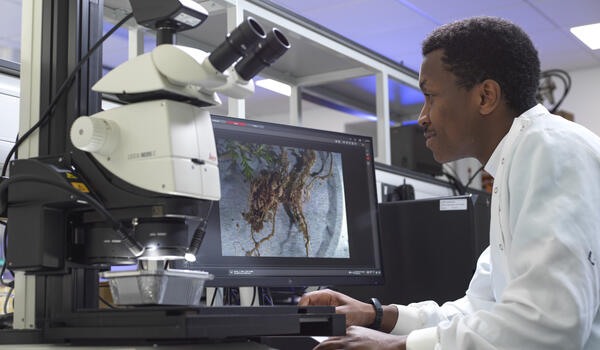
Training is delivered in a friendly, interactive and professional atmosphere with hands-on practical experience throughout. This practical work involves both field exercises and use of the latest industry standard models – delivered by leaders in field hydrology and commercial modelling in the UK.
3 things we’d like you to know
Lancaster is well situated for field work. We have natural water sources all around; water treatment works; and a number of areas under flood risk
You will work with the latest field technology and models used by industry
You will learn alongside recent graduates and experienced industry practitioners to gain from peer-to-peer learning and networking opportunities
Programme options
We offer a suite of postgraduate level awards in Flood and Water Management:
Postgraduate Certificate in Flood and Water Management – 1 core and 2 optional modules
Postgraduate Diploma in Flood and Water Management – 1 core and 5 optional modules
Master’s in Flood and Water Management– 1 core and 5 optional modules plus dissertation
The Certificate and Diploma programmes include a subset of modules from the Master’s programme, and each programme is offered independently of the others. This flexibility is valuable to those who are combining study with work or other responsibilities, or who are unsure about entering postgraduate level study.
If you start with the PGCert, you may apply to transfer your credits to a Diploma or the Master’s, with a fee discount for modules already taken. Similarly, after the Diploma, you may request to transfer to the Master’s and take only the remaining modules.
Flexible study options
Study alongside work and other commitments by taking this course on a part-time basis. Running over two years, you can choose from a selection of our modules each year.
We'll liaise with you over your choice of optional modules, ensuring you successfully balance your commitments alongside our Master’s programme.
Graduating from the PGDip Flood and Water Management programme awards you with competences for roles such as:
Graduate scientists and technical leads within environmental consultancies
Project managers within government agencies in the UK (e.g., Environment Agency) or other countries
Planning officers in local government
Graduate scientists and technical roles within water supply or sewerage companies
Specialist science roles with environmental charities and water development charities
Research assistant roles within universities and research institutes
You may wish to continue onto our MSc in Flood and Water Management.
Facilities
Laboratories
Lancaster Environment Centre features state-of-the-art teaching laboratories and specialist facilities, including dedicated spaces for Environmental Chemistry, Noble Gas analysis, plus Water and Soil Science.
Research Facilities
We offer a diverse range of research facilities to support your work, from glasshouses and controlled-environment plant growth rooms to solar domes and a weather station at our Hazelrigg field site and telemetered research catchments. Our facilities are complemented by advanced equipment such as our Mass Spectrometry facility, X-ray CT-Scanner and Magnetometer.
Local Environment
Our exceptional local surroundings – ranging from coasts and lakes to forests, farms and urban environments – provide a living laboratory for hands-on learning, helping you develop practical skills with global relevance.
Study Spaces
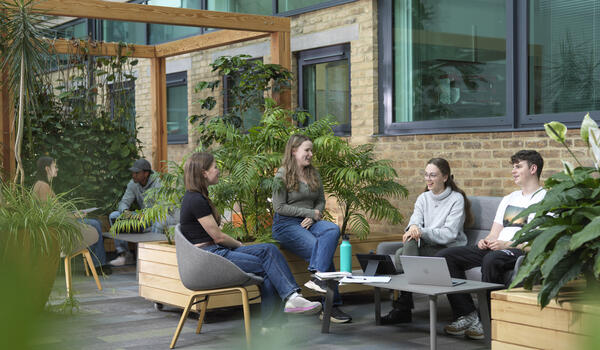
Alongside a range of study areas across campus, our atrium offers a bright, modern environment designed for collaboration and independent work. Filled with natural light and greenery, it’s a welcoming space for students and staff to meet, study and relax.
Data Resources
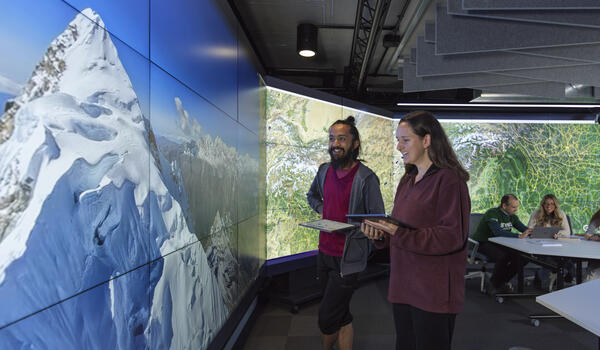
Dedicated support staff with expertise in GIS, statistics, modelling and programming are on hand to help you build advanced data and digital skills. We also have a cutting-edge data immersion suite that’s used in our teaching.
Our partnerships
We work alongside a number of valued partners, selected to reinforce learning across our Flood & Water Management courses.
JBA Group
"The JBA Group recruits well-trained graduates and encourages in-work learning for our colleagues in the Group. For many years we have sponsored our staff to join the flood training programmes at Lancaster University, and supported the UK-wide British Hydrological Society scholarship scheme that has helped others undertake training at Lancaster.
JBA’s confidence in the quality and value of the courses at Lancaster is reflected in the number of JBA colleagues that have benefited from full funding of professional training - to date, 25 JBA employees have up-skilled and gained career-enhancing qualifications in this way.
The key benefits we see from completion of a course on flood and water management at Lancaster are:
Enhanced technical expertise and application of best practice
Access to cutting-edge industry knowledge and thought leadership
Strong link between academic learning and real-world consultancy
Professional accreditation (CIWEM) and career progression support
Improved analytical, modelling, and communication skills
Flexible delivery aligned with work commitments, and
Strengthened organisational capability and sector reputation”
Alex Scott – Programme Manager | JBA Trust Jeremy Benn – Founder of JBA Group
Professor John Curtin – President of the Chartered Institution of Water and Environment Management (CIWEM), Lancaster University alumni
“When I started at Lancaster in 1987, I had originally planned to pursue a Chemistry degree. Back then undergraduates could choose three first year modules – my first two were clearly going to be chemistry – but for my third I chose Environmental Science which intrigued me not just because of my growing environmental awakening – but it came with the opportunity of field work. Who wouldn’t want that on the doorsteps of the Lakes!
From the moment I started I was hooked. I still remember the amazing spread of first year work from analysing satellite data (on a computer far less powerful than my phone now) to exploring the interconnections between science and the environment at what felt such a vibrant department.
During my final years I was drawn to hydrology. I was starting to realise that water is the ribbon that runs through most climate and environmental issues – essential for nature and communities to flourish – but seriously degraded by development and climate change.
The course at Lancaster had an excellent combination of world leading thinkers in the science – for sure – but at its heart embedded practical, usable solutions to problems. Almost all the theory I was taught was followed by a real-world application.
This taught not just the technical elements of hydrology – but the curiosity needed to understand problems with one goal – to fix them.
Little did I know how essential that combination was going to be in my career – over three decades leading flood risk management in the UK as we experienced the climate changing rapidly and all the challenges it threw at us.
I look back with incredible fondness to my time at Lancaster – from the lifelong friends I made, the sports rival between colleges and a course that gave me the technical and professional curiosity I’ve needed in my career.
And the best thing? The department is still doing all that today.”
Professor John Curtin – President of the Chartered Institution of Water and Environment Management (CIWEM), Lancaster University alumni
Entry requirements
Academic requirements
2:2 Honours Degree (UK or equivalent) in a science or engineering subject that includes Level 5 hydrology training; such as Civil or Environmental Engineering, Environmental Science, Geography, Natural Sciences.
We will consider applicants that have successfully completed continuing professional development (CPD) courses in hydrology or flood management, combined with experience. Please provide details in your application for us to assess.
English language requirements
We require an IELTS (Academic) Test with an overall score of at least 6.5, and a minimum of 6.0 in each element of the test.
If you are thinking of applying to Lancaster and you would like to ask us a question, complete our enquiry form and one of the team will get back to you.
Delivered in partnership with Lancaster International Study Centre, our one-year tailored pre-master's pathways are designed to improve your subject knowledge and English language skills to the level required by a range of Lancaster University master's degrees. Visit Lancaster University International Study Centre for more details and a list of eligible degrees you can progress onto.
Course structure
We continually review and enhance our curriculum to ensure we are delivering the best possible learning experience, and to make sure that the subject knowledge and transferable skills you develop will prepare you for your future. The University will make every reasonable effort to offer programmes and modules as advertised. In some cases, changes may be necessary and may result in new modules or some modules and combinations being unavailable, for example as a result of student feedback, timetabling, Professional Statutory and Regulatory Bodies' (PSRB) requirements, staff changes and new research. Where the course offers optional modules, they may not all be available every year.
Core
core modules accordion
Catchments are increasingly understood as complex and highly interconnected systems. This presents significant challenges for those who manage land and water resources within catchments, but also a range of novel and timely research opportunities. In this context, you will gain an understanding, through practical experience, of key research and management challenges that may face catchments in the future. You will draw on the latest land and water management frameworks used in catchments across the UK and Europe as a basis.
After analysing these frameworks and identifying significant challenges, you will use a combination of field, laboratory and data analysis techniques to investigate research questions focused on the condition of land and water resources within catchments. Case studies will be drawn from the English Lake District, including work within Windermere’s catchment at the heart of a UNESCO World Heritage site.
Optional
optional modules accordion
Explore in-depth aquatic ecology, focusing on both freshwater and marine ecosystems. You will examine key ecological concepts such as species interactions, energy flow, nutrient cycling and ecosystem functioning across different aquatic environments. The module will explore how physical, chemical and biological factors shape the structure and dynamics of both marine and freshwater habitats. Through case studies, fieldwork and practical applications, you will investigate the ecological processes in lakes, rivers, coastal zones and oceans and develop skills in data analysis, biological monitoring and conservation strategies. Special attention will be given to the conservation and management of aquatic habitats, with a focus on sustainable practices. You will develop a broad understanding of aquatic ecology and the skills required to address contemporary challenges in both freshwater and marine environments.
Delve into the fate and behaviour of chemical contaminants in different environmental systems, while considering relevant fundamental principles and processes.
You will support theory through case studies taken from recent peer-reviewed sources. You will gain an understanding of the fundamental principles relating to the fate and behaviour of contaminants in the environment. This will be specifically relating to the movement of chemicals between and within environmental media, specific biological, chemical and physical processes controlling the fate of contaminants in soil, water and air, and the prediction of the spatial and temporal behaviour and impact of contaminants using well-established models.
At a generic level, you will gain skills for reviewing scientific literature, formulating robust scientific arguments and using a range of information resources for research projects.
Build your knowledge around the key concepts of hydrology, hydrometrics and basic hydrological processes operating at a catchment scale. You will focus on the practical application of skills and industry standard techniques in the context of the latest legislation, guidance and policy.
An introduction to estimation and the computational techniques used to calculate extreme sea level and wave heights, and to produce tidal graphs for flood inundation modelling. During this module, you will cover coastal asset management, design and planning considerations, in the context of applying these technical approaches and concepts to decision-making faced by coastal asset owners, planners, and developers. You will explore the concept of predicting climate change impacts and uncertainty and how to incorporate these into flood risk management.
Chemical contamination is one of the ten ‘planetary boundaries’, which, according to some of the world’s most eminent scientists, should not be crossed. The reasons are self-evident; a contaminated world is an unsafe world – for society and the environment. Even the most advanced nations suffer, directly or indirectly, from pollution, whether the source is thousands of kilometres away or just down the street.
Through a combination of lectures and workshop-based activities, you will gain an understanding of the scale of the pollution problem, the fate, behaviour and impact of pollutants in the environment, especially in terrestrial systems, the processes developed to assess the risk and potential impact of pollution, and how we use scientific understanding to reduce the impact of pollution on the environment and society.
The knowledge and skills that you will gain from this module will support your ambitions for further research or employment in the regulatory and private sectors.
Build a comprehensive and systematic understanding of the data analysis and programming techniques that increasingly underpin environmental and Earth sciences and are equally relevant to research and employment. To begin, you will be introduced to methods for using computer programming for analysis and visualisation of environmental science data. Using a modern programming language (e.g. Python) and interactive development environments (e.g. Jupyter Notebook), you will then develop the skills necessary to use programming in conjunction with large datasets and modelling systems that feature throughout environmental science.
You will explore the fundamental tools of programming, running code in interactive development environments, editing, commenting, debugging, and using variables, loops, conditional statements and functions. Once you have mastered these tools, you will develop proficiency in programming for statistical analysis, hypothesis testing and data visualisation, and gain experience in planning and implementing tasks at a professional level.
An introduction to commercially available models for real time flood forecasting and warning systems and the concepts of variability, uncertainty and accuracy in short term forecasting. You will explore longer term climate prediction and the concepts and principals of uncertainty.
As part of this, you will investigate a simulated flood response exercise to understand how forecasting is applied and how uncertainty and variability in forecasting is dealt with in a real-world context and influences the decision-making process.
By reviewing case studies and examples of river restoration projects, you will explore the contexts for developing legislative and policy drivers, for example, the Water Framework Directive (WFD). You will explore the impact of land use and land management practices on rivers and how to incorporate flood risk management considerations into successful catchment and river restoration.
As part of this, you will take a field trip to visit a restored river system, demonstrating assessment techniques and providing case study material to support the design of a river restoration scheme as part of the assessment.
We introduce you to the fundamental principles of Geographical Information Systems (GIS) and remote sensing and demonstrate how these complementary technologies may be used to capture/derive, manipulate, integrate, analyse and display different forms of spatially-referenced environmental data. We blend theory-led lectures with hands-on practical sessions using state-of-the-art software. Alongside core subject knowledge, you'll build transferable skills in synthesising geographical data, developing problem-solving strategies, managing your time effectively and presenting analysis through innovative graphical formats.
Develop the knowledge needed to select the most appropriate model for particular applications in flood risk management, from flood warning and flood risk mapping for spatial and emergency planning, to broad scale screening studies, detailed feasibility and design of flood mitigation measures. You will be introduced to commercially available 1D, 2D and integrated models, along with their data requirements, capabilities and applications, including flood studies, sediment transport and tidal/coastal modelling.
Throughout, you will utilise case studies and undertake hands-on modelling. No previous experience is required. You will also touch on hydraulic principles relating to good river weir and culvert design, which will be demonstrated using a hydraulic flume. You will focus on the practical application of skills and industry standard techniques in the context of the latest legislation, guidance and policy.
Gain a foundational knowledge of flood risk related responsibilities and assessment methods, with an introduction to the key concepts in urban hydrology and sustainable drainage systems (SuDS). You will cover the practical application of SuDS in the context of the emerging guidance and legislation using case studies of SuDS implementation in a variety of situations. You will learn about the design of SuDS systems, from outlining design concepts to assessing the performance, estimation of flow and water quality loading.
Fees and funding
Location
Full Time (per year)
Part Time (per year)
Home
£8,400
£4,200
International
£20,600
£10,300
Additional fees and funding information accordion
There may be extra costs related to your course for items such as books, stationery, printing, photocopying, binding and general subsistence on trips and visits. Following graduation, you may need to pay a subscription to a professional body for some chosen careers.
Specific additional costs for studying at Lancaster are listed below.
College fees
Lancaster is proud to be one of only a handful of UK universities to have a collegiate system. Every student belongs to a college, and all students pay a small College Membership Fee which supports the running of college events and activities. Students on some distance-learning courses are not liable to pay a college fee.
For students starting in 2027, the fee is £40 for undergraduates and research students and £15 for students on one-year courses. Students on some distance-learning courses are not liable to pay a college fee.
Computer equipment and internet access
To support your studies, you will also require access to a computer, along with reliable internet access. You will be able to access a range of software and services from a Windows, Mac, Chromebook or Linux device. For certain degree programmes, you may need a specific device, or we may provide you with a laptop and appropriate software - details of which will be available on relevant programme pages. A dedicated IT support helpdesk is available in the event of any problems.
The University provides limited financial support to assist students who do not have the required IT equipment or broadband support in place.
There is no application fee if you are applying for postgraduate study starting in 2027.
Paying a deposit
For some of our courses you will need to pay a deposit to accept your offer and secure your place. We will let you know in your offer letter if a deposit is required and you will be given a deadline date when this is due to be paid.
The fee that you pay will depend on whether you are considered to be a home or international student. Read more about how we assign your fee status.
If you are studying on a programme of more than one year’s duration, tuition fees are reviewed annually and are not fixed for the duration of your studies. Read more about fees in subsequent years.
You may be eligible for the following funding opportunities, depending on your fee status and course. You will be automatically considered for our main scholarships and bursaries when you apply, so there's nothing extra that you need to do.
Unfortunately no scholarships and bursaries match your selection, but there are more listed on scholarships and bursaries page.
The information on this site relates primarily to the stated entry year and every effort has been taken to ensure the information is correct at the time of publication.
The University will use all reasonable effort to deliver the courses as described, but the University reserves the right to make changes to advertised courses. In exceptional circumstances that are beyond the University’s reasonable control (Force Majeure Events), we may need to amend the programmes and provision advertised. In this event, the University will take reasonable steps to minimise the disruption to your studies. If a course is withdrawn or if there are any fundamental changes to your course, we will give you reasonable notice and you will be entitled to request that you are considered for an alternative course or withdraw your application. You are advised to revisit our website for up-to-date course information before you submit your application.
More information on limits to the University’s liability can be found in our legal information.
Our Students’ Charter
We believe in the importance of a strong and productive partnership between our students and staff. In order to ensure your time at Lancaster is a positive experience we have worked with the Students’ Union to articulate this relationship and the standards to which the University and its students aspire. Find out more about our Charter and student policies.