The only UK master’s degree dedicated to political ecology
Directly engage with practitioners of political ecology through our network of professionals
Become an environmental change-maker
The Earth is faced with unprecedented and interconnected environmental challenges which produce profound inequalities in terms of prosperity, power and justice. Responding to complex problems like these demands both critical thought and action in order to help us to live upon a changing planet. This unique programme in Political Ecology offers the conceptual tools and practical skills to ask and respond to the difficult questions of human-environment relations. You are given a safe space to confront and challenge the status quo through critical thought and debate, crucially helping to drive transformative action for a better and fairer world.
Who is this programme for?
Anyone seeking to address the environmental injustices and unequal power relations that are visible throughout the world today. By doing so, you will become an environmental ‘change-maker’ capable of working in a variety of sectors.
Looking ahead to employability
We develop your skills in:
Understanding the different ways of analysing, debating and acting in response to diverse environments and development concerns, from local to global scales
Project management for driving transformative action and change
Constructing conversations to tackle the world’s most urgent and challenging environmental and developmental questions
What to expect
The MA in Political Ecology focuses on a range of themes, including the politics of resource extraction, water, climate politics and the green economy. To do this, we believe passionately that true learning is about dialogue and critical reflection, and not just lectures. Through a series of core and optional modules, we offer novel approaches to learning and teaching, engaging you in creative classes, both on and off campus. You will develop the necessary means to understand our complex human-environment relations, including how society might address and overcome some of the challenges of living on Earth.
The final phase of your Master’s is a dissertation project. You can choose to work alongside one of our world-leading academics or one of our industry partners on a topic relevant to political ecology.
3 things we would like you to know
Our master’s is truly unique – the only one in the UK offering a dedicated political ecology perspective
You will learn by exploring our local environment as a ‘living laboratory’ to critically examine political ecology concerns. We are located near to the Lake District and equidistant between London and Edinburgh
You will work with and learn from one of the largest political ecology research groups in the UK, who have an international reputation. We are founding members of POLLEN, the world’s most diverse organisation for political ecology
Flexible study options
Study alongside work and other commitments by taking this course on a part-time basis. Running over two years, you take a selection of the modules each year.
We will liaise with you over your choice of optional modules and your schedule, so that you can successfully balance your work and other commitments alongside the Master’s programme.
Dr John Childs, Senior Lecturer in Political Ecology, talks about the Political Ecology master's degree that allows students to engage with the world around them, and to understand environmental change starting right here in Lancaster.
Postgraduate study is carried out in the Graduate School for the Environment. This is a collaboration between Lancaster University's Environment Centre, the Centre for Ecology & Hydrology, and Rothamsted Research.
Graduates of the MA Political Ecology will have the skills and knowledge that make you attractive to employers across the spectrum of politically conscious and action-oriented organisations. Whether you embark on a career within government by advocating for policy changes; work for a business to transform their sustainability practices; or a enter role within the NGO sector, we envisage that you will be able to shape the world through transformative action. Our recent graduates are proving this! They currently occupy roles as:
Energy equity lead
Sustainability consultant
National graduate trainee
Senior teacher trainer: sustainability
PhD student
Examples of potential careers also include:
Policy advisor
Policy analyst
Environmental planner
Due diligence researcher
Science engagement
Environmental consultant
Conservation officer
Academia
A future for Emily
The MA in Political Ecology was what drew me to study at Lancaster University in the first place. The degree programme is the only master's degree in Political Ecology in the UK and one of the few in the world. The programme has completely exceeded my expectations.
The relatively small size of the programme is an asset, allowing us to have high-level debates and discussions in the classroom about complex theory and current events, and to create a close bond with fellow course mates and teaching staff. Political ecology is a field which pushes for not only academic engagement but real-world engagement, and teaching staff actively engage in and encourage this.
Completing the MA in Political Ecology programme has helped me solidify my plans to also pursue a PhD in Political Ecology. Thanks to the support of my supervisor, Dr Emma Cardwell, and the Lancaster and Environment Centre department, I am also attending the Ecological Society of America conference to present my dissertation research and eventually pursue my dissertation’s further publication as well.
Emily, MA Political Ecology 2025
Guy
The Political Ecology Master's at Lancaster University is one that deals with some of the most salient issues affecting our world from a deeply perceptive and engaging standpoint. To those who don’t believe in the divide between human and nature, or research and action, Political Ecology is a degree that speaks to you. I came away from this year with confidence in my abilities to critically engage with issues such as environmental (in)justice or climate policy. The political ecology framework is one that allows for an exploration of ideas and methodologies outside traditional definitions of environmentalism.
Rebekkah
This programme has helped me find myself in ways that feel like both a returning and an expanding of who I am. I have been challenged - and learned how to meet those challenges - in ways that I know will serve me for the rest of my life and career. I came into this programme worried about the future, unsure what to do, and burning to understand why the world is the way it is. Between the content, coursework, mentors, and peers I have met along the way, I have come out of it with greater confidence, understanding, and hope. The future is scary and uncertain, but this programme has laid down the foundations for how I can do something about it.
Nate
Political Ecology at Lancaster has helped me build off my undergraduate studies and explore new areas of interest. The relatively small cohort size has also meant that I've received excellent support from the wonderful faculty.
Entry requirements
Academic requirements
2:2 Hons degree (UK or equivalent) in a Social Science or other disciplines with an environmental focus, such as Geography.
We may also consider non-standard applicants with a 2:2 degree in a subject not noted above, alongside extensive relevant work experience or similar training, such as work with environmental policy and practice, NGOs or activist networks.
English language requirements
We require an IELTS (Academic) Test with an overall score of at least 6.5, and a minimum of 6.0 in each element of the test.
If you are thinking of applying to Lancaster and you would like to ask us a question, complete our enquiry form and one of the team will get back to you.
Delivered in partnership with Lancaster International Study Centre, our one-year tailored pre-master's pathways are designed to improve your subject knowledge and English language skills to the level required by a range of Lancaster University master's degrees. Visit Lancaster University International Study Centre for more details and a list of eligible degrees you can progress onto.
Course structure
We continually review and enhance our curriculum to ensure we are delivering the best possible learning experience, and to make sure that the subject knowledge and transferable skills you develop will prepare you for your future. The University will make every reasonable effort to offer programmes and modules as advertised. In some cases, changes may be necessary and may result in new modules or some modules and combinations being unavailable, for example as a result of student feedback, timetabling, Professional Statutory and Regulatory Bodies' (PSRB) requirements, staff changes and new research. Where the course offers optional modules, they may not all be available every year.
Core
core modules accordion
Explore debates around ‘Environment’ and ‘Development’ through a critical geographical lens. Trace the evolution of discourse at intersection of these issues, movements and policies, critically situating notions such as sustainable development against the backdrop of changing geographies of global inequality.
You will draw on critical environmental studies, political ecology and post-development, as you tackle themes that include climate politics, rural development and food sovereignty, neoliberal conservation approaches and their discontents, indigenous knowledges, environmental justice movements, and post-growth approaches.
Through a combination of lectures and workshop activities, gain the necessary insights and theoretical tools for understanding critical debates around environment and development, while also training how to construct reasoned arguments through critical evaluation of evidence, understanding theory-practice relationships, and writing in an academic register.
The dissertation allows you to conduct an independent research project that is at the forefront of the discipline, focusing on a specific topic relevant to your degree programme and interests. Throughout, you will receive one-to-one support from an academic.
This is the largest piece of work that you will complete during your degree and depending on your subject area, will enable you to develop skills including:
Formulating a research question
Contextualising it within research literature
Identifying and using appropriate research methods and techniques to address your question
Collecting and analysing data
Interpreting and communicating your findings
You will be expected to present your findings in an extensive report akin to a research paper. In this, you will demonstrate your ability to conduct rigorous, independent research whilst working effectively with others, attributes valued by future employers.
Through a combination of lectures, workshop and field-based activities, you will gain a ‘whole system view’ that cuts across disciplines. With a foundation in ongoing research, this will enable you to refine your skills in critical thinking and creative problem solving.
Your new knowledge and skills will provide a springboard for further study or employment focused on a major societal challenge.
This module introduces cutting-edge theoretical approaches, geographies and themes of political ecology (e.g. power and justice), addressing the most relevant and pressing questions facing our planet. You will learn about complex environmental issues, critique the status quo and drive transformative action through a political ecology lens. You will explore topics through a mixture of conceptual frameworks including feminist, decolonial, degrowth and justice-based approaches. A combination of campus and field-based learning will give you the opportunity to engage with the wider political ecology community. Your understanding of how the global environment operates across different spaces and scales using political ecology theories will be consolidated. You will be able to apply critical thinking to real-world problems using your knowledge of the key challenges facing environmental crises.
An introduction to advanced research methods and approaches in the social sciences, with a particular focus on qualitative research methods. This module will introduce you to new ways of conducting and thinking about academic research. You will explore the process of independent research, from framing the questions that are asked about the world – and the practical and political drivers behind this – to considering how to plan ethical research.
You will explore a broad range of approaches to generating data, including both conventional and unconventional social science methods. Expect rigorous theoretical discussion, based in deep engagement with the literature, paired with engaging hands-on opportunities to put these concepts into practice. You will also look beyond research at academic communication and consider ways of reaching the public with outputs from your work.
Optional
optional modules accordion
Take a critical, yet hands-on approach to exploring the role of eco-innovation as a pathway towards sustainable development.
Through action-learning, you will identify and address complex real-world sustainability challenges by developing your own eco-innovation proposals – viable ideas with the potential to reduce human impact on the environment whilst simultaneously delivering the economic and social ambitions of the global sustainable development agenda.
Working in small teams, you will combine key sustainability concepts and business planning approaches to develop effective eco-innovations. Throughout, you will gain valuable transferable skills including team working, problem analysis and framing, and effective oral and written communication to professional and non-academic audiences.
By the end of the module, you will be able to demonstrate a critical understanding of the forefront of eco-innovation for sustainable development, along with practical skills and increased confidence to help you drive change in real world professional environments.
In times when hope and fear about the environmental crisis alternate in our minds, when social and political change play havoc with our interpretation of the historic worlds we inhabit, it is crucial that we examine critically and creatively the ways and means by which such a crisis has come into existence. To do so, this module builds bridges across disciplines.
This module combines a place-based approach (Lancaster, the Morecambe Bay, and the Lake District) and an analytical focus centred on the dissonance and convergence of temporal scales. We seek to answer two questions in close dialogue with students:
To what extent is the dissonance between the different timescales of the Earth system, the social and built environment, and the human imagination a contributing factor to political inaction and cultural indifference?
In what ways can we better integrate these timescales while retaining the rigour, criticality, and creativity of the disciplines used to study each?
The module will explore topics such as tidal systems, coasts and estuaries; floods; the rise, fall and rebirth of particular narratives of change; ruins and memory; risk and CO2 trading; glacial archaeology and informality and hope.
Through this module, you will explore the shift in humanity’s relationship to the living world and its irreducible, but novel and creative, ‘global’ dimensions of environmental sustainability.
Confronted by unprecedented global environmental challenges, the current response is too superficial and slow. Addressing these problems demands acknowledging their multidimensional nature by situating them in regard to other extraordinary global challenges: socio-technical, cultural, geo-political. Indeed, pressing issues of ‘global’ environmental sustainability are inseparable from an ongoing, turbulent process constructing the ‘global’ – even the ‘planetary’ – as a new horizon of collective action and responsibility
Starting with China’s ‘ecological civilisation’, you will then rethink sustainability from other perspectives from across the world (e.g. south Asia, sub-Saharan Africa, Latin America) and diverse sectors of society.
Altogether, this requires profound transformation of multiple core concepts of socio-environmental understanding and ways of thinking, including integration of worldviews beyond dominant Western perspectives.
This module provides an overview of the rights protected by international instruments. This includes civil, political, economic, social and cultural rights.
You will be introduced to the regional and universal systems protecting and promoting human rights. The main focus will be on the UN human rights system, but regional systems will also be compared.
You will learn about the substance and procedure of human rights and engage with key debates in the development of rights and the obligations of non-state actors.
This field-based, interdisciplinary module puts you at the heart of environmental sustainability case studies right on our doorstep in Lancaster. These may include:
Pollution at Windermere
Habitat restoration in the Cumbrian Lake District
The energy transition from coal mines to renewables
Innovative waste management schemes
Local food initiatives
With each case study, our academic and research staff work alongside external stakeholders in the identification, assessment, and remediation of environmental challenges.
Our most pressing environmental sustainability challenges include biodiversity loss, climate change, waste and pollution management, uncertain food security and dwindling resources. There is an ever-increasing demand for graduates versed in these complex issues, whose critical thinking and original, creative problem-solving can make a difference.
You’ll gain both first-hand knowledge relevant to careers in environmental sustainability, and experience in effective communication that cuts across disciplinary boundaries and brings together the University, the private sector, and the wider public.
How are we transforming the way we supply and use energy to achieve our climate targets? On this cross-disciplinary module, you will look at the major changes underway within our energy system.
Examine decarbonisation pathways in electricity, transport and heat, whilst considering supply and demand dynamics and carbon removal. As part of this, you will investigate real-world challenges at the forefront of the discipline, including how to govern the energy system, economics, societal engagement, and energy security. You will gain real-world insight into complex related issues via interactions with energy professionals, using the University energy system as a case study.
Create the theoretical and analytical foundation for your future study and work in public policy. This module will give you a solid grounding in the theories of policymaking process, the critical actors and institutions involved, and the key concepts, traditions and paradigms that have shaped policymaking.
You will gain a solid grasp of the policy cycle and theories that explain the nature of policymaking including agenda setting, policy formulation, implementation and evaluation. You’ll examine a range of public policy theories and apply these approaches to real world case studies including:
Mainstream approaches such as institutionalism, new public management and evidence-based policymaking
Broader theoretical approaches such as multi-level governance and complexity
Critical policy studies examined through the lens of power - drawing on a range of gender and anti-racist approaches
You will identify the actors and factors that shape policy, discover the causes of policy convergence and policy change, and assess what equitable, fair and just policies look like.
Fees and funding
Location
Full Time (per year)
Part Time (per year)
Home
£12,600
£6,300
International
£30,900
£15,450
Additional fees and funding information accordion
There may be extra costs related to your course for items such as books, stationery, printing, photocopying, binding and general subsistence on trips and visits. Following graduation, you may need to pay a subscription to a professional body for some chosen careers.
Specific additional costs for studying at Lancaster are listed below.
College fees
Lancaster is proud to be one of only a handful of UK universities to have a collegiate system. Every student belongs to a college, and all students pay a small College Membership Fee which supports the running of college events and activities. Students on some distance-learning courses are not liable to pay a college fee.
For students starting in 2026 or 2027, the fee is £40 for undergraduates and research students and £15 for students on one-year courses. Students on some distance-learning courses are not liable to pay a college fee.
Computer equipment and internet access
To support your studies, you will also require access to a computer, along with reliable internet access. You will be able to access a range of software and services from a Windows, Mac, Chromebook or Linux device. For certain degree programmes, you may need a specific device, or we may provide you with a laptop and appropriate software - details of which will be available on relevant programme pages. A dedicated IT support helpdesk is available in the event of any problems.
The University provides limited financial support to assist students who do not have the required IT equipment or broadband support in place.
There is no application fee if you are applying for postgraduate study starting in 2026 or 2027.
Paying a deposit
For some of our courses you will need to pay a deposit to accept your offer and secure your place. We will let you know in your offer letter if a deposit is required and you will be given a deadline date when this is due to be paid.
The fee that you pay will depend on whether you are considered to be a home or international student. Read more about how we assign your fee status.
If you are studying on a programme of more than one year’s duration, tuition fees are reviewed annually and are not fixed for the duration of your studies. Read more about fees in subsequent years.
You may be eligible for the following funding opportunities, depending on your fee status and course. You will be automatically considered for our main scholarships and bursaries when you apply, so there's nothing extra that you need to do.
Unfortunately no scholarships and bursaries match your selection, but there are more listed on scholarships and bursaries page.
The Peter Vincent prize rewards Lancaster University final year geography students applying for one of LEC’s taught Master’s degrees. You may be eligible for a prize of £1500.
Peter John Vincent Scholarship accordion
If you are a Lancaster University final year geography student applying for one of LEC’s taught Master’s degrees, you may be eligible for a prize of £1500. For each of our Master's degrees, we will award the prize to the graduate with the highest overall mark in either geography, human geography, or physical geography. That’s six prizes in total that may be awarded.
You don’t have to do anything. Once you have secured your place on your chosen LEC Master’s, you will automatically be considered for the prize and notified if you are successful.
Facilities
Laboratories
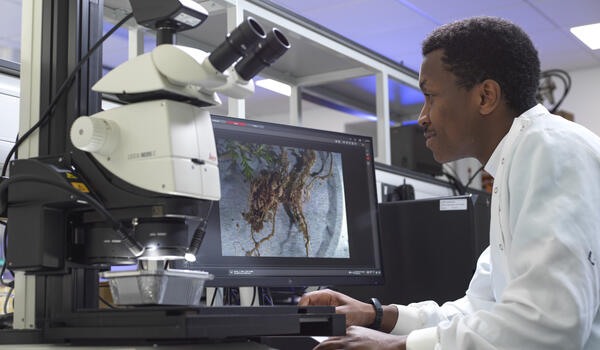
Lancaster Environment Centre features state-of-the-art teaching laboratories and specialist facilities, including dedicated spaces for Environmental Chemistry, Noble Gas analysis, plus Water and Soil Science.
Research Facilities
We offer a diverse range of research facilities to support your work, from glasshouses and controlled-environment plant growth rooms to solar domes and a weather station at our Hazelrigg field site and telemetered research catchments. Our facilities are complemented by advanced equipment such as our Mass Spectrometry facility, X-ray CT-Scanner and Magnetometer.
Local Environment
Our exceptional local surroundings – ranging from coasts and lakes to forests, farms and urban environments – provide a living laboratory for hands-on learning, helping you develop practical skills with global relevance.
Study Spaces
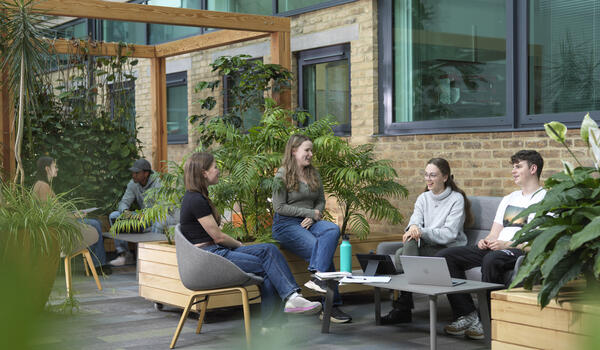
Alongside a range of study areas across campus, our atrium offers a bright, modern environment designed for collaboration and independent work. Filled with natural light and greenery, it’s a welcoming space for students and staff to meet, study and relax.
Data Resources
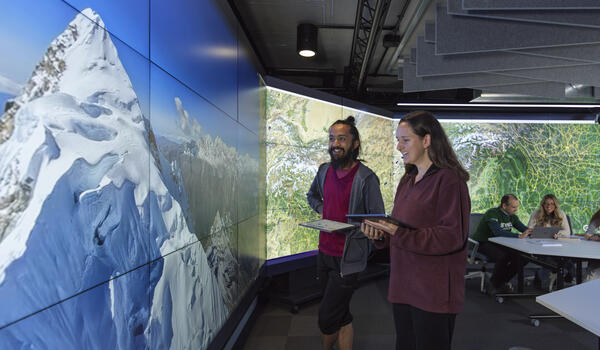
Dedicated support staff with expertise in GIS, statistics, modelling and programming are on hand to help you build advanced data and digital skills. We also have a cutting-edge data immersion suite that’s used in our teaching.
The information on this site relates primarily to the stated entry year and every effort has been taken to ensure the information is correct at the time of publication.
The University will use all reasonable effort to deliver the courses as described, but the University reserves the right to make changes to advertised courses. In exceptional circumstances that are beyond the University’s reasonable control (Force Majeure Events), we may need to amend the programmes and provision advertised. In this event, the University will take reasonable steps to minimise the disruption to your studies. If a course is withdrawn or if there are any fundamental changes to your course, we will give you reasonable notice and you will be entitled to request that you are considered for an alternative course or withdraw your application. You are advised to revisit our website for up-to-date course information before you submit your application.
More information on limits to the University’s liability can be found in our legal information.
Our Students’ Charter
We believe in the importance of a strong and productive partnership between our students and staff. In order to ensure your time at Lancaster is a positive experience we have worked with the Students’ Union to articulate this relationship and the standards to which the University and its students aspire. Find out more about our Charter and student policies.





.jpeg)